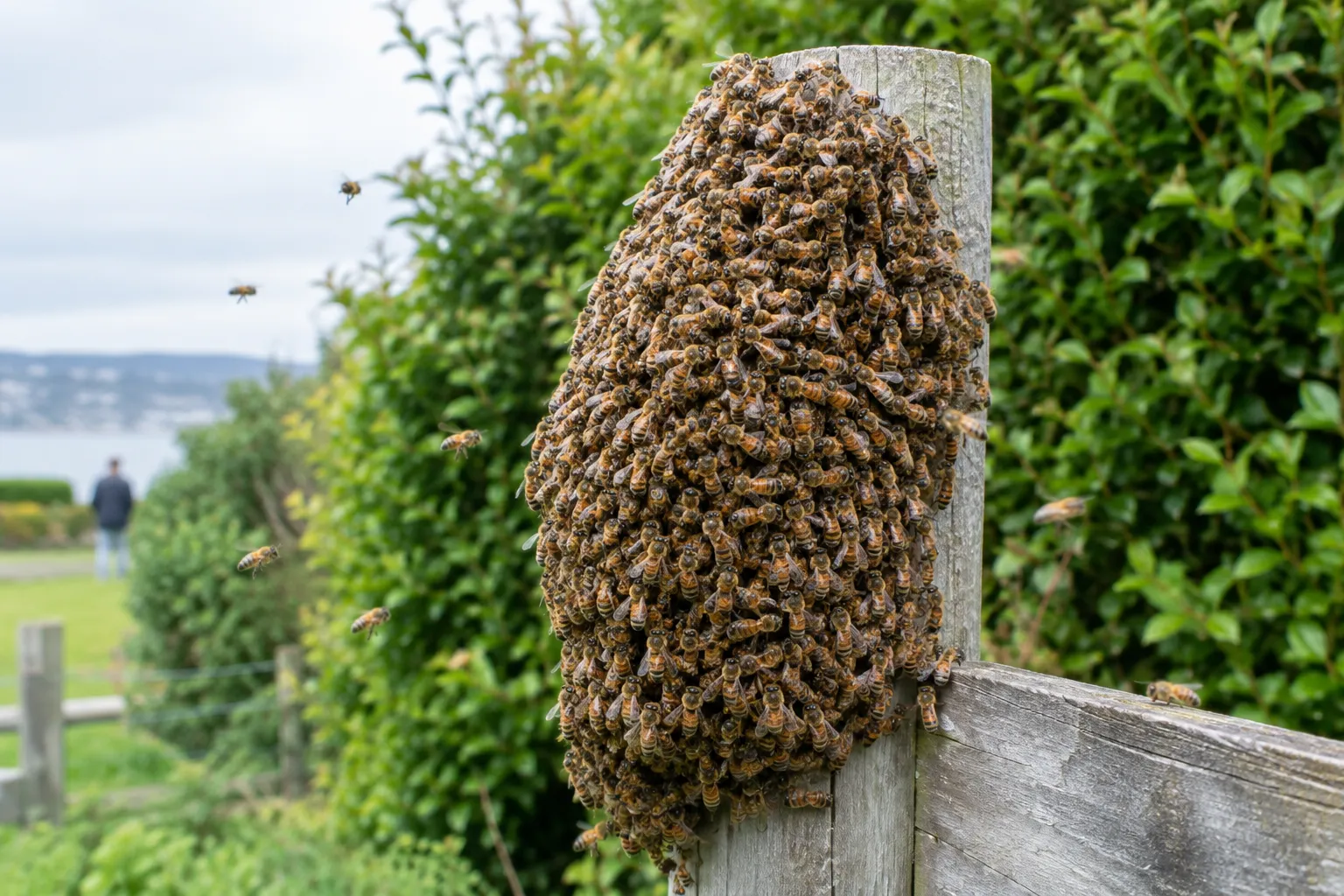
A bee swarm is a honey bee colony on the move. It rests in a cluster, often on a branch, fence, post or car, while scout bees look for a new home. In Auckland, most bee swarm removal is done by beekeepers, and collection is often free, because a swarm is a colony of bees they can keep. The job starts costing money when the swarm is hard to reach, or when it has already moved into a wall or roof. This page covers why bees swarm, how long a swarm stays, whether it is dangerous, what collection involves and when you might pay. For other bee problems, see bee removal in Auckland.
Who removes bee swarms in Auckland?
Beekeepers collect most honey bee swarms. The Auckland Beekeepers Club runs a free swarm collection service through independent volunteer collectors, and Honey and Bees New Zealand lists swarm collectors around the country. Some bee removal businesses also collect swarms free, and charge only for harder jobs, such as bees inside a building.
Who to call depends on where the swarm is:
- Hanging in the open (a branch, fence, post, letterbox or car): a swarm collector. This is the easy case.
- High up in a tree, or somewhere awkward: a collector may still help, but may need equipment or charge for it.
- Going into a gap in a wall, roof, chimney or tree trunk: call quickly. Once the bees build comb inside, it is no longer a swarm but an established colony, and our page on bees in walls and roofs applies.
You can also ask for quotes through the form on this page. Say clearly that it is a swarm, where it is and how high, and send a photo if asked.
Why do bees swarm?
Swarming is how honey bee colonies reproduce. When a hive gets crowded, the colony raises a new queen. The old queen then leaves with a large share of the workers, often about half or more, to start a new colony somewhere else. The bees that stay behind carry on with the new queen.
Honey and Bees New Zealand says swarming can begin as early as August and runs through until January, with spring the busiest time. That is why swarm calls in Auckland pick up from late winter into summer. Before they leave, the bees fill up on honey, which is one reason swarming bees are so docile: they have no nest or brood to defend.
How long will a bee swarm stay?
Usually a few hours to a day or two. The swarm clusters while scout bees search for a new home, then flies off once they agree on one. The University of Georgia's bee lab says a swarm usually moves to its permanent home within 24 hours. Clemson Extension notes that some stay put for several days.
The longer a swarm hangs in one spot, the more likely it is struggling to find a home. Those are the swarms that sometimes move into a gap in a nearby house. If a swarm has been on your property for more than a day, or you see bees going in and out of a gap in the wall rather than hanging in a cluster, call a collector sooner rather than later.
Is a bee swarm dangerous?
A swarm is usually gentle. Honey and Bees New Zealand says bees in a swarm are not aggressive or inclined to sting unless provoked, and UGA's bee lab says the risk of stings is low. The danger is mostly from people poking, spraying or throwing things at the cluster, which can make the bees defend themselves.
To stay safe while you wait:
- Keep children and pets inside or well away.
- Don't spray the swarm with insecticide or water, or try to knock it down.
- Don't block it in or cover it.
- Close nearby windows and doors.
If anyone is allergic to bee stings, keep them indoors. If someone is stung and has trouble breathing, swelling of the face or lips, or feels faint, call 111.
What does bee swarm collection involve?
For a swarm in the open, collection is quick. The collector holds a box or hive under the cluster and shakes or brushes the bees in. Once the queen is inside, the rest follow. They usually leave the box in place until dusk so the last flying bees can join, then take the swarm away to a hive. The whole job often takes under an hour.
The collector may ask you for:
- A photo of the swarm
- How high it is, and what it is hanging from
- How big it is, roughly (a football, a rugby ball, bigger)
- How long it has been there
- Whether it is in the open or going into a gap
Anyone who keeps the swarm in a hive has to be a registered beekeeper. Under the American Foulbrood National Pest Management Plan, every beehive in New Zealand must be registered with NZ Bee Health and Biosecurity. If you would rather the bees are rehomed, not killed, our guide on how to get rid of a bee swarm without killing it goes through it step by step.
When does bee swarm removal cost money?
Collecting a swarm hanging in the open is often free in Auckland. It costs money when it needs ladders, a cherry picker or tree climbing, when the bees are somewhere hard to reach, or when the swarm has moved into a building and needs cutting out. The specialist quotes once they know where the bees are.
Costs rise with height and access, travel, and anything that involves opening a wall, roof or chimney. A swarm that has turned into an established colony in a cavity is the most expensive case, because the comb has to come out and the opening has to be repaired. Our guide to bee removal cost has price ranges for each case.
Questions people ask
What should I do if a bee swarm lands on my car?
Leave the car where it is if you can, keep people away, and call a swarm collector. A swarm on a car is usually easy to collect, and the bees leave within hours to a day anyway. Don't drive off with the swarm attached or spray it. If you must move the car, wait until the bees have gone or been collected.
Will a bee swarm come back?
The same swarm won't, because it is looking for a new home and will move on or be collected. But a garden near a hive can see more than one swarm in a season, and bees are often drawn to spots where bees have nested before. If a swarm keeps settling in the same tree or near the same gap, ask the collector why.
Why are there so many bee swarms in spring?
Spring is when honey bee colonies grow fastest, as flowers bloom and the colony builds up numbers. A crowded hive raises a new queen, and the old queen leaves with part of the colony. In New Zealand, swarming can begin as early as August and runs through until January.
Can I just leave a bee swarm alone?
Often, yes. A swarm in the open usually leaves within a few hours to a day or two once scouts find a new home. The risk is that the new home is a gap in your wall or roof. If you leave it, keep an eye on it, and call a collector if the bees start going into a cavity.
What happens to the bees after a swarm is collected?
A collector usually takes the swarm home and settles it in a hive, where it becomes a new colony. That is why many beekeepers are happy to collect swarms for free: a healthy swarm is valuable to them. Anyone who keeps the bees in a hive must be a registered beekeeper in New Zealand.
Guides in this section
- Bee swarms
How to get rid of a swarm of bees naturally in Auckland, without killing them.
Sources
- Honey and Bees New Zealand, Honey bee swarms
- Auckland Beekeepers Club, Free swarm collection
- University of Georgia Bee Lab, Honey bee swarms and bees in walls
- Clemson Cooperative Extension, Frequently asked questions about honey bee swarms
- NZ Bee Health and Biosecurity, Apiary registration
- Published prices of Auckland bee removal businesses, checked October 2026
Last updated