Bees in Titirangi
Titirangi homes sit inside the bush at the edge of the Waitakere Ranges. Bees here have wild trees to live in, and timber houses on steep slopes to move into when those are full.
Checked
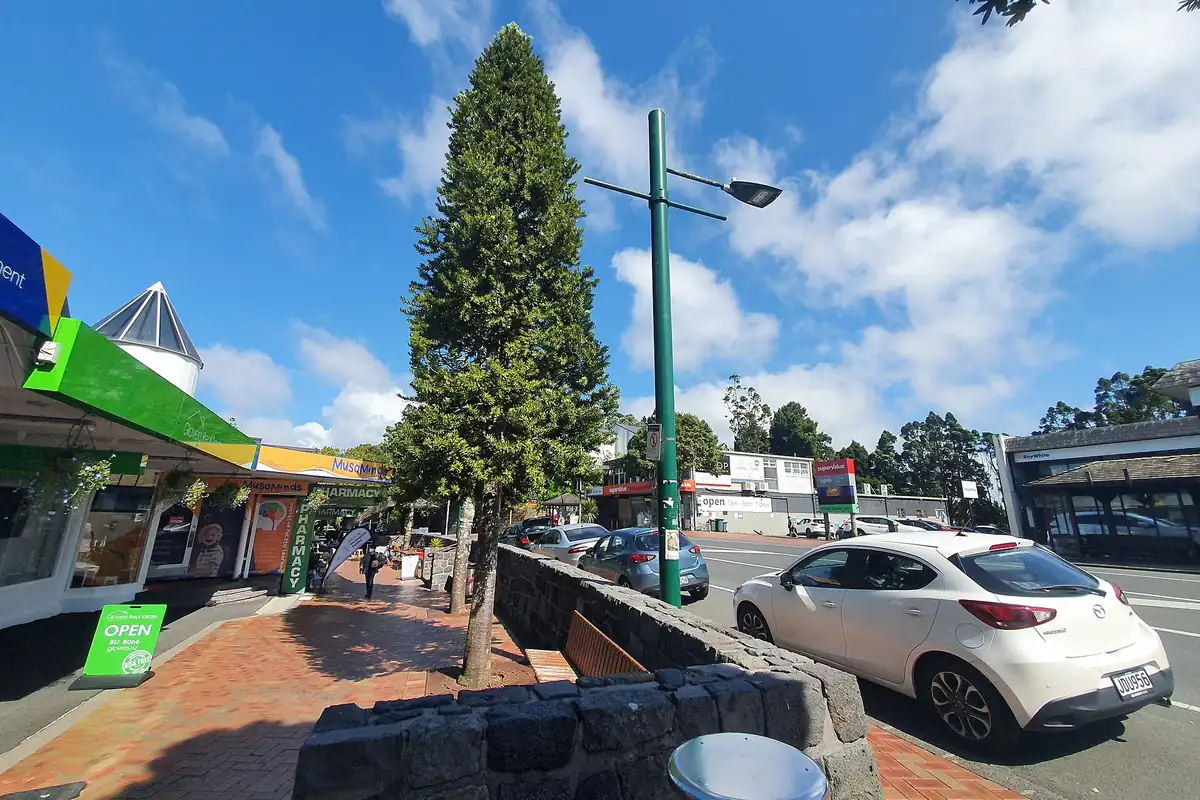
Titirangi, Laingholm, Woodlands Park, French Bay, Wood Bay and Waiatarua sit within or right beside the Waitākere Ranges Heritage Area, set up by an Act of Parliament in 2008 to protect the ranges and their foothill communities. Most houses are on steep, bush-clad sections reached by winding roads off Titirangi Road and Scenic Drive. Many date from the 1950s to the 1970s: timber houses, pole houses and architect-designed homes with big decks cantilevered out over the slope. That setting changes both where bees live and how anyone reaches them.
Wild colonies in the canopy
The bush around Titirangi has old trees with hollows, and honey bees use them. Some of those wild colonies survive a few years, and in spring they swarm like any managed hive. A swarm from a bush colony may hang high in a tree for a day before moving on, often into another hollow, sometimes into a house.
If the swarm is high in native bush, leave it. A collector is unlikely to reach it safely, and it will usually move on within a day or two. Keep an eye on where it goes. If the scouts start inspecting your eaves or a gap in your deck framing, call for help before the bees move in. The swarms out of reach page explains when a high swarm is worth chasing.
Pole houses, decks and the underfloor
The house types here give bees some unusual homes:
- Pole houses have exposed framing and a lot of junctions between timber members, with gaps behind flashings and fascias.
- Cantilevered decks have deep, dark spaces between joists, often boxed in on the downhill side.
- Undercrofts on the downhill side are used for storage and seldom visited, so a colony can grow unnoticed.
- Timber-lined ceilings in mid-century houses sometimes sit directly under the roof with only a shallow void, so a colony up there is close to the room below.
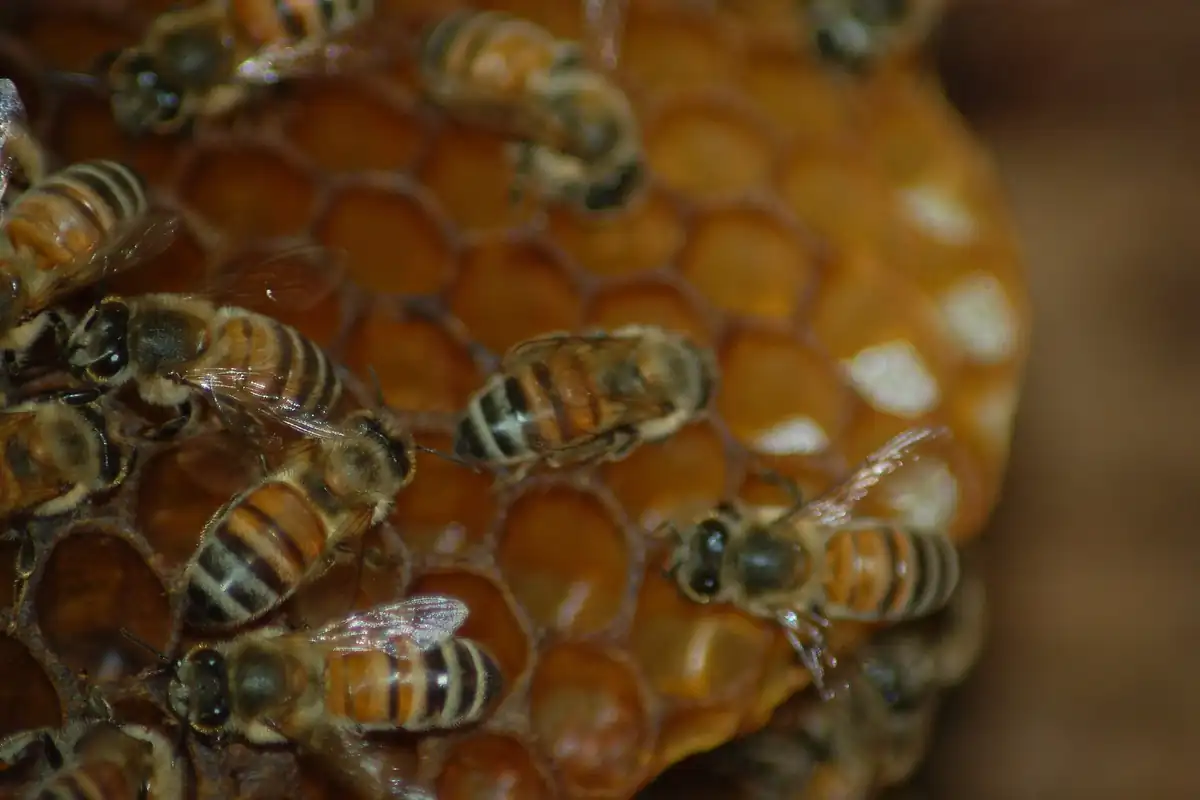

The photo shows comb from a wild colony built in the open. Under a deck or in a wall void it looks the same: pale sheets hanging side by side, heavy with honey. All of it has to come out, because comb and honey left behind draw robbing bees and wax moth. Read after the bees are out for what follows a removal.
Working around kauri
Kauri dieback disease is spread in soil, and the Waitākere Ranges have been hit hard. Auckland Council asks everyone to keep soil away from kauri roots and to clean footwear and gear. If a colony is in or near a kauri on your section, tell whoever visits before they come. They should keep off the root zone, which spreads well past the canopy edge, clean boots and gear before and after, and not dig near the tree. A colony actually inside a living kauri is best left alone or assessed very carefully; cutting into the tree is not an option to take lightly.
Getting a technician to a bush section
Access is often the biggest part of a Titirangi job. When you ask for a quote, include:
- Where to park, because many driveways are steep, narrow or shared.
- The number of steps or the length of track from the road to the house.
- Which side of the house the bees are on, and how far the ground drops away beneath that point.
- Whether there is a deck or flat area where a ladder can stand.
A ladder on a steep bush slope is a real hazard, so some jobs are done from inside the roof space or from a deck rather than from the ground. That is a judgement for the person on site, and it is one reason quotes are written after a visit.
Bumble bees and natives in bush gardens
Bush gardens have leaf litter, rotting logs and banks that suit bumble bees and New Zealand's native solitary bees. Native bees nest in bare soil on banks and paths and almost never sting. They are worth leaving. The native and solitary bees page shows how to recognise them. Bumble bee nests in a bank can usually be left until they die out in autumn.
Costs in the ranges
Swarm collection is often free when a collector can reach the swarm. For colonies inside a house or deck, the figure depends on access and the age of the colony. Published figures are few: one Auckland beekeeping business lists $210 for removing bees from a wall cavity, without stating GST or repairs, and a Wellington firm lists $140 including GST per bumble bee nest. Steep access and kauri care can add time. See the costs overview.
Over the hill
Henderson lies on the flat below the ranges, with very different housing. Across the isthmus, Grey Lynn has villas packed close together. All areas are on the Auckland areas page.
The rest of what we cover, from swarms to wall cut-outs, starts on our page about bee removal around Auckland.
Quick answers
Should I worry about bees in the bush next to my house?
Not usually. Bees foraging and living in the bush pay little attention to people. The time to act is when bees start using a gap in your house, or when a nest sits beside a path or deck you use every day.
Is it legal to remove bees from a tree in the heritage area?
Removing bees isn't restricted by the heritage area rules, but felling or cutting protected trees can be. Check with Auckland Council before cutting into any significant tree to get bees out.
A swarm is in the gutter of my pole house. What should I do?
Keep people below clear, don't hose it, and ring a swarm collector with a photo. If the bees start going under the roofing, ask for a visit so the colony doesn't settle in.