Moving a bumble bee nest
Moving a bumble bee nest is possible, but it doesn't always work. Here is when it is worth trying, how it is done, and the honest alternatives.
Checked
A bumble bee nest can sometimes be moved, but success isn't guaranteed. The NZ Bumblebee Conservation Trust offers guidance on moving nests, and the honest summary is that moved nests don't always survive: the comb is fragile, the queen can be lost, and foragers return to the old spot. Moving is worth trying when the nest is small, early in the season and reachable without tearing it apart. If a nest is under a step used daily, in a play area or near someone with a sting allergy, and moving isn't practical, destroying it is a reasonable choice. If it isn't in anyone's way, the simplest option is to leave it; it will die out on its own within a few months.
First, does it need to go?
Bumble bee nests last a single season, roughly two to three months according to the NZBCT. The bees are gentle and do no structural damage. Leave it if:
- It is in a part of the garden people seldom use.
- It is under a deck you can avoid stamping on.
- It is in a compost bin you can stop turning for a while.
The bumble bee guide and the note on bumble bees under decks and compost go through the living-with-it options.
When moving is worth trying
- Early in the season, when the nest is small and the comb is compact.
- When the nest is reachable in one piece: in a bird box, a pot, a bag of potting mix, a compost bin, or loose material in a shed.
- When there is a suitable new spot nearby: dry, sheltered, shaded, away from paths.
A nest deep in an old rodent hole under a lawn, or in a wall void, is much harder to move without damage.
How a nest is moved
- Work at dusk, when foragers are home and the bees are slow.
- Lift the whole nest with its surrounding material into a ventilated box, keeping the wax cells level.
- Seal the box gently and carry it to the new site, ideally some distance away, because bumble bees remember where home was.
- Set the box in a dry, shaded spot, with a small entrance hole.
- Leave it undisturbed. Some foragers will fly back to the old spot; a bit of material left there catches confused bees for a day.


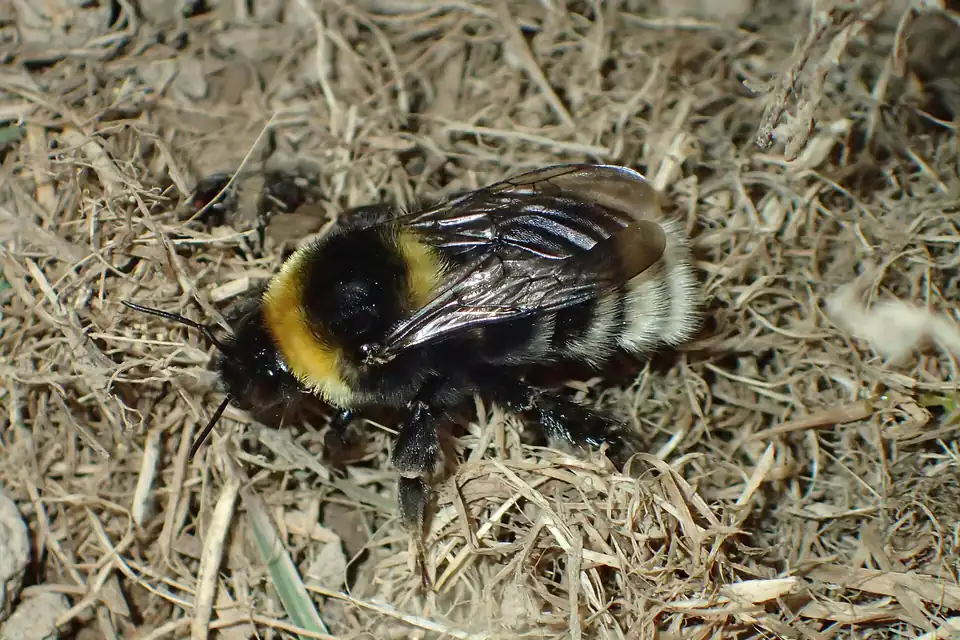
Even done well, the queen may be lost, or the colony may abandon the box. The photo shows a queen, which every nest depends on.
When destroying a nest is reasonable
If moving is impractical and the nest is a genuine hazard, destroying it is a reasonable choice. A technician does it in the evening, using a product approved for the purpose and following its label, and removes nesting material where it can be reached. Bumble bee nests hold little honey and comb, so there is far less left behind than with a honey bee colony.
Don't do it this way
- Pouring petrol, boiling water or household chemicals into the hole: dangerous, unreliable and harmful to soil and pets.
- Blocking the entrance: bees dig out elsewhere, sometimes indoors.
- Disturbing it in the middle of a warm day: the most likely way to get stung.
What it costs
The only published per-nest figure we found is from a Wellington firm, which lists $140 including GST per bumble bee nest, whether relocated or destroyed. No Auckland business we found publishes one. Access, height and travel can change the figure. See bumble bee nest costs.
Is it a bumble bee nest at all?
Check the insects before booking anything. Bumble bees are big, round and furry, and come and go one at a time. Shiny, sleek yellow-and-black insects pouring out of a hole are wasps, and a pest controller deals with those. See the bee or wasp guide and the lawn nest note.
If the bees here don't match yours, the front page on bee nest and colony removal in Auckland sets swarms, bumble nests and wall colonies side by side.
Quick answers
Can a beekeeper take my bumble bee nest?
Most beekeepers keep honey bees and don't collect bumble bees. A few specialists may, but it isn't common.
Will a moved nest come back?
The colony won't return to a spot once moved, though foragers may circle the old site for a day.
What time of year is best to move a nest?
Early spring, when the nest is small. By late summer the nest is near the end of its life, and waiting is usually simpler.