Bees around Warkworth
Out past the Puhoi to Warkworth motorway the bee picture changes: more hives on the land around you, more sheds and outbuildings, and longer drives for anyone coming to help.
Checked
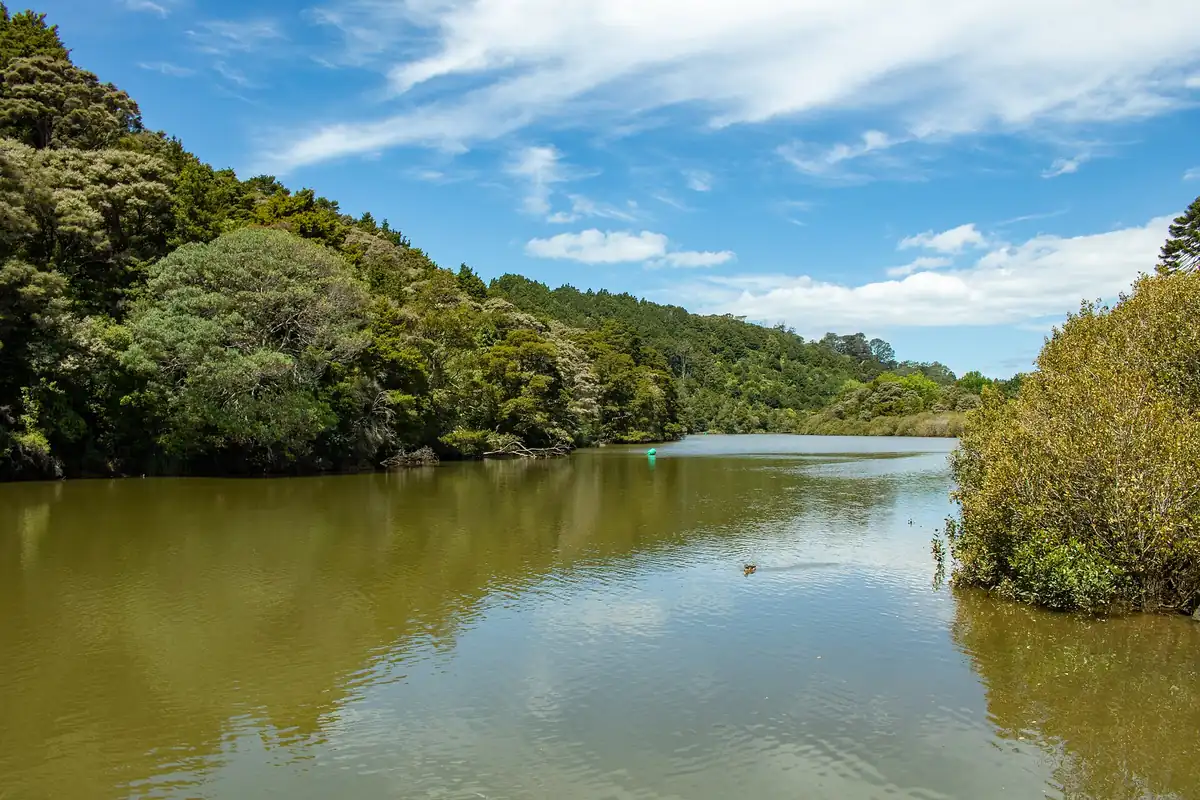
Warkworth is the market town for the Mahurangi district, on the river of the same name, with Matakana, Snells Beach, Algies Bay and the Kōwhai Coast within a short drive. The old town has villas and bungalows on the slopes above the river. Around it, new subdivisions have spread since the motorway from Puhoi opened in 2023, and beyond them are lifestyle blocks, vineyards, orchards and grazing hill country. The further you are from the town centre, the more your bee questions look like a farm's rather than a suburb's.
Hives on the land around you
Rural Rodney carries plenty of managed hives. Commercial and hobby beekeepers place apiaries on farms and blocks where there is forage, including regenerating mānuka and kānuka on the hill country. Every apiary must be registered with NZ Bee Health and Biosecurity, and its keeper must manage American foulbrood under the national pest management plan.
Living near apiaries means more bees on your flowers and more swarms in spring. It does not mean the bees belong to you or that you are responsible for them. If a swarm settles on your property, it is fair to ask nearby beekeepers whether it is theirs, and many will collect it gladly. If you don't know who keeps hives nearby, report the swarm through Honey and Bees New Zealand's list of collectors. The neighbours' bees note covers the etiquette and the council position.
Sheds, tank stands and farm buildings
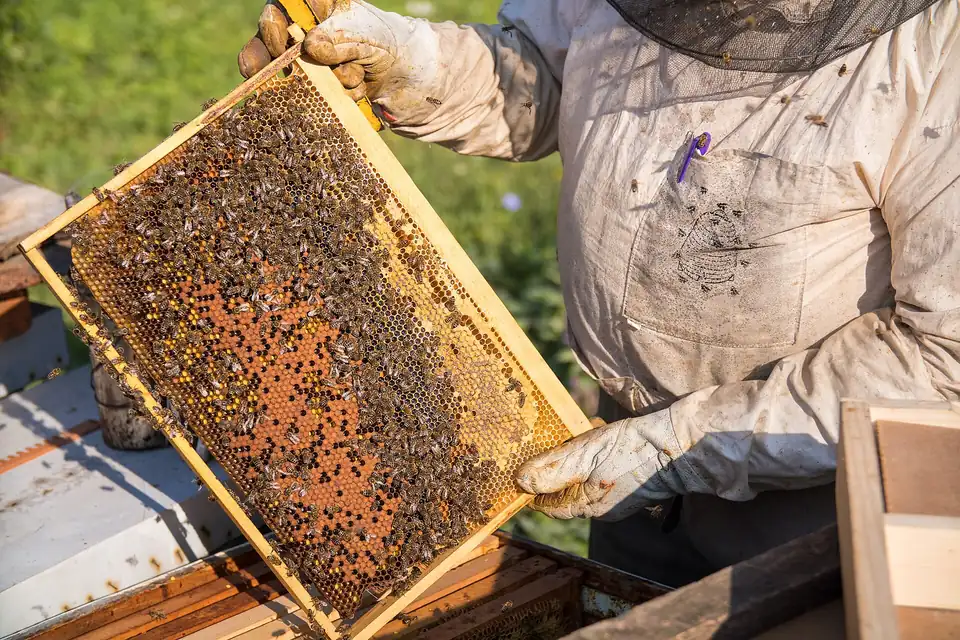

On a block, colonies turn up in places town houses don't have:
- Hay barns and implement sheds, between the cladding and the framing, or in a roof void above a lean-to.
- Old water tank stands and the space under a concrete tank lid.
- Disused farm machinery, boxes, drums and stacked pallets.
- Old farmhouses with their open eaves, dropped weatherboards and cold chimneys.
- Hollow trees in shelter belts and paddock trees.
A colony in a shed or a tree well away from the house can often be left, if nobody is near it and you are relaxed about bees. A beekeeper may want to cut it out for the bees. A colony in the house, in a shed you work in every day, or near stock water troughs where animals crowd the bees, is a different matter. The trees and gardens page explains the options for colonies outside the house.
Old farmhouses and villas in town
Warkworth's older houses have the same weak points as villas anywhere: weatherboards with no building paper, chimneys left capped badly, and soffits with gaps. Because they are older and often bigger, a long-established colony may have spread through several bays between studs. Cutting out an old colony is slower and messier than a new one. Read the cut-out page before agreeing to anyone simply spraying the wall.
Matakana gardens and vineyards
Matakana's vineyards, olive groves and gardens flower across spring and summer, and bumble bees are common in their mulched beds and grass margins. A bumble bee nest in a vine row or a garden bed rarely needs to go. Where one is beside a cellar door path or a children's area, it can be moved or removed in the evening when the bees are home. See bumble bee nests.
Travel, ladders and long drives
A technician coming to a lifestyle block may be driving a fair way, so travel is part of the price. To keep a visit efficient:
- Give exact directions, the gate code if there is one, and say whether dogs or stock are loose.
- Say how high the entry point is and whether the ground underneath is level, sloping or soft.
- Send a photo of the bees from a distance, and one of the building.
Work at height on rural buildings needs proper gear, and WorkSafe's working-at-height guidance applies to anyone doing paid work on a roof. A swarm high in a shelter-belt pine may be left to fly off rather than chased with ladders. The out-of-reach swarms page explains when that is the sensible call.
What a rural job tends to cost
Swarm collection can be free when a beekeeper wants the bees. For colonies inside buildings, a written quote after a visit is normal, and travel adds to it. Published reference points are few: one Auckland beekeeping business lists $210 for removing bees from a wall cavity (GST and repairs not stated), and a Wellington pest controller lists $140 including GST per bumble bee nest. The swarm cost page covers when a swarm turns into a paid job.
Further afield
The Hibiscus Coast is the nearest built-up coast to the south. West Auckland's Henderson has its own orchard history. All areas are listed on the Auckland areas page.
The rest of what we cover, from swarms to wall cut-outs, starts on our page about Bee Removal Auckland.
Quick answers
A swarm keeps coming out of the same tree on our block every spring. Why?
A hollow tree that has held a colony smells of old comb and propolis, and scouts from new swarms are drawn to it. Either a colony is still living there and swarming each year, or new swarms keep moving in. See why swarms return to the same spot.
Can I keep a swarm that lands on my block?
Only as a registered beekeeper. Anyone who keeps bees in New Zealand must register their apiary with NZ Bee Health and Biosecurity, and must inspect for American foulbrood.
Bees are drinking at our stock trough. Is that a problem?
Bees need water and will use troughs on hot days. Usually stock and bees get along. If bees are drowning in large numbers, float a board or some sticks in the trough so they can land safely.