Bees in Remuera
Large interwar houses, brick chimneys, clay-tiled roofs and gardens with century-old trees. In Remuera the bees tend to go high, and the roof is where most of the work happens.
Checked
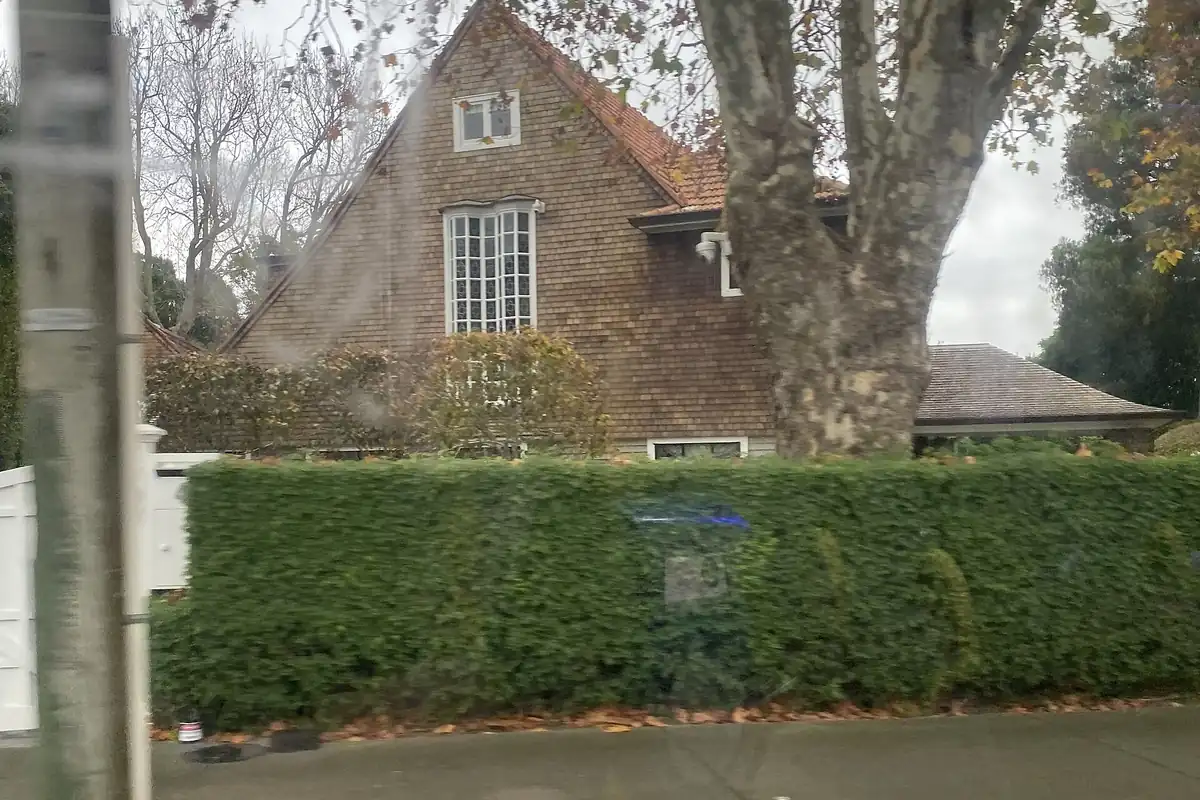
Remuera stretches along the ridge from Newmarket towards Meadowbank, around the volcanic cone of Ōhinerau / Mount Hobson, with Epsom and Greenlane alongside. Much of its housing went up between the 1900s and the 1940s: big villas, bungalows, Arts and Crafts houses and interwar brick homes, many with clay-tiled or slate roofs and two or three chimneys. Sections are larger than in most of the isthmus, and gardens hold oaks, planes, magnolias and camellias planted generations ago. Those features shape where bees end up.
The roof: tiles, chimneys and deep voids
A large hipped roof covered in clay tiles has a generous roof space and many small gaps where tiles meet ridges, valleys and walls. Add two or three brick chimneys, some no longer used, and a Remuera roof offers swarms a long list of entry points.
Colonies in these houses are most often found:
- In a chimney stack that no longer takes a fire, where a swarm can build comb in the flue or in a void beside it.
- Under ridge and hip tiles, where the mortar bedding has cracked.
- In the roof space above a bay or a sunroom, reached through a gap at the eaves.
- Behind decorative barge boards on gable ends.
Clay tiles are brittle and should only be walked on by someone who knows how. Many jobs on these roofs are done from inside the roof space, or by lifting and relaying a small number of tiles. Chimney colonies have their own page: bees in a chimney.
Old trees in big gardens
Mature trees are a feature of Remuera, and old trees develop hollows. A colony living in a hollow oak or plane can survive for years and may swarm every spring, sending clusters into neighbouring gardens. Signs of a tree colony are a steady stream of bees at one hole, high or low, and bees present on fine days through winter.

A tree colony well above head height is usually harmless and can be left. If branches or the trunk need work for other reasons, tell the arborist about the bees so they can plan for them. Some significant trees in Auckland are protected, so check with Auckland Council before cutting into one to reach a colony. The trees and gardens page explains what can be done.
Bumble bees in established borders
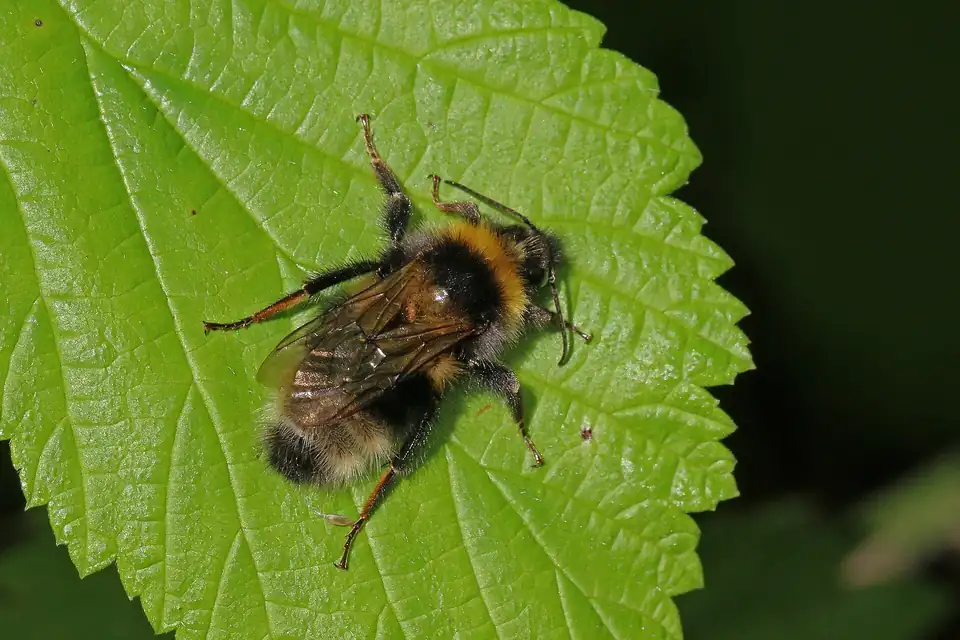
Deep borders, old compost corners and tired lawns suit bumble bees. Several species live in Auckland, and the garden bumble bee in the photo is one of the four introduced to New Zealand. A nest in a border is usually tolerated by the gardener and gone by autumn. The New Zealand bumble bee species note shows how to tell them apart.
Heritage-listed and older houses
Some Remuera houses are on Heritage New Zealand's List or scheduled in the Unitary Plan. Removing bees doesn't change a heritage building, but opening up walls, ceilings or chimneys to get comb out might, if original fabric is damaged. On a scheduled house, plan any opening with care and talk to the council if more than minor repair is needed. Most cut-outs can be done through a small opening in a less visible place, such as a roof space, a cupboard or a back wall.
Two storeys and steep driveways
Height is the main factor in Remuera prices. Two-storey houses on the slopes north of Remuera Road, steep driveways and tall chimneys mean ladders, roof anchors or sometimes scaffolding. Anyone paid to work on a roof must manage the fall risk under WorkSafe's working-at-height rules, which is part of why roof jobs take longer.
When asking for a quote, describe:
- Which storey the bees are on, and how high the entry point is.
- Whether the roof is tiles, slate or iron.
- Whether there is a roof space manhole you can reach.
- Any chimney that is still used.
Cost guide for Remuera
Garden swarms are usually free to have collected; roof and chimney colonies are not, and the price rises with every metre of height. For a sense of scale, an Auckland beekeeping business publishes $210 for a wall-cavity removal, silent on GST and repairs, and a Wellington company publishes $140 including GST per bumble bee nest. Roof tiling and chimney repair sit with other trades. The wall and roof cost page breaks a quote into its parts.
Schools, churches and larger buildings
Remuera and Epsom have many schools, churches and large older buildings with high gables, bell towers, deep eaves and roof spaces that are rarely visited. Colonies in buildings like these can grow for a long time before anyone notices, and they are often in places that need an elevated platform to reach. If you manage one of these buildings, include the bee check in the annual maintenance round, especially of gutters, gable vents and any louvres. For a school, timing matters: work at height over a playground is best done in the holidays or after hours, with the area closed off. Tell us the building's use, the height of the entry point and any access restrictions when you ask for a quote.
Neighbouring parts of Auckland
To the west, Grey Lynn has smaller villas packed tightly together. East along the coast, Howick has a different housing era altogether. The Auckland areas page compares them.
The rest of what we cover, from swarms to wall cut-outs, starts on our page about getting bees removed in Auckland.
Quick answers
Do bees damage clay tiles?
No. Bees don't chew tiles or brick. The damage comes from the comb and honey inside, and from the work needed to reach them. A colony left too long can leak honey into ceilings.
We light our fire in winter. Will the bees leave?
Smoke may drive some bees out, but it will not remove the comb, and melting wax and honey in a flue is a fire risk. Have a chimney colony cleared before you light the fire.
Can a beekeeper rehome bees from a chimney?
Sometimes, if the comb can be reached from the fireplace or the top of the stack. Chimney cut-outs are among the harder jobs, and many beekeepers won't take them on.