Bees in the ceiling or roof space
A hum above a bedroom, bees around a downlight, a busy gap under the eaves. Roof-space colonies are common in Auckland, and they are usually reached from inside the roof.
Checked
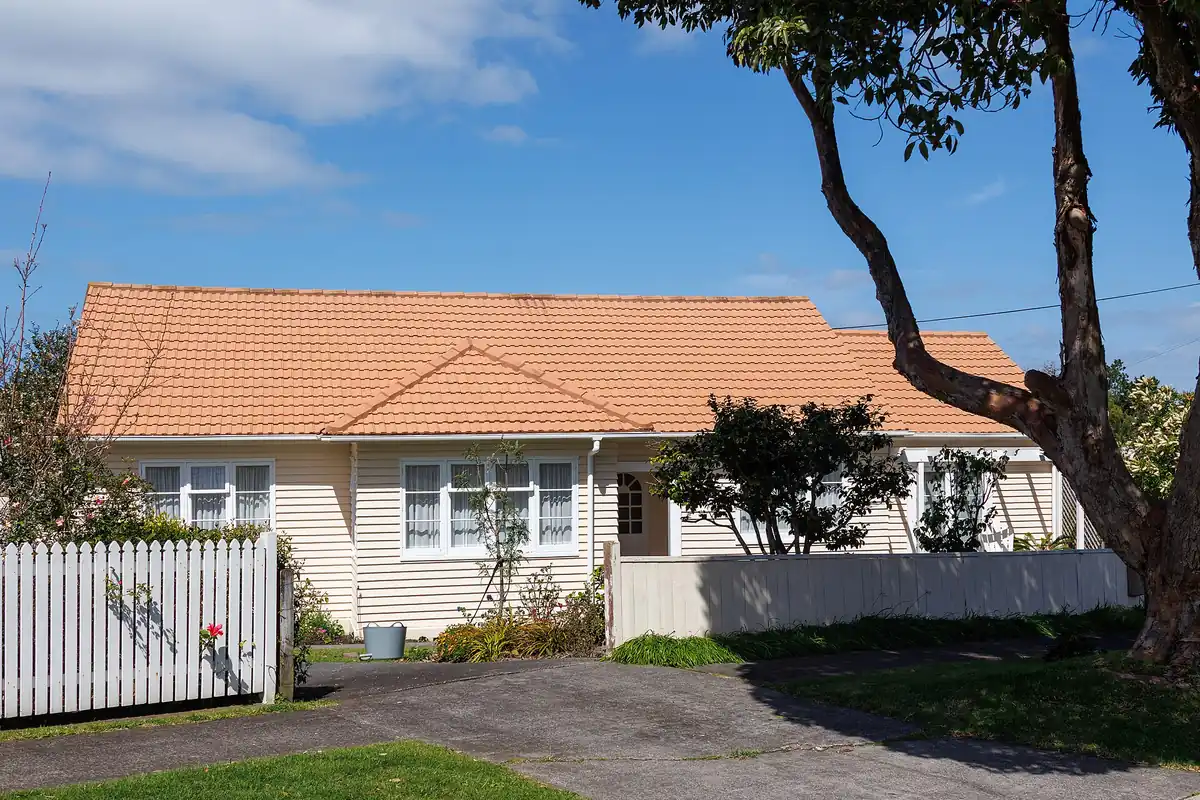
Honey bees often get into the roof of an Auckland house through a gap in the soffit, at the eaves, along the barge boards or where a lean-to roof meets the main roof. Inside, they build comb hanging from rafters, between ceiling joists or along the eaves void. Removal usually means working from inside the roof space, through the manhole, or taking down a section of soffit lining, and cutting out all the comb and honey before closing the entry. Sometimes a section of ceiling has to come down from below, which is the messiest option and needs a plasterer afterwards.
Signs the colony is in the roof
- A steady stream of bees at one point under the eaves or at the roof edge.
- A hum through the ceiling of one room, loudest on warm afternoons.
- Bees inside the house near downlights, extractor fans or the manhole.
- A warm patch on the ceiling, sometimes with brown staining.
- In older colonies, honey seeping through the ceiling or a sweet smell.
For bees coming into rooms, see bees inside the house for what to do today.
Where the comb usually is
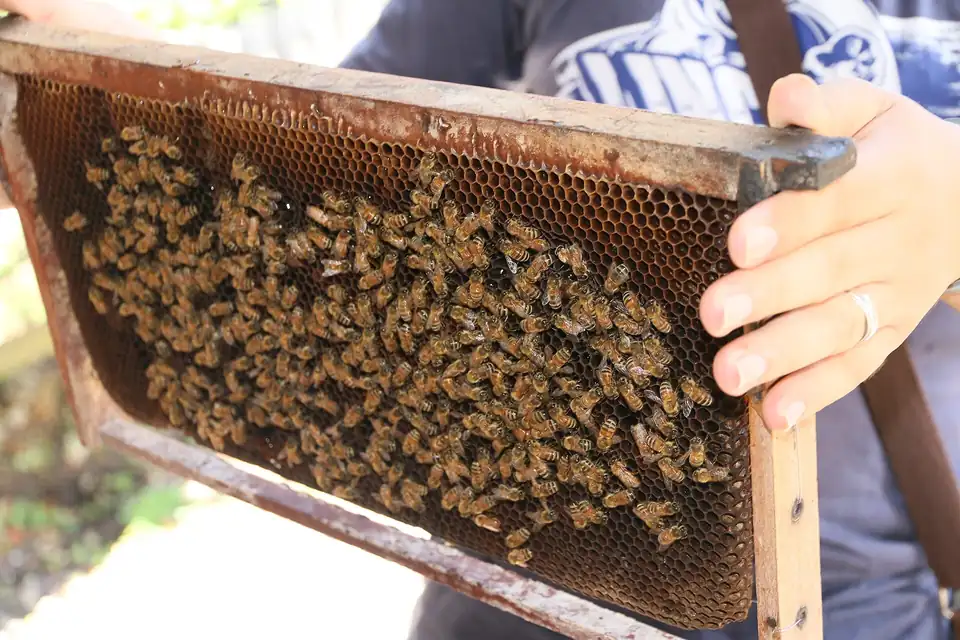

Bees usually build close to their entrance:
- In the eaves void, just inside the soffit, between the wall top plate and the fascia.
- Between ceiling joists, sitting on the back of the ceiling lining, near the eaves.
- Hanging from rafters in a roomy roof space, like the frame of comb in the photo but in irregular sheets.
- Above a lean-to or a flat-roofed extension, where there is little room to work.
The narrower the space, the harder the access. Low-pitched roofs from the 1960s and 70s often have tight eaves voids; older villas and bungalows usually have more room.
How the job is done
- Find the comb. From the entrance, the hum and sometimes a thermal camera, the technician works out where the nest sits.
- Choose the access: through the manhole and across the joists, by taking down soffit sheets from outside, by lifting a few roof tiles, or, as a last resort, by cutting a section of ceiling from below.
- Remove the comb and honey, and the bees. Where a beekeeper is taking the colony, brood comb is tied into frames.
- Clean up honey, wax and debris, and remove soaked insulation.
- Close the entry, and refit soffits or tiles.
Working on joists in a roof space has its own hazards: stepping through the ceiling, electrical cables and old insulation. Some older Auckland houses have loose-fill insulation or materials that need care. Height work at the eaves must follow WorkSafe guidance for working at height.
The ceiling lining
If the comb sits directly on the back of the ceiling and the roof space is too tight to reach it, the ceiling may need to come down in that spot. That is a bigger repair: plasterboard, stopping and painting, or matching an old lath-and-plaster ceiling. Ask before work starts which approach is planned, and who does the repair. See after the bees are out.
Why the comb can't be left
Comb and honey left in a roof space soften on hot days, leak through the ceiling, smell, attract wax moth and ants, and invite robbing bees, which can spread American foulbrood to other hives. An empty nest also attracts the next swarm. Read why not to spray a wall colony.
What it costs
Roof-space jobs are quoted after a visit because access varies so much. The published reference points we found are one Auckland beekeeping business's $210 for removing bees from a wall cavity (GST and repairs not stated) and a Wellington firm's $140 including GST for destroying a honey bee colony in a cavity, which excludes comb removal. Ceiling repairs are usually separate. See wall and roof costs.
If the bees here don't match yours, the front page on Auckland Bee Help sets swarms, bumble nests and wall colonies side by side.
Quick answers
Can I go up into the roof and look?
You can look from the manhole with a torch, but don't approach the comb. Bees defend the nest, and joists are easy to slip off.
The bees are in my soffit, not the roof. Is that easier?
Usually. A soffit colony can often be reached by removing soffit sheets from outside, which is simpler to repair.
Are bees in the roof a fire risk?
Not usually. The concern is honey leaking into the ceiling and the risk of bees coming indoors.