Why spraying bees in a wall backfires
A can of spray through the entrance looks like the cheap fix. It usually leaves the expensive part of the problem behind, inside your wall.
Checked
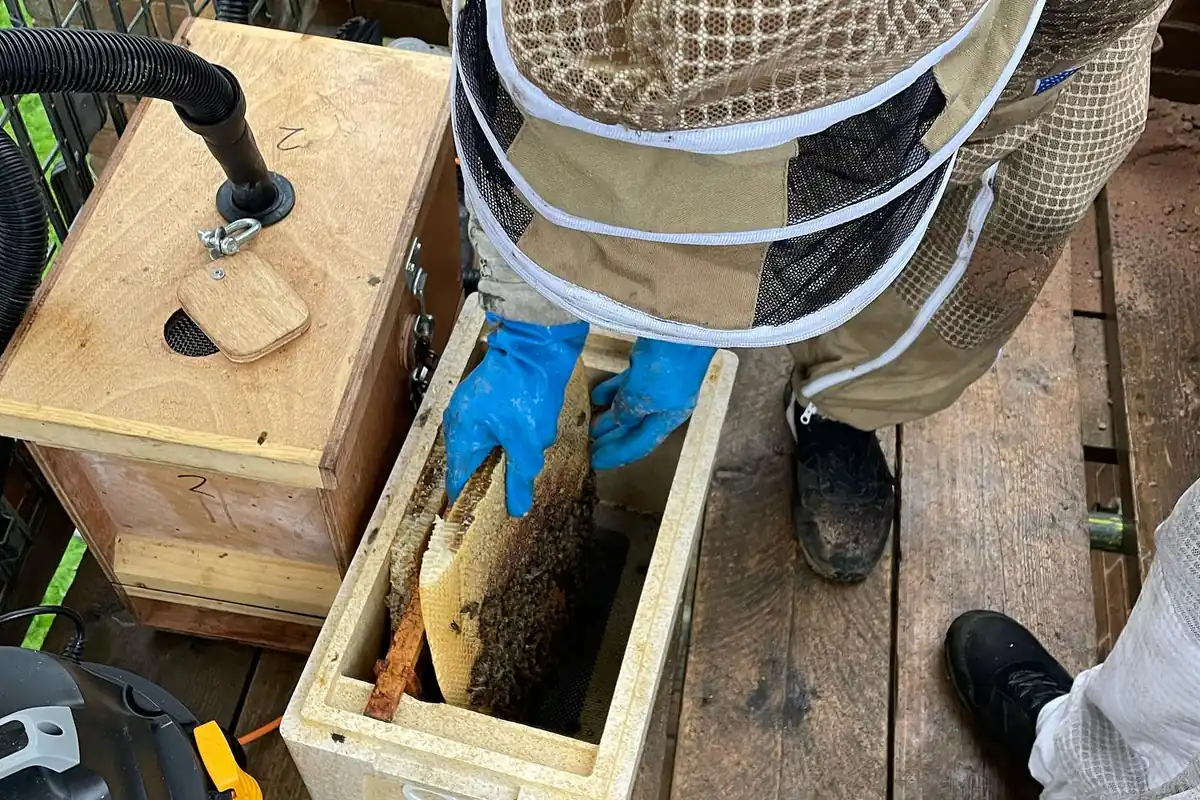
Spraying insecticide into the entrance of a bee colony in a wall does kill bees. What it doesn't do is remove the colony. The comb, the honey, the dead brood and the dead bees all stay inside the cavity. In a few weeks that mass starts to cause problems that cost more than the original job: honey leaking through linings, smells, wax moth, ants, robbing bees from other hives, and a risk of spreading American foulbrood. UC Riverside's bee researchers put it plainly: killing the bees without removing the comb leads to trouble.
What is actually inside the wall
An established colony builds sheets of wax comb, parallel and about a bee-space apart, filling the cavity between studs or joists. In a colony a few months old, that can mean several kilograms of comb holding honey, pollen and developing brood. Bees keep the nest at a steady temperature and constantly fan and clean it. Once the bees are dead, nobody is managing it.
Honey leaks and stains
Comb is held together and kept cool by the living colony. Without bees fanning, comb in a sun-warmed wall softens. Honey runs out of uncapped cells and, on hot days, comb can collapse. Honey soaks into timber, plasterboard and insulation, leaving dark stains on ceilings and walls that keep coming back through paint. It is sticky, it ferments, and it draws other insects.
Smells and secondary pests
Thousands of dead bees and dead brood rot. In an enclosed wall, that produces a smell that can last weeks. The comb then attracts:
- Wax moths, whose larvae tunnel through old comb and leave webbing and debris.
- Ants, including Argentine ants, which arrive for the honey.
- Cockroaches and rodents, attracted by the stores.
Robbing bees and disease
Honey left in a dead colony is free food for every honey bee in the neighbourhood. Foragers from other colonies, including managed hives, find it quickly and carry it home. NZ Bee Health and Biosecurity identifies robbing as a way American foulbrood spreads between colonies, because spores in honey from a diseased colony infect the hives that rob it. If the sprayed honey also carries insecticide, robbing bees carry that home too. The American foulbrood note has the detail.
New swarms move in

An empty cavity lined with old comb smells exactly like a good home to swarm scouts. A wall where a colony was sprayed often gets a new swarm the next spring, and you are back where you started, with more old comb. See why swarms return to the same spot.
Sprays and the law
Insecticides in New Zealand are regulated under the Hazardous Substances and New Organisms Act 1996, and must be used as their labels direct. Many household sprays are not made for nests in wall cavities, and most labels carry warnings about bees. Over-the-counter "bee nest" sprays are generally designed for wasp nests. Pouring or pumping products into a wall cavity also risks contaminating linings, insulation and wiring.
When treating a colony is the right call
Sometimes a colony can't be rehomed: no beekeeper will take it, it is unhealthy, or the comb can't be reached without major damage. Then a technician may treat the colony. Done properly, that is followed by opening the cavity and removing the comb and honey, and sealing the entry so no other bees can reach what is left. Any quote to deal with a wall colony should say whether the comb comes out. If it doesn't, ask why, and what happens to it. Our checklist before hiring a bee remover covers this.
What to do instead
- Leave the entrance open and the bees undisturbed.
- Ask a beekeeper whether the colony can be rehomed.
- If not, ask for a written quote that includes comb removal and closing the opening.
The cut-out page walks through a live removal, and after the bees are out covers cleaning and repairs.
This note sits under Auckland Bee Help, where the front page sorts out which bee jobs need a visit and which don't.
Quick answers
I already sprayed. What now?
Keep the entrance open for a few days so surviving bees can leave rather than enter the house. Then arrange for the comb to be removed and the cavity cleaned before the weather warms.
Can I just seal the hole after spraying?
Sealing traps the honey and comb inside, where it still melts and rots. It also stops the surviving bees leaving, so they may come out inside the house.
Does smoke drive bees out of a wall?
Smoke calms bees and may make some leave, but the comb stays and the colony usually returns. It isn't a removal method.