Bee swarms in Auckland
A humming ball of bees on a branch, fence or car is a honey bee swarm. It is usually calm, often gone within a day, and a beekeeper may well collect it for nothing.
Checked
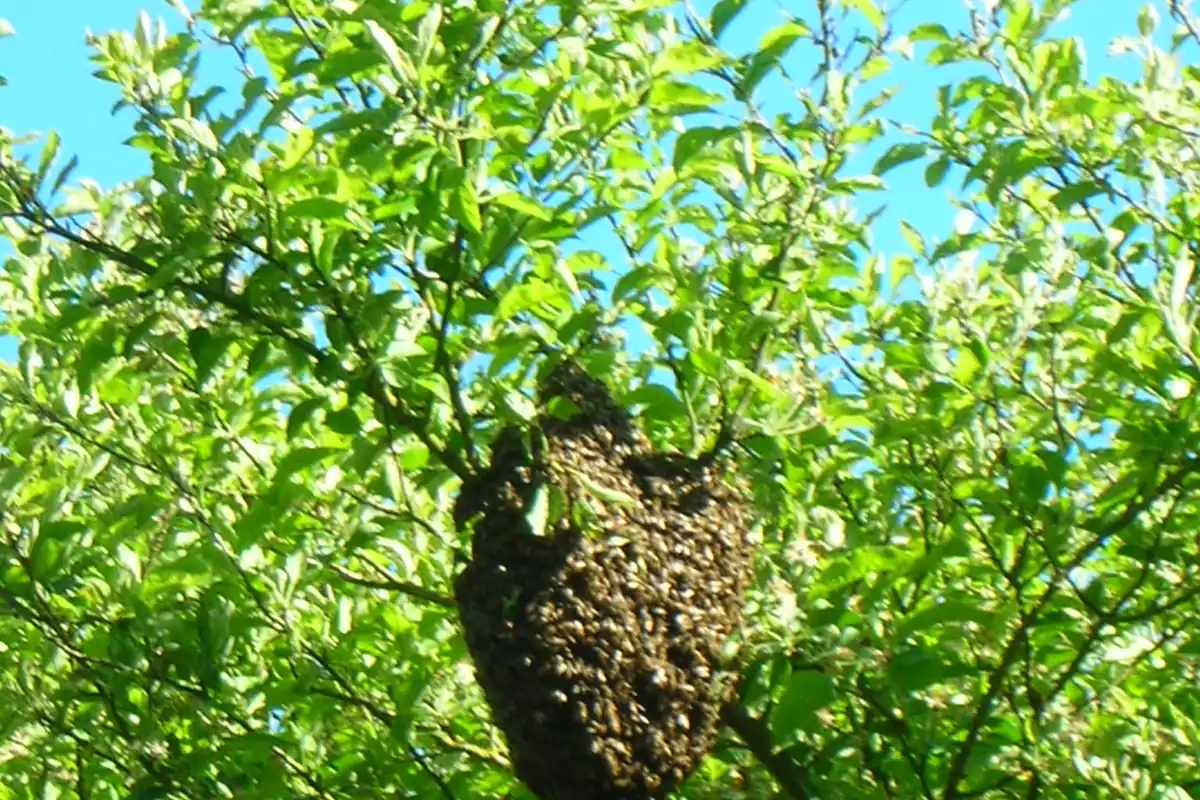
A bee swarm is a honey bee colony in the middle of moving house. Thousands of bees cluster around their queen on whatever is handy, often a branch, fence post, letterbox or car, while scouts search for somewhere permanent to live. In Auckland the people who deal with swarms are mostly beekeepers and volunteer collectors, and a swarm in easy reach is often collected free, because it can become a new hive. It turns into paid work when the swarm is out of reach or has already moved into a building. This page covers why swarms happen, how long they stay, how safe they are, what collection looks like and when you might pay.
 Play film, 3:13
Who collects bee swarms in Auckland?
Start with a beekeeper. Free swarm collection is organised by the Auckland Beekeepers Club, whose volunteer members do the pickups, and Honey and Bees New Zealand keeps a list of swarm collectors by region, including Auckland. Some private bee businesses collect swarms free too, and charge only for harder work.
Where the swarm is decides who to call:
- In the open and within reach (a shrub, fence, post, letterbox, car): a swarm collector. The simplest job there is.
- High in a tree or somewhere awkward: a collector may still come, but might need gear or charge for it. If nobody can reach it, it will usually leave on its own.
- Disappearing into a gap in a wall, roof, chimney or tree trunk: act fast. Once the bees start building comb inside, it stops being a swarm and becomes a colony. See bees in walls and roofs.
If a beekeeper can't help, for example because the bees are already inside the house, use the form below and we'll arrange for a local technician to call you back and quote.
Why do honey bees swarm?
Swarming is how a honey bee colony becomes two. When a hive gets crowded in spring, the workers raise a new queen. Before she emerges, the old queen flies off with a large share of the workers to start again elsewhere, and the bees left behind carry on with the new queen.
According to Honey and Bees New Zealand, swarming can start as early as August and carry on through January, and the Auckland Beekeepers Club sees most calls from September to December. The bees gorge on honey before they leave and have no brood or stores to protect, which is a big part of why a swarm is usually so placid.
How long does a swarm stay?
Usually a few hours, sometimes a couple of days. The cluster waits while the scouts agree on a new site, then lifts off together. The University of Georgia's bee programme says most swarms move on within about a day.
A swarm that lingers for several days may be struggling to find a home, and those are the ones that sometimes pick a gap in a nearby house. If bees are still there after a day, or you notice them going in and out of a crack rather than hanging in a clump, call a collector without waiting.
Are swarms dangerous?
Rarely, if they are left alone. According to Honey and Bees New Zealand, swarming bees aren't aggressive unless provoked. Stings tend to follow somebody spraying, hosing, poking or throwing something at the cluster.
While you wait:
- Bring children and pets inside, or keep them well back.
- Don't spray the swarm with insecticide or water, or try to knock it down.
- Don't cover it or try to trap it.
- Shut nearby doors and windows.
What happens when a swarm is collected?
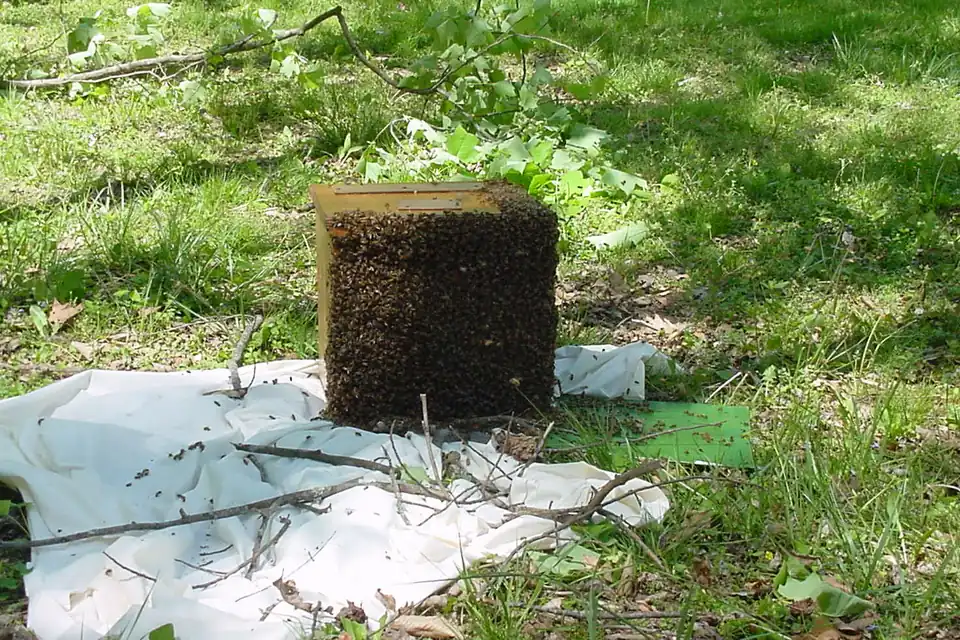

For a swarm in the open, it is quick. The collector holds a box under the cluster and gives the branch a sharp shake or brushes the bees in. If the queen goes in, the rest follow. The box is often left in place until evening so stragglers can join, then taken away to a hive. It is usually under an hour of work.
A collector will usually want to know:
- What the swarm is hanging from, and how high
- Roughly how big it is (a grapefruit, a football, a rugby ball or bigger)
- How long it has been there
- Whether it is in the open or heading into a gap
- A photo, snapped from well back
Whoever keeps the bees must be a registered beekeeper. NZ Bee Health and Biosecurity runs registration under the American foulbrood pest management plan, and every hive in the country has to be on it. To keep the bees alive without lifting a finger yourself, see moving a swarm on without killing it.
When does a swarm cost money?
A swarm in easy reach is often collected free in Auckland. Expect a charge when it needs a tall ladder, a cherry picker or a climber, when it is somewhere tricky, or when the bees have moved into a building and need cutting out.
A swarm that has turned into a colony inside a wall is the expensive version, because the comb and honey have to come out and the opening has to be repaired. The cost guide has the published prices we could find.
If the bees here don't match yours, the front page on bee removal around Auckland sets swarms, bumble nests and wall colonies side by side.
Quick answers
A swarm has landed on my car. What now?
Leave the car parked if you can, keep people away and ring a swarm collector. A swarm on a car is usually easy to box up, and the bees often leave by themselves within a day. Don't drive off with them on board, and don't spray them.
Will the swarm come back?
The same swarm won't: it is heading for a new home. But properties near hives can see several swarms in a season, and the scent of an old nest site draws new swarms to it. If swarms keep settling in the same spot, ask the collector why.
Why are there so many swarms in spring?
Colonies build up fast once the flowers come out, and a crowded hive raises a new queen and splits. In New Zealand that lasts roughly from August into January.
Can I just leave a swarm alone?
Often, yes. A swarm in the open usually leaves within a day or two. Keep an eye on where it goes. If the bees start moving into your wall or roof, ring a collector straight away.
What happens to the bees afterwards?
A collector usually takes them home and puts them in a hive, where they become a new colony. That is why so many beekeepers will collect a healthy swarm for free.