What a bee cut-out involves
A cut-out removes a honey bee colony from a building alive: the bees, the comb and the honey. It is slow, careful work, and it is the most thorough way to deal with bees in a wall.
Checked
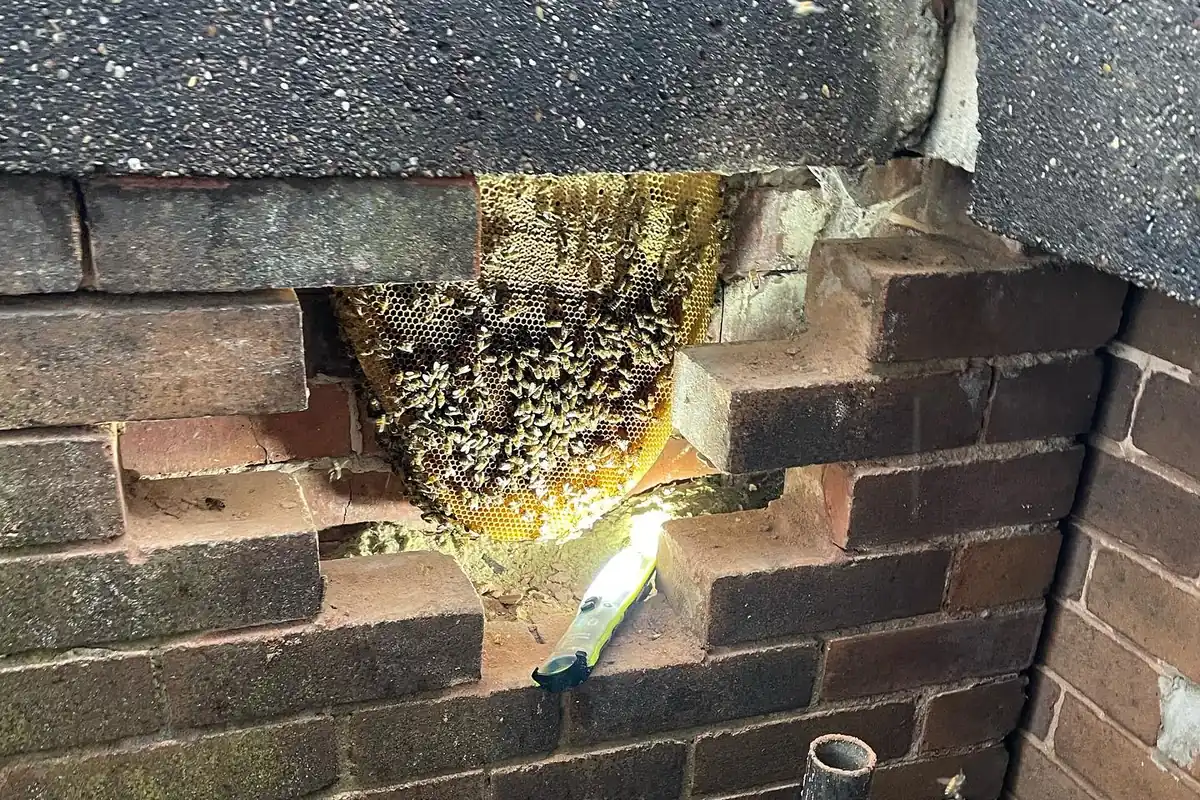
A cut-out is the removal of an established honey bee colony from a building by opening the cavity, cutting out the comb, and moving the bees and brood into a hive. Done well, it leaves no comb or honey in the wall, gives the bees a chance of survival with a beekeeper, and finishes with the opening closed. It takes longer than treating a colony, typically a few hours on site depending on the size and access, and the opening usually needs some repair afterwards. An Auckland swarm collector notes that opening walls and roofs is invasive and expensive with no guarantee, which is why many beekeepers don't take cut-outs on.
Step 1: find the nest
The technician watches the entrance, listens through the lining, and may use a thermal camera to see the warm comb. Bees usually build above and beside the entrance, between two studs in a timber wall, or along joists in a ceiling. Pinpointing it keeps the opening small. See signs of bees in a wall.
Step 2: decide where to open
The opening can be made from outside or inside:
- Outside: lifting weatherboards, a soffit sheet or bricks. Usually preferred on timber houses, because weatherboards can be refixed.
- Inside: cutting plasterboard or lining. Sometimes quicker, but makes more mess indoors and needs a plasterer.
On villas and heritage homes, the aim is to lift and refix original boards rather than cut them.
Step 3: open up and expose the comb
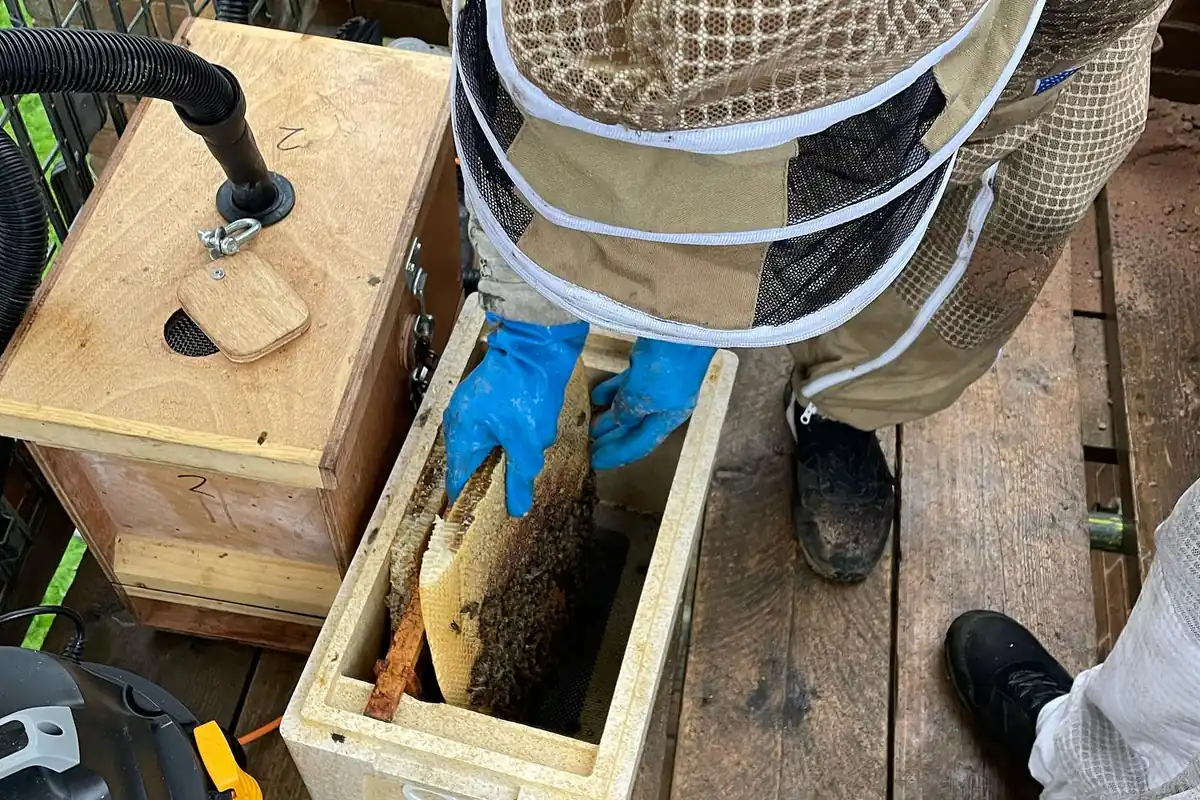

With the cavity open, the comb is visible: parallel sheets of wax, with honey at the top and edges and brood in the middle. Bees are calmed with a little smoke. The photo shows this stage on a brick-wall job in the UK.
Step 4: cut the comb and move the brood
Each sheet of comb is cut out. Brood comb is trimmed and tied or banded into empty hive frames so the colony keeps its young. Honeycomb is separated into a bucket. Many removers use a gentle bee vacuum to collect the adult bees, or brush them into the box. Finding the queen is the key: if she goes into the box, the colony will stay.
Step 5: clean the cavity
Every scrap of comb, wax and honey is scraped out. Honey-soaked insulation is removed. The cavity is wiped down, because the smell of old comb and propolis draws new swarms. See why swarms return to the same spot.
Step 6: close up
The opening is closed, temporarily or with a finished repair, depending on what was agreed. The original entrance gap is sealed so no bees can get back in. A hive box with the remaining foragers may be left nearby until evening so returning bees can join the colony.
Step 7: the bees go to a beekeeper
The hive goes to a registered beekeeper, who checks it for disease, treats for varroa and manages it from there. Anyone keeping bees in New Zealand must be registered with NZ Bee Health and Biosecurity. Read what happens to a collected swarm.
When a cut-out isn't possible
Sometimes the comb can't be reached without major damage, no beekeeper wants the colony, or it is weak or diseased. Then the colony may be destroyed, but the comb should still be removed. A quote that kills the bees and leaves the comb is only half a job. See why not to spray a wall colony.
What it costs
Published prices for cut-outs are rare. One Auckland beekeeping business lists $210 for removing bees from a wall cavity, without stating GST or whether repairs are included. A Wellington pest controller lists $140 including GST for destroying a colony in a cavity, which does not include removing the comb. Old, large colonies, height, special cladding and repairs all add to the figure. See wall and roof costs.
If the bees here don't match yours, the front page on Bee Removal Auckland sets swarms, bumble nests and wall colonies side by side.
Quick answers
How long does a cut-out take?
A small, new colony at ground level may take an hour or two. A large old colony in a ceiling or a two-storey wall can take most of a day.
Will I need a builder afterwards?
Often for a finished repair, especially on plaster linings or special cladding. Ask what closing-up is included.
Can a cut-out be done in winter?
Yes. Colonies are smaller in winter, but cooler weather means brood must be handled quickly to keep it warm.