What bee removal costs in Auckland
Anything from nothing to several hundred dollars plus a builder. It comes down to which bees they are and where they have settled.
Checked
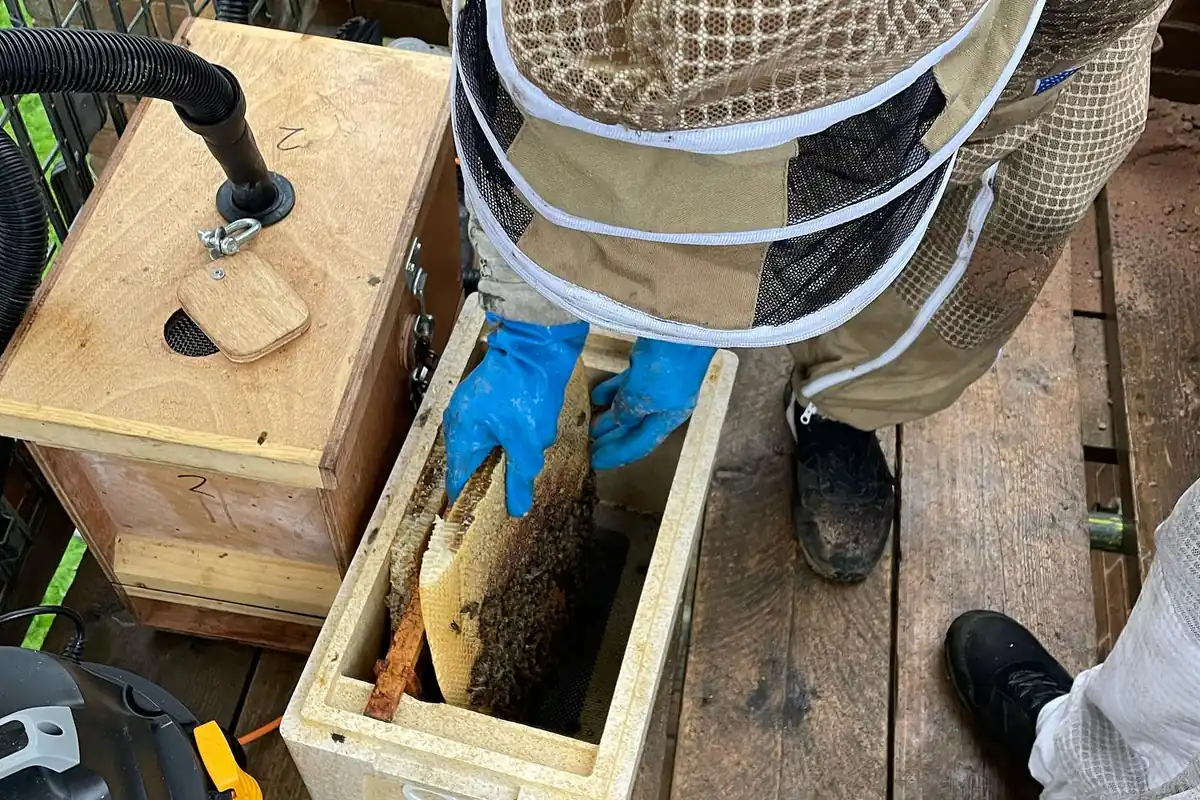
Bee removal in Auckland can cost nothing or run to several hundred dollars before repairs. A honey bee swarm hanging in the open is often collected free by a beekeeper. Bumble bee nests and honey bees living inside a building are paid work, and very few Auckland businesses publish a price for either. The table shows every published figure we could check in October 2026, with the source, so you can see exactly where each number comes from. Treat them as a guide: the person who looks at your job sets the real price.
| Job | Published price | Source and notes |
|---|---|---|
| Honey bee swarm in the open | Often free | Auckland Beekeepers Club volunteers and private collectors in Auckland |
| Swarm high up or hard to reach | No published price | Collectors may charge for ladders or climbing gear |
| Bumble bee nest, moved or destroyed | $140 per nest, GST included | A Wellington pest controller; no Auckland business publishes one |
| Honey bees removed from a wall cavity | $210 | One Auckland beekeeping business; GST and wall repairs not stated |
| Honey bee colony destroyed in a cavity | $140, GST included | The same Wellington pest controller; comb removal not included |
| Opening and repairing the wall, ceiling or roof | Quoted separately | No business we found publishes this |
Prices were checked on 27 October 2026. Always ask whether a quote includes GST.
Is bee removal ever free?
Not always. A swarm in easy reach is often collected free in Auckland, because a beekeeper can turn it into a hive. The Auckland Beekeepers Club arranges this through volunteers. You will usually pay for bumble bee nests, for bees living in a building and for anything that needs height equipment.
Free collection is for the simple case: a cluster in the open that can be boxed up in under an hour. Beekeepers don't generally take bumble bee nests, and an Auckland swarm collector says it doesn't normally open walls for established colonies because the work is invasive and expensive. Those jobs go to a beekeeper who takes on cut-outs, if you can find one, or to a pest controller.
Keeping it free, or close to it
If it is a honey bee swarm in the open, ring a collector before it moves anywhere awkward.
- Ring early. A swarm collected while it is still hanging outside is often free. The same bees a week later, inside your wall, are a paid job.
- Send a clear photo and say how high it is and what it is on.
- Make access easy. Clear the way and mention gates, dogs and parking.
- Don't spray first. Dead or stirred-up bees are harder to collect, and beekeepers won't want them.
Why colonies in walls cost more
Because of the work. UC Riverside's bee researchers say removing a colony from a building almost always means opening the cavity, cutting out the comb and honey, cleaning the space and repairing the wall. That can be one person for an hour or most of a day plus a builder.
What moves the price:
- Size and age of the nest. A colony that has been there a year holds far more comb than one that arrived last week.
- Height and access. Upper storeys, roof spaces and chimneys need ladders, scaffolding or a cherry picker.
- Cladding and linings. Weatherboards come off more easily than brick, plaster or tiles.
- Repairs. Some people close up the opening, others leave it for a builder.
- Kill or rehome. Destroying a colony is quicker than cutting it out alive, but the comb and honey still have to come out afterwards, which adds cost unless the first quote covers it.
The walls and roofs guide explains why the whole nest has to come out, and why spraying a wall colony is a false saving.
What makes a quote higher or lower?
The kind of bees, where they are, how long they have been there and whether repairs are included. Travel, after-hours visits and a return trip to check the nest is gone can add more. A good quote lists each part separately so you can compare like with like.
Ask what happens to the comb and honey. A low price to kill a colony in your wall can leave you with the clean-up and a second bill later.
Before you price a job, the front page on Auckland Bee Help helps you name the kind of bees you have.
Quick answers
What do beekeepers charge?
Many Auckland beekeepers collect swarms in the open for nothing, because a healthy swarm is useful to them. Those who also do cut-outs charge for the harder work: one Auckland business lists $210 for removing bees from a wall cavity. Beekeepers don't usually take bumble bee nests.
Is there a free way to deal with bees?
Wait, or ring a swarm collector. Most swarms leave within a day or two, and in Auckland they are often collected free. A bumble bee nest dies out on its own within a few months, so leaving it costs nothing. Honey bees living in a building need paid help.
Why don't more Auckland businesses publish bee prices?
Because the job varies so much with height, access and the size of the nest that most prefer to quote after seeing it. That is why our table includes a Wellington figure and says so.
What should a quote cover?
Which bees they think they are, whether they will be rehomed or killed, whether all the comb and honey comes out, whether opening and repairing the wall is included, whether the figure includes GST, and the plan if bees return.
Can my neighbour keep bees in Auckland?
Yes. Auckland Council allows beekeeping in urban areas, provided the keeper takes reasonable steps to avoid nuisance, including swarming. Every hive must also be registered with NZ Bee Health and Biosecurity.
Where this comes from
- Auckland Beekeepers Club, Report a swarm (free collection)
- Bee Swarm (Auckland), free swarm removal
- Published price lists of New Zealand bee removal and pest control businesses, checked 27 October 2026 (a guide only, not a quote)
- Bee Swarm (Auckland), Bees in a cavity in the wall or roof
- UC Riverside, Unwanted honey bees
- Auckland Council, Animal Management Bylaw