Getting rid of a bees nest safely
The safe way depends on which bees they are and where they have set up. Here is the safe DIY part, and the point to hand over.
Checked
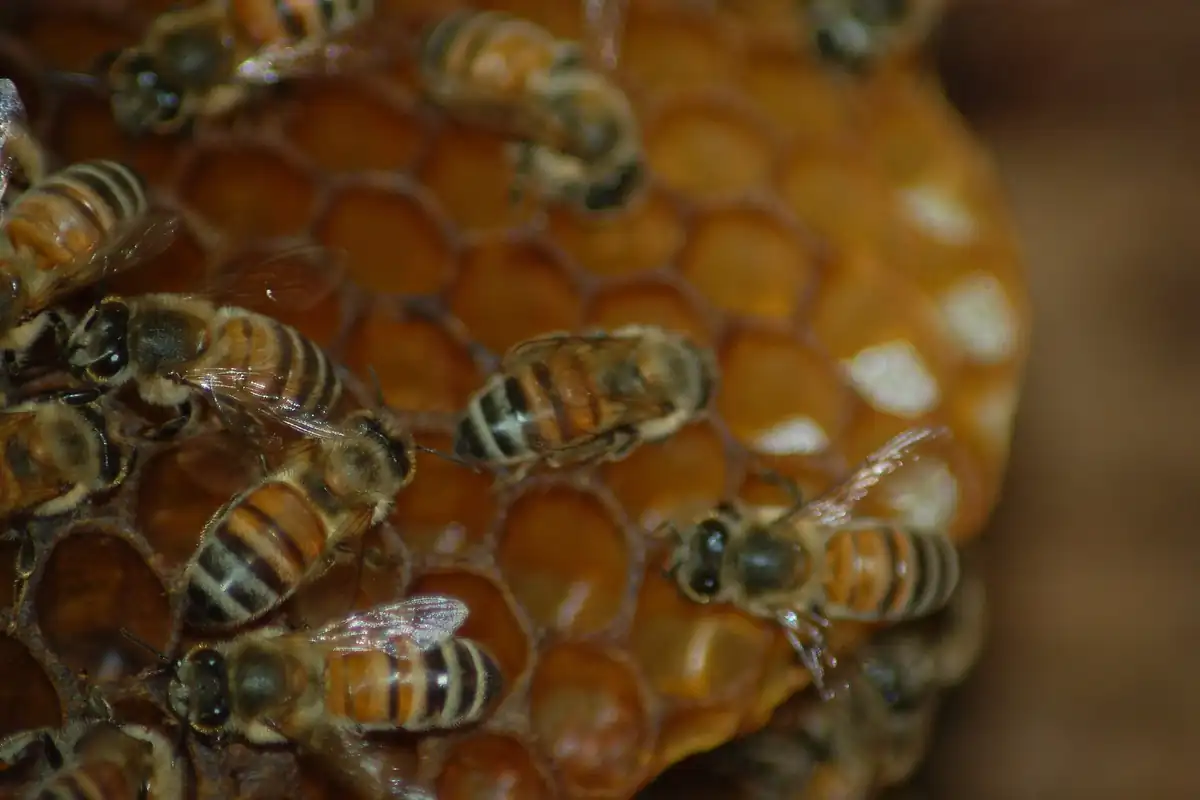
The safe way to get rid of a bees nest is to identify it first and then choose the fix that suits it. A honey bee swarm hanging off a branch can usually be collected by a beekeeper, often free. A bumble bee nest can usually be left to die out, or moved. An established honey bee colony inside a wall, roof or tree has to be cut out in full, which is skilled work. Spray almost never settles it. This guide works through each case, the home remedies people try, and the point where doing it yourself stops being sensible.
Start by working out what you have
Look from a safe distance at the insects and at how busy the entrance is. Don't spray, block or dig until you know.
| What you see | What it is | What to do |
|---|---|---|
| A clump of bees hanging off a branch, fence or post | Honey bee swarm | Ring a swarm collector or beekeeper |
| A few big furry bees using a hole in the ground, compost or a wall | Bumble bee nest | Leave it, or have it moved or removed |
| Small brown bees pouring in and out of one gap in a wall, roof or tree | Established honey bee colony | Beekeeper cut-out if possible, otherwise a pest controller |
| Shiny yellow and black insects, pinched waist, papery grey nest | Wasps | A pest controller |
The bumble bee page and bees in walls and roofs go into those two cases in detail.
A swarm: leave it and call a collector
Swarming bees aren't aggressive unless provoked, according to Honey and Bees New Zealand, which also asks the public to leave swarms unsprayed. Around Auckland, the Auckland Beekeepers Club arranges free collection through volunteers.
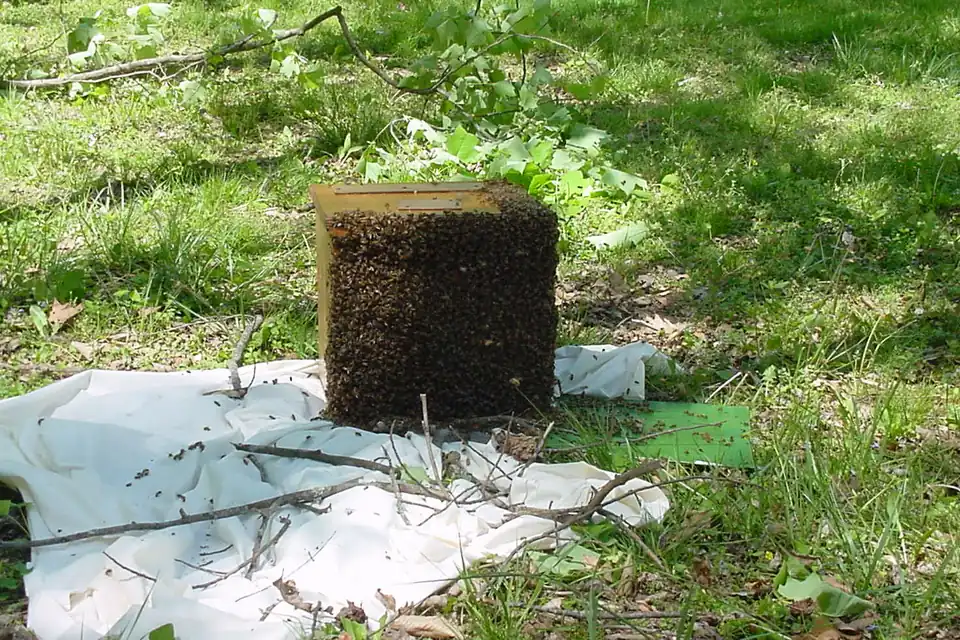

Think of a swarm as a colony in transit, resting while scouts find a new home. It often goes within a few hours to a day or two. If it is somewhere harmless, waiting is a fair option. If it starts moving into the house, ring someone straight away. Moving a swarm on without killing it has the steps.
An established colony: not a DIY job
For almost everyone, no. A settled honey bee colony means thousands of bees, sheets of wax comb and stored honey, and the bees will defend it. Getting it out means opening the cavity, cutting out every comb and cleaning up, in a full bee suit. Get it wrong and you end up stung, with angry bees and comb left behind to melt.
Researchers at the University of Georgia and UC Riverside both stress that the whole nest has to come out, because leftover comb and honey can seep through walls and draw other bees. Bees defending an opened nest are far more aggressive than any swarm. Unless you keep bees yourself and have the gear, hand it on: a beekeeper who takes on cut-outs if one is available, or a pest controller if not.
Should you spray it?
No. Spray rarely fixes a bee problem and often makes it worse. Insecticide only really works on bees that moved in a day or two ago. On an established colony the dead bees, comb and honey stay put, and the poisoned honey harms any bees that rob it.
It reaches beyond your house, too. American foulbrood, a fatal disease of honey bee larvae, spreads when bees rob honey from weak or dead colonies, according to NZ Bee Health and Biosecurity. A colony killed and left in a wall is exactly that. Insecticide is the right tool for wasps. For honey bees the answer is removal, and where a colony is destroyed, the comb should still come out.
Do home remedies work?
The internet is full of them: peppermint oil, vinegar, cinnamon, citronella, mothballs, even WD-40. None reliably shifts an established colony, and we haven't found a New Zealand authority that recommends any of them. Bees with comb, brood and honey in a cavity won't abandon it over a smell.
At best a smell keeps a few bees off a spot for a while, but it does nothing about the comb, which is the real problem. Mothballs and solvents bring their own hazards indoors. A fresh swarm will probably leave anyway, and an established colony needs the comb taken out.
When to hand it on
Get help when the bees are inside a wall, roof, chimney or floor, when the nest is high up, when it has been there for weeks, when bees are getting into the house, or when anyone nearby reacts badly to stings. Those are the cases where DIY is most likely to go wrong.
The cost guide shows the published prices we found, from free swarm collection to cutting a colony out of a wall.
If the bees here don't match yours, the front page on Bee Removal Auckland sets swarms, bumble nests and wall colonies side by side.
Quick answers
What gets rid of bees quickest?
For a swarm, a phone call to a collector. Collection is often free, and a swarm caught before it gets into a cavity is the easiest job there is. For an established colony there is no quick, safe shortcut: spray looks fast but leaves comb and honey behind.
Can bees be moved on alive?
Have a beekeeper collect them. Swarms are boxed up and given a hive. Colonies can sometimes be cut out and rehomed with their comb. Bumble bee nests can sometimes be moved at night. Ask for live removal when you ring around, as not everyone offers it.
Will fly spray kill bees?
It will kill the bees it hits, but it won't reach a colony inside a wall, tree or roof, and it leaves the comb and honey behind. Poisoned honey then endangers other bees.
Should I just remove the queen?
Taking the queen alone won't get rid of a colony, because the workers can raise a new queen from young larvae. When a beekeeper takes a colony they try to catch the queen so the bees settle in the new hive, but the whole nest still has to go.
What do I do if I'm stung?
Health New Zealand advises getting the sting out quickly, washing the area and using an ice pack. Healthify suggests scraping it out rather than squeezing it. Ring 111 for any trouble breathing, swelling of the face or lips, or faintness. For anything else, Healthline is free on 0800 611 116.
Where this comes from
- Honey and Bees New Zealand, Swarm collection
- Auckland Beekeepers Club, Report a swarm
- University of Georgia Bee Program, Honey bee swarms and bees in walls
- UC Riverside, Unwanted honey bees
- NZ Bee Health and Biosecurity, American foulbrood
- NZ Bumblebee Conservation Trust, Bumblebee nests at your place
- Health NZ: stings from bees and wasps
- Healthify, Insect bites and stings