About Auckland Bee Help
A mobile bee service for Auckland homes, built around one idea: keep healthy honey bees alive where you can, and when a nest has to go, take all of it.
Checked
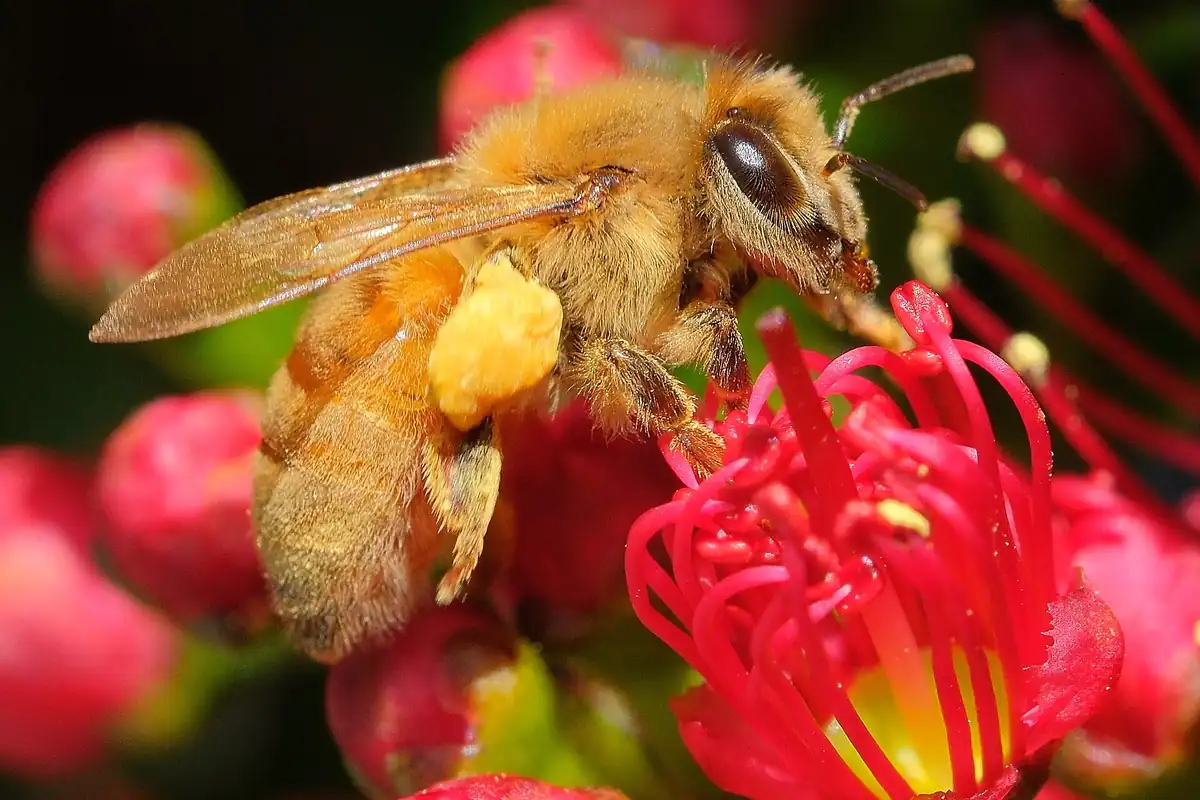
Auckland Bee Help deals with bees that can't stay where they are. That means bumble bee nests beside doors and paths, honey bee colonies living inside walls, ceilings and chimneys, and swarms that nobody can reach. We work across the Auckland region as a mobile service. There is no shop or depot to visit: a local technician comes to the property, works out what the bees are and where the nest sits, and gives you a written figure before anything is done. This page explains how we think about bee work, and the rules it follows.
The starting point: most bees should be left alive
Honey bees and bumble bees are valuable. They pollinate gardens, orchards and crops, and honey bees in New Zealand are under constant pressure from varroa mites. So the first question on every enquiry is whether the bees need to go at all, and if they do, whether they can go somewhere alive.
That is why this site keeps telling people to ring a beekeeper about a swarm. A cluster hanging from a branch or fence is a colony between homes, and a beekeeper or volunteer collector can usually box it up and give it a hive, often for nothing. We would rather you made that call than paid us. Our swarm guide and collector page explain how.
Where we come in
There are jobs a swarm collector won't or can't take on, and those are the ones we handle:
- Colonies inside buildings. Once bees have built comb in a wall, ceiling, chimney or subfloor, it is no longer a swarm. The bees, the comb and the honey all have to come out, and the opening has to be closed. See bees in walls and roofs.
- Bumble bee nests in the wrong place. Beekeepers don't generally collect bumble bees. A nest under the front step or in a play area can be moved or removed. See bumble bees.
- Swarms out of reach. High in a tree, on a second-storey roof or on a building where a collector can't safely work. See swarms out of reach.
- Not sure what it is. Many calls turn out to be wasps. Our bee or wasp guide helps, and the technician confirms on site.
How we decide between rehoming and removal
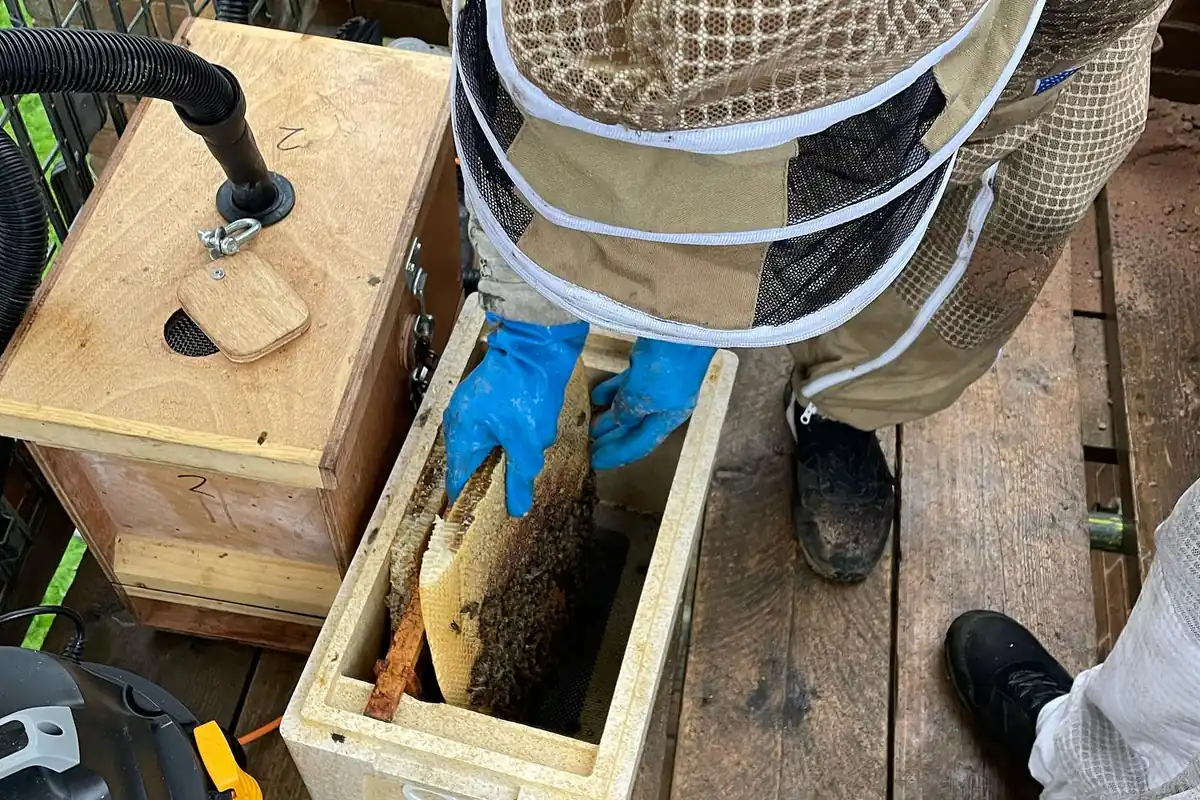

A colony that can be rehomed alive usually should be. That depends on whether the comb can be reached, whether a registered beekeeper will take the bees, and whether the colony looks healthy. Where those line up, the comb with brood is cut out and tied into frames, as in the photo, and the bees go into a hive box.
Where they don't line up, for example a colony deep inside a ceiling over a bedroom, an old colony that is failing, or a nest no beekeeper wants, the colony is destroyed. Even then, the comb and honey are removed. A dead colony left in a wall rots, leaks honey, draws wax moth and robbing bees, and can spread American foulbrood to managed hives across the neighbourhood. We don't treat a wall colony and walk away. The American foulbrood note explains why.
The rules the work follows
Bee work in New Zealand touches several laws and agencies. The ones that matter most:
- Biosecurity Act 1993 and the American foulbrood pest management plan. Anyone who keeps bees, including a beekeeper who takes a rehomed colony, must register their apiary with NZ Bee Health and Biosecurity and manage American foulbrood. Suspected exotic bee pests, and the yellow-legged hornet, are reported to MPI on 0800 80 99 66.
- Hazardous Substances and New Organisms Act 1996. Where a nest has to be treated, products are used as their labels direct, and only products approved for that use. Labels include bee-protection statements for a reason.
- Health and Safety at Work Act 2015. Paid work on roofs and ladders has to manage the risk of falls. That is one reason roof jobs take longer and cost more than ground-level ones.
- Building and heritage rules. Opening and repairing a small part of a wall to get comb out is normally maintenance. On a heritage-listed or special character house, take care with original materials, and check with Auckland Council before larger changes.
We don't claim registrations, licences or memberships here. If you want to know who will be on your property and what their qualifications are, ask when you're called back, and you will be told.
What we won't do
- Tell you a swarm in the open needs paid removal when a collector would take it.
- Spray a wall colony and leave the comb inside.
- Block an entry hole while bees are still using it.
- Quote a price without someone seeing the bees and the building, except as a published guide range.
- Deal with wasps under the name of bee work. Wasps are a separate pest-control job.
- Give medical advice. For stings, follow Health NZ's guidance, and ring 111 for any severe reaction. Our stings page summarises it.
Where we work
The whole Auckland region, from Wellsford and Warkworth down to Pukekohe and the Bombay Hills, out west to the Waitākere Ranges and across to Waiheke Island. The Auckland areas page has local notes for twelve parts of the city, covering housing, terrain and access. Rural and island jobs include travel in the price.
How a job runs
- You send the quote form or ring 09 802 7675.
- We call you back, usually the same working day, and may ask for a photo taken from a distance.
- A technician visits, identifies the bees, finds the nest and gives you a written figure.
- You decide. Nothing is booked until you agree.
- The work is done, the comb comes out, and you are told what repairs, if any, remain.
Phones answered: 7.30am–6pm weekdays; 8am–2pm Saturdays.
The fuller version, including who carries out the work, is on how it works.
Why there is a site at all
Bee advice online is mostly from overseas: different species, different laws, different seasons. We wanted one place that answers Auckland questions with Auckland facts: when swarm season runs here, who collects swarms, what NZ law says about hives and abandoned comb, what published prices exist and where they come from. The hive notes are the long answers. Every page lists its sources, and every dollar figure names its publisher and the date we checked it.
The jobs themselves are laid out on our front page about Auckland bee removal.
Quick answers
Are you beekeepers?
We are a bee nest service, not a honey business. Rehomed colonies go to registered beekeepers, because anyone keeping bees in New Zealand must be registered.
Do you charge to come and look?
Ask when you are called back. Some jobs can be assessed from good photos; others need a visit, and you will know before anyone comes out whether there is a charge.
Do you deal with wasps?
No. Wasp nests are a pest-control job. If what you have turns out to be wasps, we will tell you so you can arrange a pest controller.