Native and solitary bees around the house
Small bees going in and out of holes in the lawn, a bank or an old post are almost always solitary bees. They don't swarm, don't build comb and very rarely sting.
Checked
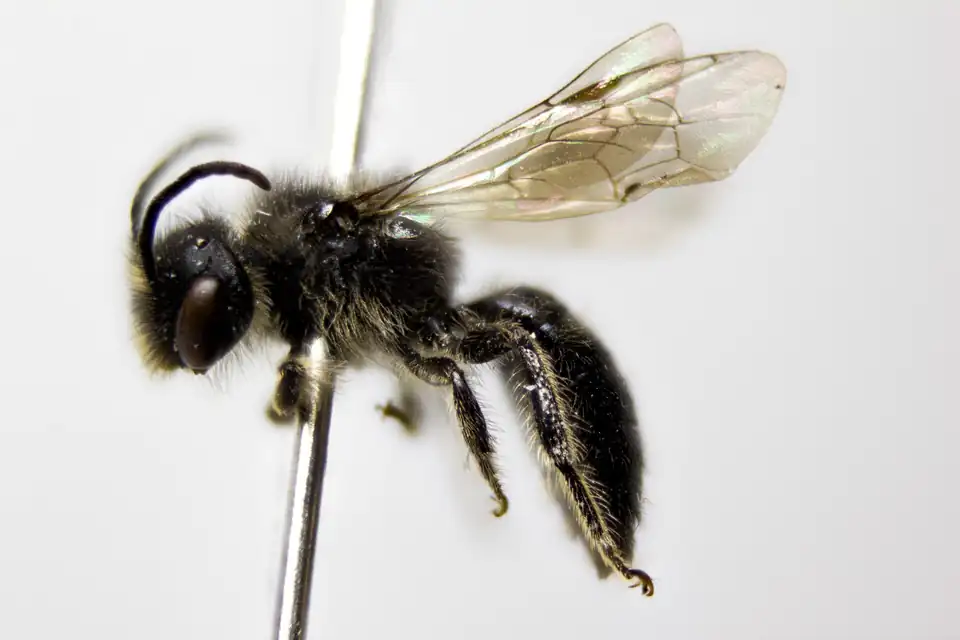
Solitary bees nest alone: each female digs or finds her own small tunnel and provisions a few cells for her young. In Auckland that includes New Zealand's native bees, about 27 species, nearly all ground-nesting, and introduced solitary bees such as the lucerne leafcutting bee. They don't swarm, don't build comb, don't damage buildings and very rarely sting people. A sunny patch of lawn or a clay bank dotted with small holes looks alarming but needs nothing done. We advise leaving them, and we don't remove them; the handful of exceptions are below.
How to recognise them
- Size: small, often 6 to 12 mm, many smaller than a honey bee.
- Colour: usually black or dark brown, some with pale face marks or fine hairs.
- Nest: a hole the width of a pencil lead or a little bigger, often with a tiny mound of loose soil. Many holes may be close together.
- Traffic: single bees, each to her own hole. No streams, no clusters.
- Season: active while their food plants flower, then gone underground.
The specimen photo at the top shows a Leioproctus, the largest group of native bees. The native bees note has more on each group.
Where they nest around Auckland homes
- Thin, dry patches of lawn in full sun, especially on slopes.
- Clay banks, cuttings and the edges of paths.
- Gaps between pavers with sandy bedding.
- Hollow stems, dead branches and old fence posts for masked bees and leafcutter bees.
- Old timber and weathered mortar, where solitary bees use existing holes.
Why they are left alone
- They are harmless to people and buildings.
- Native bees are found only in New Zealand and pollinate native plants.
- Their activity lasts only weeks at a site.
- Any treatment strong enough to kill them in soil also harms worms, other insects and birds.
The rare exceptions
- A nesting aggregation in a child's sandpit or play surface: cover the sandpit while bees are active, or move play elsewhere for a few weeks.
- Bees in timber you are about to repair or paint: wait until late autumn or winter, then do the work.
- A severe sting allergy in the household: native bee stings are very rare and mild, but if you are worried, keep the person away from nesting areas and talk to a doctor about allergy planning.
When it isn't solitary bees
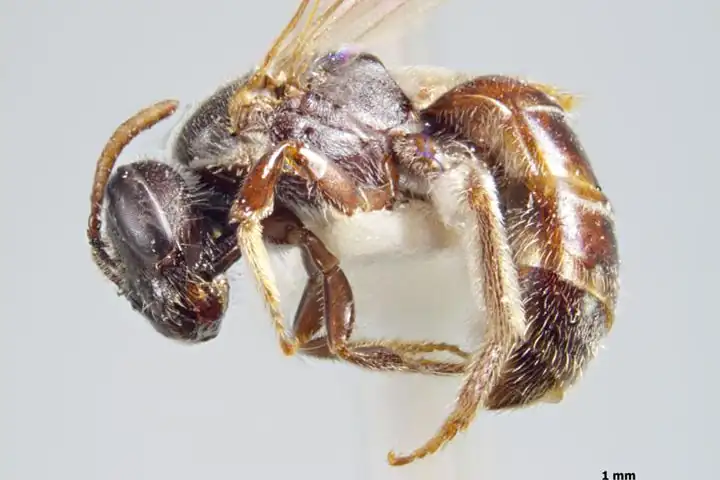

Check carefully before deciding to leave something:
- Big furry bees using one hole: a bumble bee nest. See bumble bees.
- A steady stream into one gap in the house: a honey bee colony. See walls and roofs.
- Shiny yellow-and-black insects pouring from a hole: a wasp nest, a job for a pest controller. See bee or wasp?.
Leafcutter bees
Neat round pieces cut from rose leaves mean leafcutter bees. They line nest tunnels in wood or stems with leaf pieces and are harmless. See leafcutter and mason bees.
Encouraging them
Leave a sunny bare patch, plant natives such as kānuka, mānuka and hebe, keep some dead stems, and avoid spraying flowering plants. Our is it illegal to kill bees? note explains the rules on pesticides and bees.
If the bees here don't match yours, the front page on bee removal in Auckland sets swarms, bumble nests and wall colonies side by side.
Quick answers
Will native bees damage my lawn?
The small soil mounds are cosmetic and disappear with mowing or rain.
Can I mow over native bee holes?
Yes. Mowing doesn't harm the bees underground.
Do you charge to look at native bees?
If photos show they are solitary bees, we will tell you to leave them, and there is no job to quote. Email [email protected] with a photo.