Bees around Auckland
The same honey bees and bumble bees live everywhere in Auckland, but the houses, trees and travel are very different from Warkworth to Pukekohe. Pick the part of Auckland closest to you.
Checked

We cover the whole Auckland region as a mobile service: a local technician travels to you, looks at the bees and the building, and gives you a written figure before any work. Swarms hanging in the open are usually best left to a beekeeper or swarm collector, and that holds in every suburb. What changes from place to place is the housing, the trees, the flowering season and the access, and those decide how a bee job goes. The pages below go into that detail for twelve parts of Auckland.
- Devonport Bees in a Devonport villa, a swarm on Victoria Road or bumble bees in an old garden? What to do, who collects swarms, and how villa nests are handled.
- Glenfield Glenfield bee help: swarms in bush gullies, bees under decks and in 1970s brick homes, and why any large dark hornet should go to MPI first. Costs and who to call.
- East Coast Bays Bees in Browns Bay, Mairangi Bay, Torbay or Long Bay: pohutukawa-season swarms, roof-space colonies in clifftop homes, bumble bees in coastal gardens, and costs.
- Hibiscus Coast Bee swarms and nests in Orewa, Silverdale, Millwater and Whangaparaoa: empty holiday homes, old baches, new subdivisions, and what each costs to sort.
- Warkworth Bees in sheds, water tank stands, old farmhouses and new Warkworth homes. Lifestyle-block bee problems, apiaries next door, travel and what a visit costs.
- Titirangi Bee help for Titirangi, Laingholm, French Bay and Waiatarua: colonies in pole houses and bush-section decks, swarms high in the canopy, kauri care and costs.
- Henderson Henderson, Massey, Te Atatu and Henderson Valley bee help: swarms along the Twin Streams, bees in 1960s weatherboard homes and garages, bumble bees in big sections.
- Waiheke Island Bees on Waiheke: colonies in baches and rainwater tank stands, swarms in vineyards and olive groves, and how the car ferry shapes the timing and cost of a visit.
- Grey Lynn Grey Lynn, Westmere and Arch Hill bee help: colonies in packed villas, chimneys and lean-tos, backyard hives next door, narrow side yards, and costs.
- Remuera Remuera, Epsom and Meadowbank bee help: colonies in brick chimneys and tiled roofs, swarms in mature oaks and planes, bumble bees in big gardens, and quotes.
- Howick Howick, Pakuranga, Bucklands Beach, Cockle Bay and Botany bee help: soffit and cavity colonies in 1970s to 2000s homes, coastal swarms, garden bumble bees, costs.
- Pukekohe Pukekohe and Franklin bee help: swarms in a market-garden district, colonies in town villas and new Paerata homes, glasshouse bumble bees, spray season, and costs.
How the North Shore differs
The North Shore has three quite different settings. Devonport has old timber villas inside special character streets. Glenfield and the suburbs around it are 1960s to 1980s homes on sloping sections with bush gullies, and they sit inside the area where MPI has been finding yellow-legged hornets since October 2025. The East Coast Bays have clifftop houses, plaster cladding from the 1990s and a coast lined with pōhutukawa. On the Shore, identification comes first: if a large dark wasp with yellow feet turns up, report it to MPI on 0800 80 99 66 before anything else. See our hornet note.
The isthmus: villas, chimneys and tight sections
Central Auckland has the oldest timber housing in the city, from Grey Lynn's packed villa streets to Remuera's large interwar homes. Old houses have unlined walls, unused chimneys, lean-to roofs and bay windows, all of which suit a swarm looking for a home. Work here is often about access, in narrow side yards or on two-storey roofs with clay tiles. Most colonies in these houses come out through a small opening in a less visible spot. The chimneys page and the cut-out page explain both kinds of job.
West and south: orchards, streams and market gardens
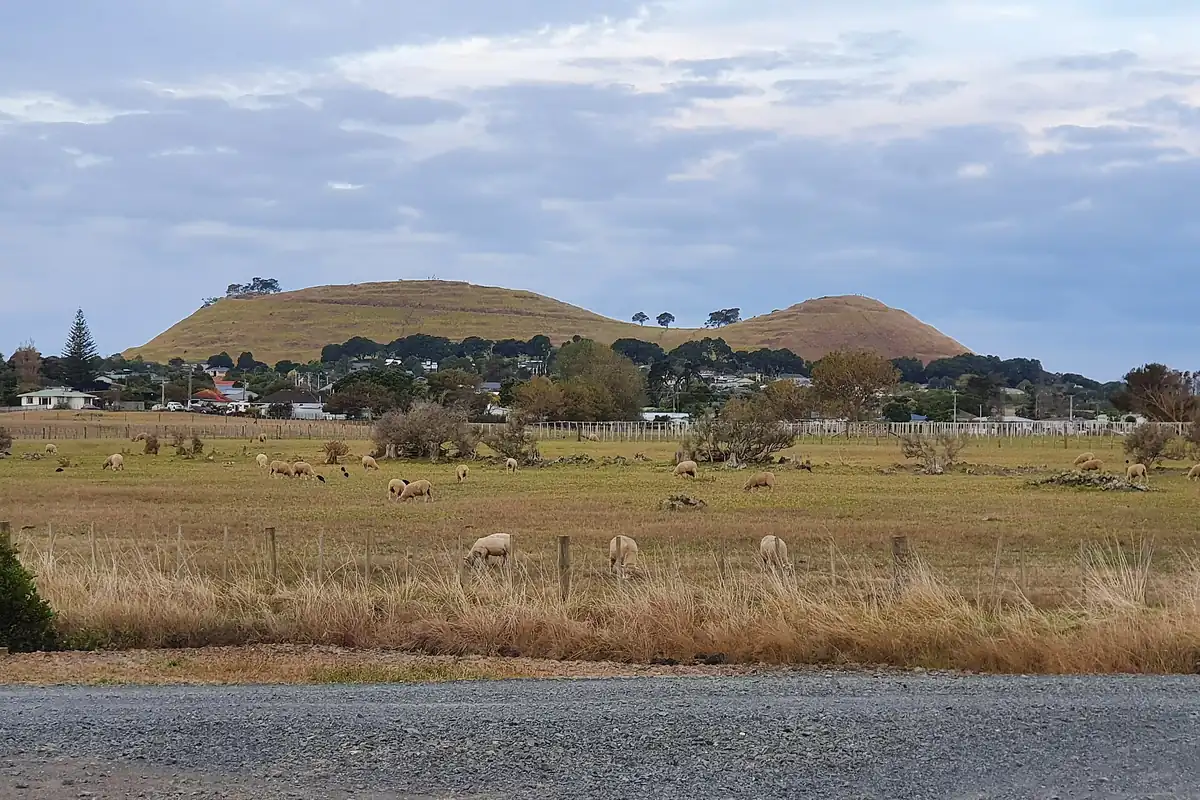

West Auckland grew out of orchards and vineyards, and Henderson's big sections still have old fruit trees with hollows. Titirangi sits in the bush of the Waitākere Ranges, where wild colonies live in the canopy and access to houses can be steep. In the south, Pukekohe is a market-garden town with glasshouses, packhouses and lifestyle blocks, and bees are part of the farming landscape. South Auckland's volcanic cones and open ground, like Māngere Mountain in the photo, are good foraging country too.
Rural edges and the islands
North of the city, Warkworth and Matakana have lifestyle blocks, farm sheds and plenty of registered apiaries nearby. The Hibiscus Coast mixes old baches, holiday homes and new subdivisions, and empty holiday houses are where colonies settle unseen. Waiheke Island adds a ferry to every visit, and most homes there run on rainwater tanks that bees visit to drink. For any rural or island job, travel is part of the price, and a clear photo before the visit saves a second trip.
East Auckland's newer homes
Howick village is one of the oldest European settlements in the region, but most of East Auckland was built from the late 1960s onward: brick veneer, weatherboard and plaster homes with wide eaves. In those houses, bees mostly get in at the soffits or through weep holes into brick cavities. Our roof space page covers what removal involves.
What stays the same everywhere
Some advice applies across Auckland, whatever the suburb:
- Swarms in the open: ring a collector first. Collection is often free.
- Colonies inside buildings: the comb and honey must come out, not just the bees. Abandoned honey spreads American foulbrood to managed hives.
- Never block an entry hole while bees are still using it.
- Bumble bee nests last a single season and can usually be left.
- Wasps are not bees. A pest controller deals with wasps; our bee or wasp guide helps you check.
If your suburb isn't listed, we still cover it. The closest area page will be a good guide, and the quote form or a call on 09 802 7675 will reach us wherever you are in Auckland.
Every kind of bee job we look at is summed up on our front page about bee nest and colony removal in Auckland.
Quick answers
Do you cover my suburb if it isn't listed?
Yes. We work across the whole Auckland region, from Wellsford down to the Bombay Hills and out to Waiheke. The pages above are the parts of Auckland with the most distinct local detail.
Is it more expensive outside the city?
Travel is part of any paid visit, so rural, island and far-south jobs can cost more. Swarm collection by a local beekeeper is often free wherever you are.
Which time of year is busiest?
Spring. Honey bee swarming runs roughly from August to January, and Auckland collectors see most calls from September to December.