Why honey bees swarm in spring
Swarming is how a honey bee colony reproduces. In Auckland it peaks from September to December, and understanding it takes most of the fear out of a cluster on the fence.
Checked
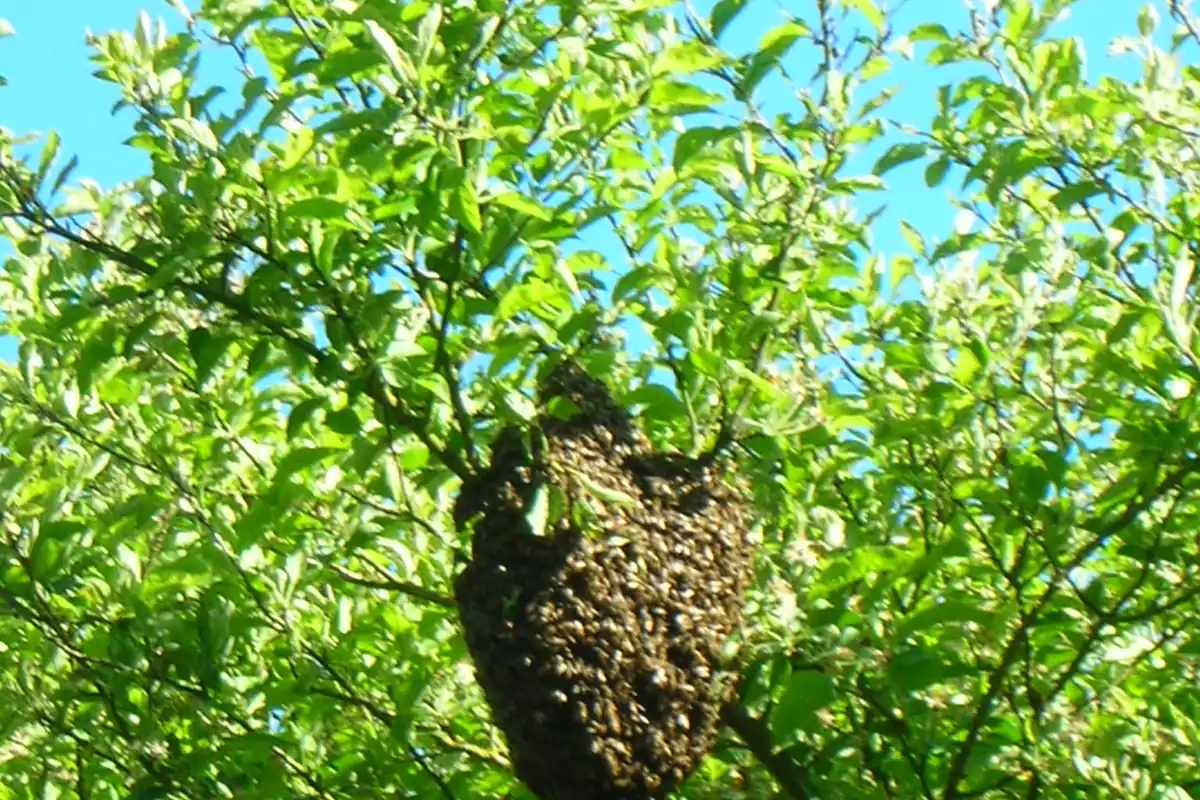
A honey bee colony is a single living unit, and the only way it can make more colonies is to split. Swarming is that split. In spring, a strong colony raises new queens, and before the first one emerges, the old queen leaves with a large part of the workers to find a new home. The bees left behind keep the old nest and the new queen. So a swarm is not an attack and not a pest outbreak. It is a colony moving house, and it is usually at its calmest while it does.
When is swarm season in Auckland?
Honey and Bees New Zealand says swarming can begin as early as August and carry on into January. The Auckland Beekeepers Club sees most of its swarm calls between September and December. Auckland's mild winters mean colonies here start building up early, so the first swarms can appear in late winter on a run of warm days, and the season runs later than in colder parts of the country.
The peak follows the flowers. As spring blossom and then natives such as kānuka, mānuka and later pōhutukawa come into flower, colonies fill with nectar, pollen and young bees, and space runs out.
What triggers a colony to swarm?
Crowding is the main trigger. When the brood nest is packed, there is little room for the queen to lay, and the queen's scent no longer spreads easily through a crowded hive. Workers respond by building queen cells, peanut-shaped cells hanging from the comb.
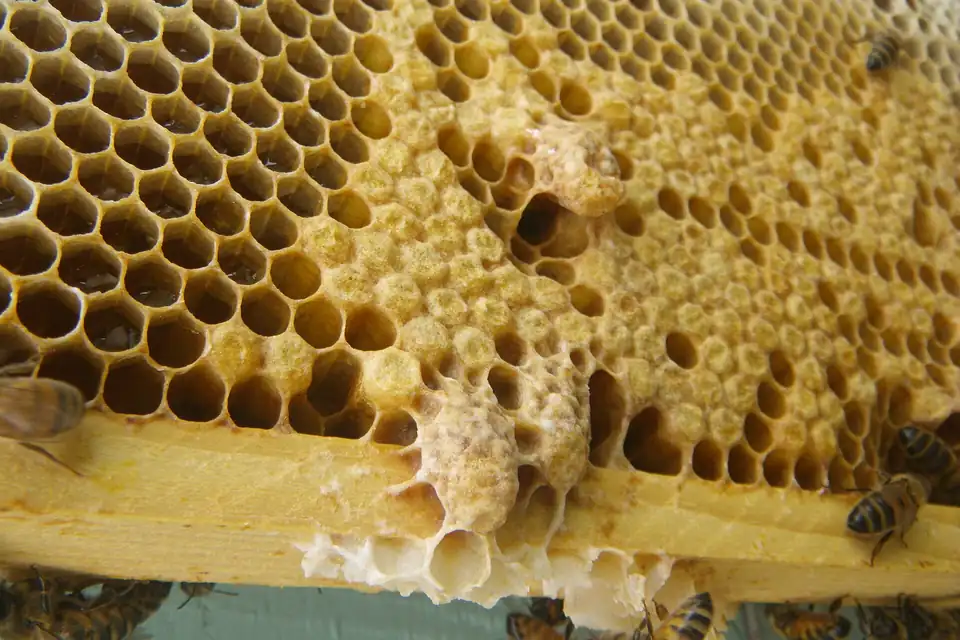

Once those cells are capped, the colony is committed. On a warm, still day, usually between late morning and mid-afternoon, thousands of bees pour out with the old queen and settle in a cluster nearby. Other factors make swarming more likely: a young, fast-growing colony, an older queen, a strong nectar flow and a run of good weather after a wet spell.
Beekeepers manage hives to reduce swarming, by giving more space, splitting colonies on purpose or removing queen cells, but no method stops it entirely. Wild colonies in trees and walls swarm freely.
Why is a swarm so calm?
A swarm has nothing to defend. It has no brood, no stored honey and no nest. The bees gorge on honey before leaving, which gives them fuel for the move and seems to make them less inclined to sting. According to Honey and Bees New Zealand, swarming bees are not aggressive unless provoked. Stings usually follow someone spraying, hosing or knocking the cluster.
That is why the standard advice is to leave a swarm alone, keep people and pets back and ring a collector. The first hour with a swarm note goes through it step by step.
What happens after the swarm lands?
The cluster is a waiting room. Scout bees fly out to inspect possible homes: hollow trees, empty hive boxes, and gaps in buildings. They report back with dances on the surface of the cluster, and over hours or a day or two the scouts agree on one site. Then the whole swarm lifts off and flies there together. The University of Georgia's bee programme notes that most swarms move on within about a day.
For you, this is the deciding moment. If the scouts choose a hollow in a tree, the bees are gone. If they choose a gap in your soffit or wall, you will have a colony inside the house, and that is a much bigger job than collecting a swarm. Watch the cluster. If bees start going in and out of a gap in the building rather than hanging in a clump, act straight away. See swarm or established hive.
Afterswarms and repeat swarms
A colony may swarm more than once in a season. After the first, or prime, swarm leaves with the old queen, a strong colony can send out smaller afterswarms led by newly emerged virgin queens. These are often smaller and can land lower down. A garden near a big colony may see several swarms in a few weeks.
Why this matters to you
Most swarms are good news for beekeepers, who can turn them into new hives, and only a nuisance for householders for a day or so. Ringing a collector early is the best thing you can do: in Auckland, a swarm in easy reach is often collected free. The swarms guide and finding a swarm collector explain how.
This note sits under bee nest and colony removal in Auckland, where the front page sorts out which bee jobs need a visit and which don't.
Quick answers
Do bumble bees swarm?
No. Bumble bee nests are started each spring by a single queen and die out at the end of the season. Clusters of bees on a branch are honey bees.
Can a swarm happen in winter?
Rarely in Auckland. Colonies sometimes abandon a nest late in the season, which can look like a swarm. See late-season swarms.
Will the swarm come back next year?
The same bees won't, but if there is a colony nearby that swarms every year, more swarms are likely. Places where bees have lived before also attract new swarms.