Bumble bee nests in Auckland
Most bumble bee nests can simply be left: they only last a few months. Here is how to decide whether yours can stay or has to go.
Checked
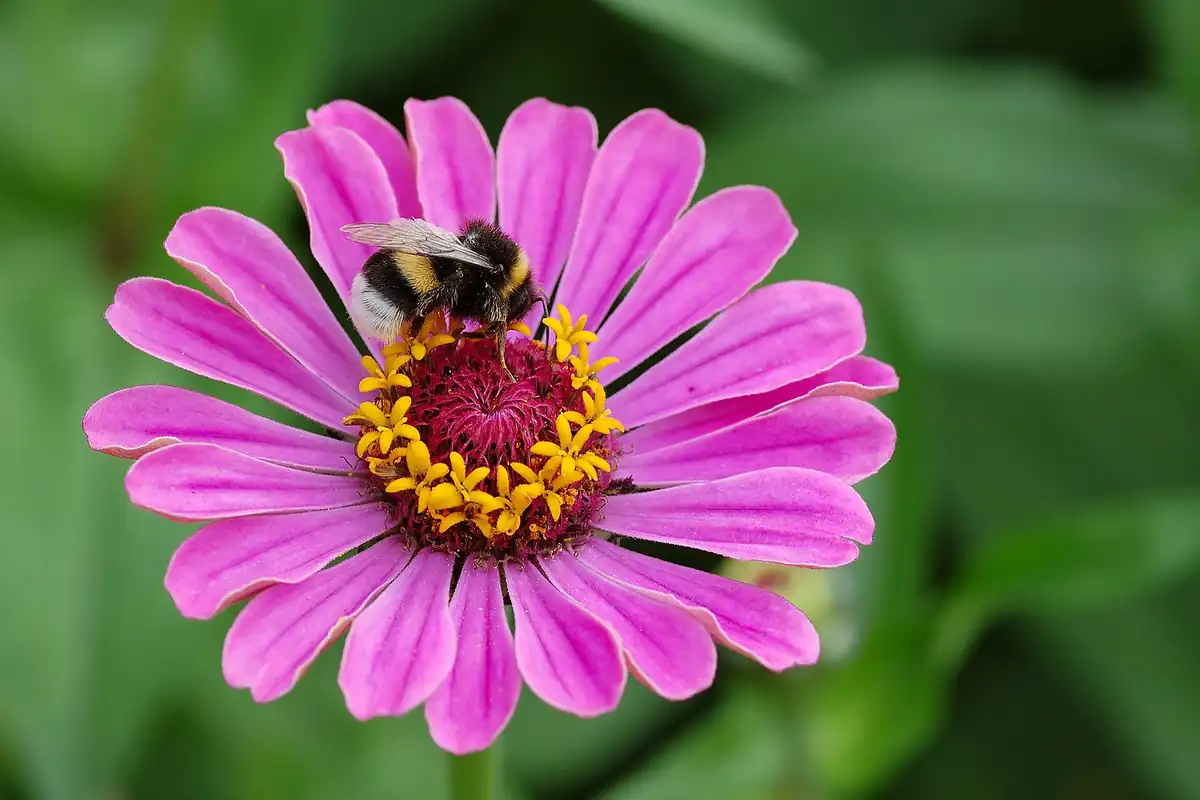
A bumble bee nest rarely needs removing. Bumble bees are placid pollinators, a nest is home to a few hundred bees at most, and it only lasts two to three months before the colony dies and the new queens leave to spend winter in the soil. If the entrance is away from doors, paths and play areas, the easy answer is to let it run its course. If it sits where people walk every day, is inside the house, or someone at home reacts badly to stings, it can be moved or removed. Beekeepers generally don't take bumble bee nests, so that is usually pest controller work. This page explains how to recognise a bumble bee nest, how long it will be there and what your choices are.
Should the nest stay or go?
Usually it can stay. The NZ Bumblebee Conservation Trust says bumble bees aren't aggressive, only defend a nest that is disturbed, cause no structural damage and store very little honey, so a dead nest doesn't attract other bees or leave a mess.
Three questions decide it:
- Will people pass right by the entrance every day? Bumble bees put up with a lot, but treading on or knocking the entrance is how stings happen.
- Does anyone in the house react badly to stings? If so, don't wait.
- Are bees getting inside the house? That is worth dealing with.
If the answer to all three is no, mark the spot, keep the mower and the dog away and let the season finish. Block the hole in winter, once it has gone quiet, so next spring's queens can't move back in.
Is it really a bumble bee nest?
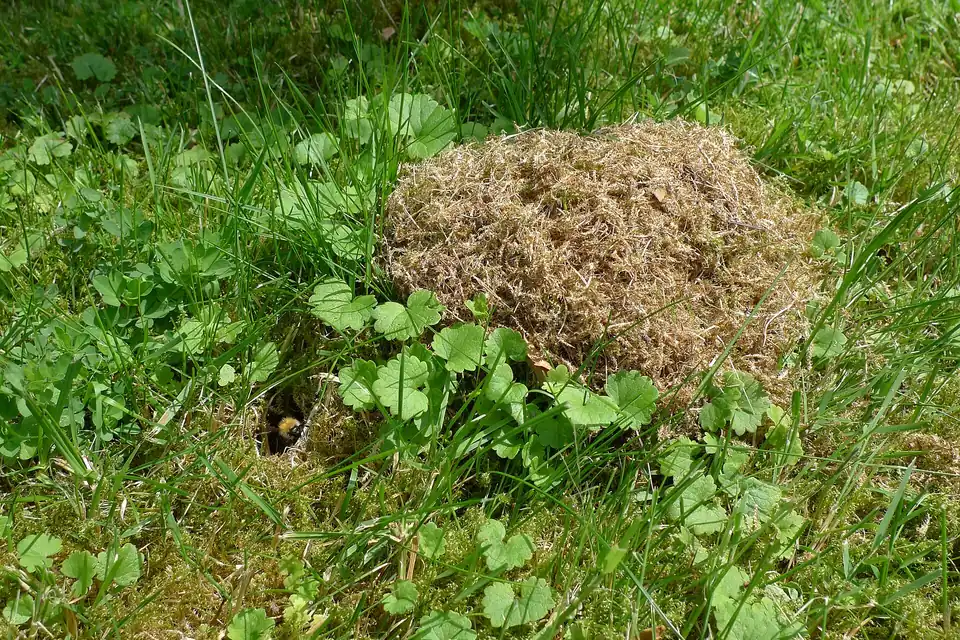

Bumble bees are big, round and furry, mostly black with yellow, orange or buff bands and a pale tail. You see the entrance rather than the nest: a few bees going in and out through a hole in the grass, a compost bin, a wall, a gap under the shed or the bottom of a hedge. Traffic is slow, a handful an hour.
That unhurried traffic is the tell. Honey bees pour through a nest entrance by the dozen every minute, and they are smaller and browner. Wasps are smooth, shiny, bright yellow and black with a pinched waist, and their nests are much busier.
Favourite nest sites around Auckland homes:
- Old mouse or rat nests in the ground
- Compost heaps and piles of grass clippings
- Under sheds, decks and the house
- Wall cavities and roof spaces
- Bird boxes, wood piles and old furniture left outside
New Zealand has four bumble bee species, all brought from England in 1885 and 1906 to pollinate red clover. The one you will most likely meet is Bombus terrestris, the buff-tailed or large earth bumble bee, now found across both islands.
Will it go away by itself?
Yes. Each nest is a single season's home. Late on, it raises new queens and males. The young queens leave, mate and dig into the soil for winter, and the old queen, workers and males all die. The nest isn't reused.
The NZ Bumblebee Conservation Trust gives the active season as about August to May, with each nest lasting two to three months of that. A nest you find in late summer may be finished within weeks. One you find in early spring has longer to go. Even at its peak a nest of the common species holds a few hundred bees, against tens of thousands in a honey bee colony.
Do bumble bees sting?
They can, but seldom do. They sting when they or the nest feel threatened: when it is trodden on, mown over or dug up. A bumble bee's sting isn't barbed, so it doesn't stay in the skin, and the bee can sting more than once.
Can the nest be moved?
Sometimes. A nest that is easy to get at, in a compost bin, bird box or pot for example, can be boxed up at night when the bees are home and taken somewhere quieter. Nests deep in a wall or under a slab are much harder to move in one piece. Be aware that relocated nests don't always survive the move, so if the nest can be left, that is better for the bees.
When a nest has to go and can't be moved, a pest controller will usually destroy it. Ask before you book whether they offer relocation, and what they will do with the nest afterwards.
What does it cost?
We couldn't find an Auckland business that publishes a bumble bee nest price. The nearest published figure is from a Wellington pest controller, which lists $140 per nest, GST included, to relocate or destroy it. Auckland prices will depend on travel, access and how deep the nest is, so treat that as a reference point, not a quote.
The cost guide compares bumble bee nests with swarms and wall colonies. When you ask for a price, say where the nest is, how high or deep, and whether you would like it moved rather than destroyed.
If the bees here don't match yours, the front page on bee nest and colony removal in Auckland sets swarms, bumble nests and wall colonies side by side.
Quick answers
Do bumble bees make honey?
Only a few small pots of nectar to feed the nest, nothing like a honey bee colony's comb and stores. That is why a finished bumble bee nest in a wall doesn't stain or draw other bees, and why beekeepers aren't interested in collecting them.
How many bees are in a bumble bee nest?
From a handful to a few hundred. In spring it may be just the queen and a few workers.
Do bumble bees nest underground?
Many do. Queens hunt for dry, sheltered holes in spring, and old rodent burrows are a favourite. The sign is a small hole in a lawn or bank with the odd bee flying in and out.
Can I get rid of a bumble bee nest myself?
You can, but there is seldom a reason to. Digging up or spraying a nest is exactly when stings happen. Waiting is safer. If it really can't stay, have it moved or removed at night by someone with the gear. Read getting rid of a nest before you try anything yourself.
Will a beekeeper take it?
Usually not. Beekeepers collect honey bee swarms because they can keep those bees. Bumble bee nests normally go to a pest controller or someone who relocates them.
Where this comes from
- NZ Bumblebee Conservation Trust, Bumblebee nests at your place
- Bee Swarm (Auckland), Bumblebees
- Te Ara encyclopedia: wasps and bees
- Published price lists of New Zealand bee removal and pest control businesses, checked 27 October 2026 (a guide only, not a quote)
- Health NZ: stings from bees and wasps