Bees on the Hibiscus Coast
Orewa, Silverdale, Millwater and the Whangaparaoa Peninsula mix old baches, holiday homes and brand-new streets. Bees treat each one differently, and empty houses are where colonies settle unnoticed.
Checked
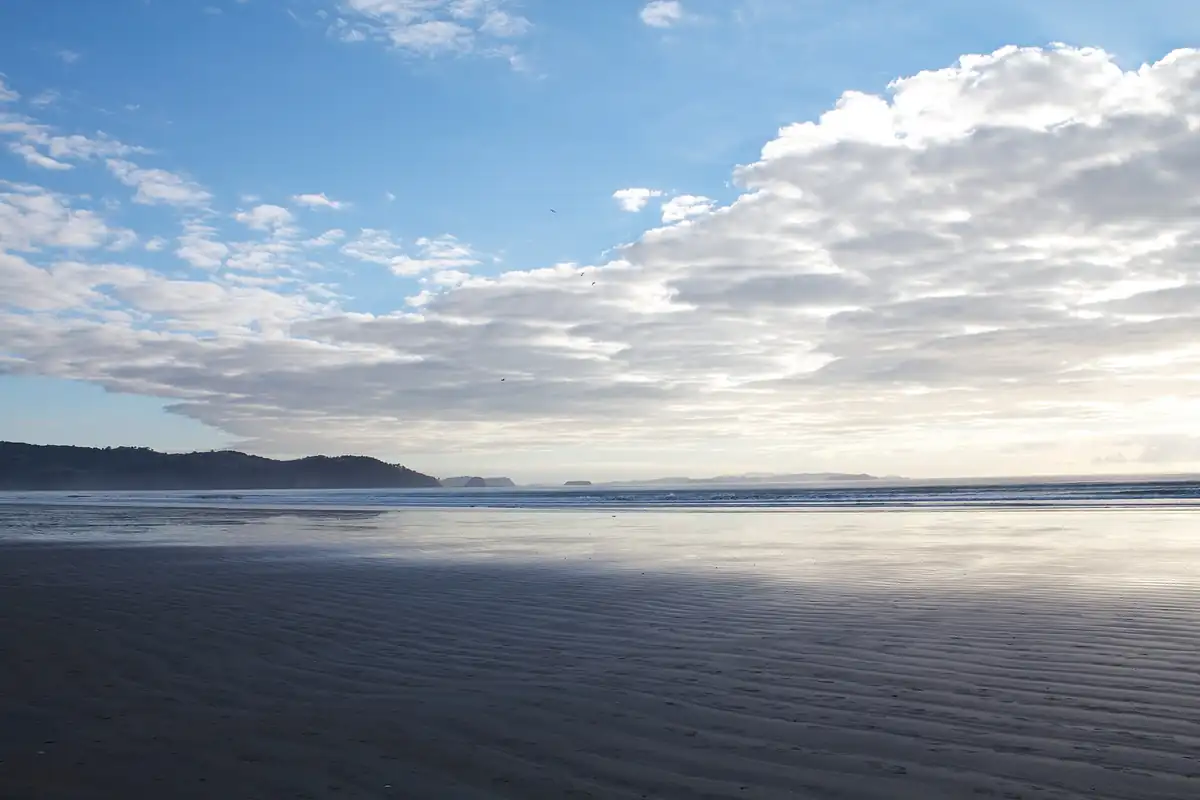
The Hibiscus Coast runs from Waiwera and Hatfields Beach through Orewa and Red Beach to Silverdale and Millwater, then out along the Whangaparāoa Peninsula to Stanmore Bay, Manly, Arkles Bay and Gulf Harbour. It started as a holiday coast, and you can still see it: fibrolite and weatherboard baches on small sections, now sitting beside two-storey family homes and large new subdivisions inland. Some houses are still used only at weekends or in summer. Bees treat this mix in three different ways.
Empty holiday homes: the colony nobody saw arrive
A house that is empty through spring is a perfect target for a swarm. Nobody is there to notice a cluster on the eaves or a few dozen scouts checking a gap in the soffit, and by the time the owners arrive for Christmas, a colony can have built several kilograms of comb inside a wall or ceiling.
If you own a holiday home on the coast, a few habits help:
- Ask a neighbour to glance at the eaves and walls in October and November, the busiest swarm months.
- Fill obvious gaps before spring: a missing soffit board, an unscreened vent, a gap where a pipe goes through the wall.
- Check old chimneys and flues on baches that no longer burn wood.
- On arrival, look for a steady stream of bees at one point. That is a colony, not passing traffic.
The bee-proofing note goes through the gaps worth sealing, and when to do it so you don't trap bees inside.
Old baches and fibrolite
Older baches often have thin sheet cladding over light framing, flat or low-pitch roofs, and no building paper. Bees moving in find an easy cavity. Some older sheet claddings in New Zealand contain asbestos, so nobody should cut, drill or snap old fibre-cement sheet to get at a colony without first finding out what it is made of. Mention the cladding when you ask for a quote. A technician can often work through a soffit, ceiling or adjacent timber instead of breaking the sheet. The cut-out page explains the usual approaches.
New streets in Millwater and Silverdale
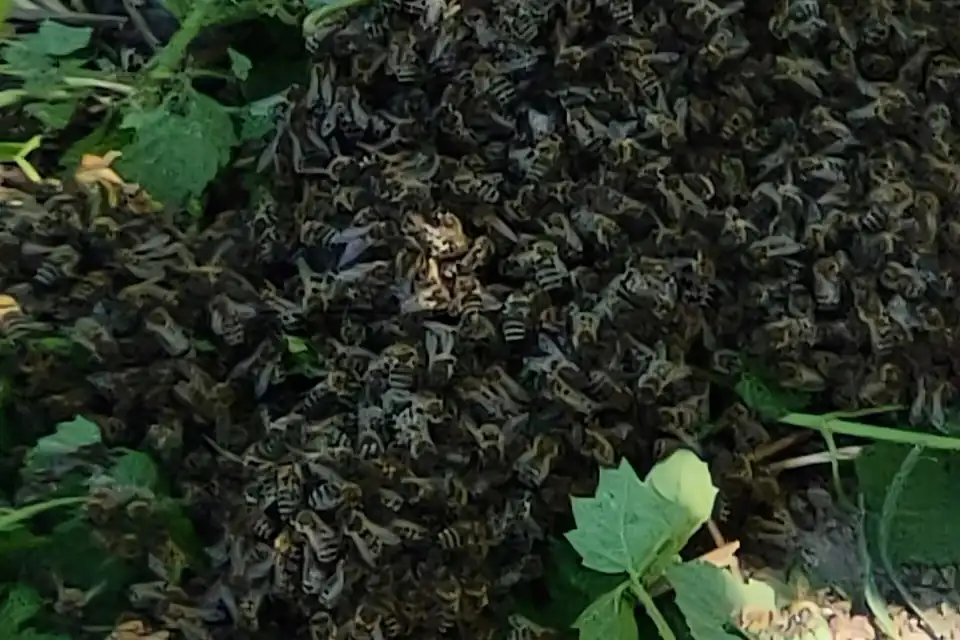

The new housing inland has fewer gaps, so colonies inside walls are less common. What we see more often there:
- Swarms landing low, on young street trees, fences, letterboxes, even the ground, as in the photo, because there is little tall shelter yet.
- Bumble bees nesting in fresh bark mulch and under decking boards.
- Honey bees drinking from pools and water features on hot days.
A low swarm on a new estate is about as easy as collection gets, and a swarm collector will often take it free. See finding a swarm collector.
Peninsula traffic and access
The Whangaparāoa Peninsula is a long road with one main way on and off, and traffic at peak times can be slow. That matters in two ways. A swarm collector coming out from elsewhere may not reach a swarm before it moves on, so ring early. And paid work at the far end of the peninsula, Gulf Harbour or near Shakespear Regional Park, is easier to schedule for mid-morning. When you ask for a quote, give the street name and say whether the house is on a slope, has a long drive or needs a ladder over a garage roof.
The regional park next door
Shakespear Regional Park at the tip of the peninsula is a predator-fenced open sanctuary, managed by Auckland Council for native birds and plants. Bees forage across it and the farmland around it, but a colony in a home next to the park is dealt with the same way as anywhere else: rehome where possible, and if the colony has to go, take all of the comb out. Never leave dead comb and honey in a wall near the park or anywhere else, because robbing bees carry American foulbrood spores from abandoned honey to healthy hives. The American foulbrood note explains the risk.
Costs on the coast
Swarms in easy reach are often collected free. For a colony inside a bach wall or a roof space, expect a written quote after a visit. Published figures are thin: one Auckland beekeeping business lists $210 for removing bees from a wall cavity, without stating GST or repairs, and a Wellington firm lists $140 including GST per bumble bee nest. Old comb, asbestos checks and peninsula travel can all add to the figure. The wall and roof cost guide has more.
Along the coast
South along the coast are the East Coast Bays; north-west, the rural Warkworth area has lifestyle blocks and orchards. Compare all of them on the Auckland areas page.
The rest of what we cover, from swarms to wall cut-outs, starts on our page about Auckland bee removal.
Quick answers
We found bees in the ceiling of our holiday home. Can they wait until we're next up?
They can, but the colony will keep growing, and bees sometimes find their way indoors through light fittings and vents. Arrange an inspection soon, and don't block the entry hole while the bees are using it.
Do bees like coastal sections?
Bees forage wherever plants are flowering, and the coast flowers heavily in late spring and summer. Sheltered gardens behind the dunes and ridges suit them well.
Who collects swarms on the peninsula?
Volunteer and private swarm collectors cover the area. Report a swarm through the Auckland Beekeepers Club or a collector listed by Honey and Bees New Zealand, and send a photo.