Bees in Henderson
Henderson grew from orchards and vineyards into one of West Auckland's biggest suburbs. Plenty of the old orchard trees and big back sections survive, and so do the bees that use them.
Checked
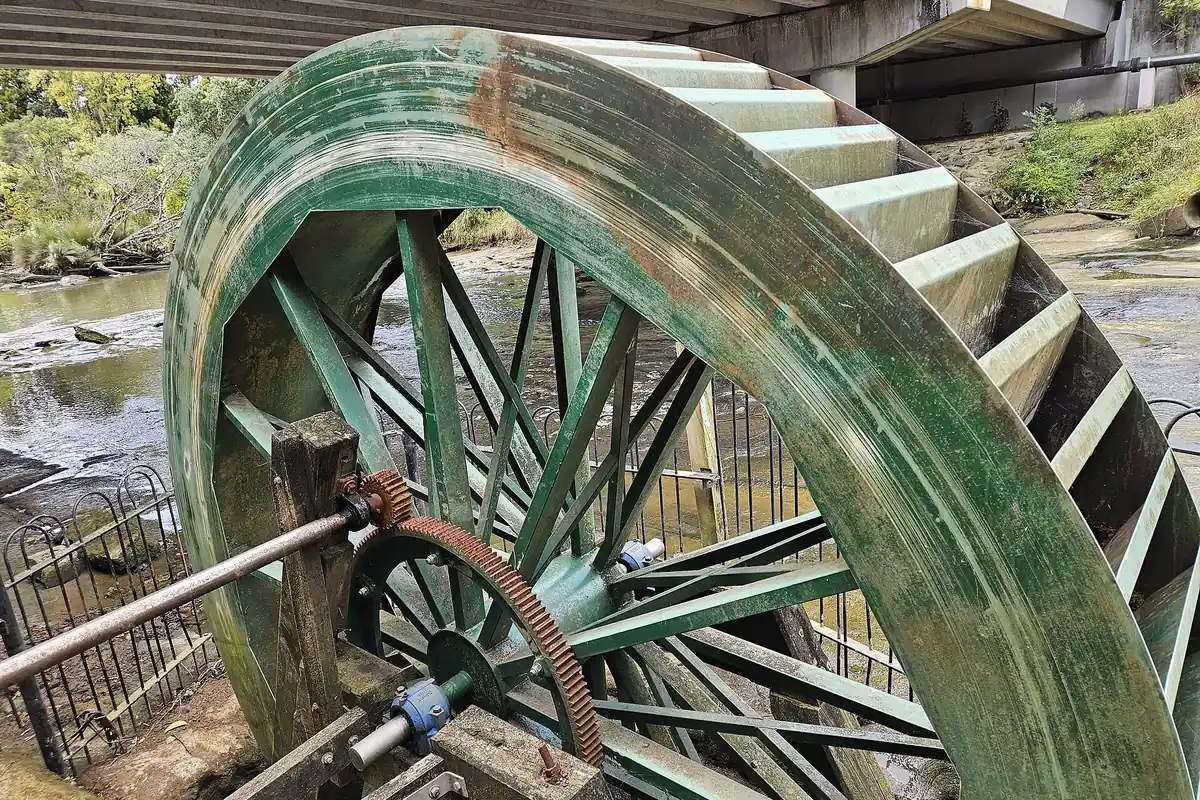
Henderson began as a timber mill on the Ōpanuku Stream and grew into a district of orchards and vineyards, many planted by Dalmatian families from the early 1900s. The old Corban winery site in the town centre is now an arts centre. Suburban housing spread across the flats from the 1950s, with weatherboard and brick homes on quarter-acre sections, followed by group housing, terraces and newer infill. Henderson Valley and Oratia, on the edge of the ranges, still have orchards and lifestyle blocks. The mix of old trees, big sections and streams gives bees plenty to work with.
Streamside swarms on the Twin Streams paths
The Ōpanuku and Oratia streams meet in the town centre, and planted reserves and shared paths follow them through the suburbs. In spring, these green corridors are full of flowering natives and old fruit trees, and swarms settle on branches beside the paths.
A swarm on a path is public property in practice: nobody owns it, and the most useful thing you can do is keep people back and report it. A swarm collector can usually box a low swarm quickly. If you are walking past, give it a wide berth and don't throw anything at it. The swarm guide explains why a swarm is so placid, and the collectors page explains how to report one.
Old fruit trees and hollow trunks
Big back sections in Henderson often keep a few trees from the orchard days: old apples, pears, plums and citrus. Old fruit trees rot at the forks and the base, leaving hollows a colony can fill. Signs of a colony in a tree:
- A steady stream of bees in and out of one hole, all day in warm weather.
- Dark staining or wax at the opening.
- Bees present even in winter on sunny days, when a passing swarm would have gone.
A colony in a tree at the bottom of the garden can often stay. If it is beside the clothesline or a play area, a beekeeper may cut it out for the bees, or the tree may need work. See trees, hedges and gardens.
1960s weatherboards, garages and sleep-outs

Henderson's mid-century houses are mostly weatherboard or brick on timber framing, often with a detached garage or a sleep-out at the back. Bees commonly get in:
- Behind the barge boards and fascia at the gable ends.
- Through gaps where weatherboards have shrunk or lifted at the corners.
- Into the walls of an unlined garage or sleep-out, where comb can hang in the open framing.
- Under the floor through gaps in the baseboards.
An unlined garage is actually the easiest place to have a colony removed: the comb is visible and reachable from inside. A lined wall in the house means taking off boards or linings. Our walls and roofs guide covers both.
After a flood
Parts of Henderson flooded badly in early 2023. If your house was repaired after flooding, check that new linings, vents and baseboards were sealed properly. Gaps left in a hurried repair are just the kind of opening a scout bee notices. Any newly fitted subfloor vent without mesh is worth a look before spring. The bee-proofing note lists the gaps that matter.
Bumble bees on big sections
Large lawns, compost heaps and old sheds suit bumble bees. In spring, a single queen starts a nest in an old rodent hole or a dry corner, and it grows over summer before dying out. Most are best left alone. If a nest is in the lawn where the mower goes, the lawn nest note explains your choices, and the NZ Bumblebee Conservation Trust has guidance on moving nests.
Costs in Henderson
An open-framed garage colony is usually the quickest paid job in Henderson, because the comb is visible from inside. A lined wall in the house takes longer. Few firms publish prices: a beekeeping outfit in Auckland advertises $210 to take bees out of a wall cavity, with nothing said about GST or making good, while a Wellington pest firm charges $140 with GST for each bumble bee nest it moves or kills. Swarms on branches along the Twin Streams are usually collected free. See wall and roof costs.
Out towards Kumeu and the north-west
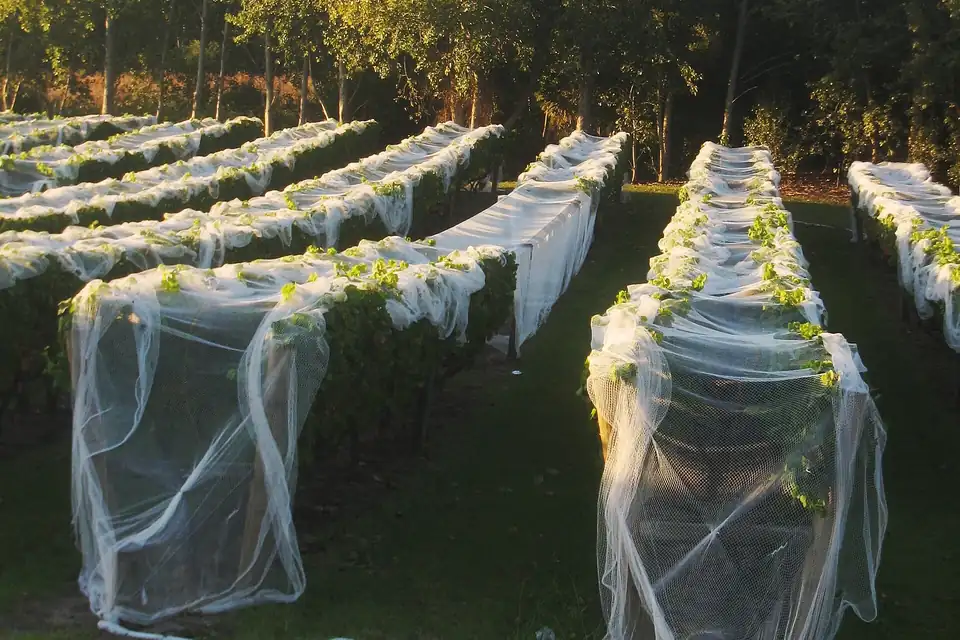
Beyond Henderson, the north-western edge of the city runs out through Massey and Whenuapai to Kumeu and Huapai, where vineyards, orchards and lifestyle blocks take over from suburbs. The netted vines in the photo above are typical of the area. Bee jobs out there look more like rural ones: colonies in implement sheds and pump houses, swarms in shelter belts, and bees drinking at troughs and tanks in summer. Bird netting over vines and fruit trees also catches the odd forager, which is a nuisance for the grower more than a bee problem. If you are on a block out west and bees have moved into a building, give clear directions and gate details when you ask for a quote, and mention any hives kept nearby, since a neighbouring beekeeper may want a swarm back.
Nearby
Titirangi sits in the bush to the south-west, and rural Warkworth shares Henderson's orchard-and-hive pattern on a bigger scale. All our areas are on the Auckland areas page.
The rest of what we cover, from swarms to wall cut-outs, starts on our page about bee removal around Auckland.
Quick answers
There are bees in my old plum tree every year. Is that one colony?
If bees are present all year, it is probably one colony living in a hollow. If they appear only in spring and leave, swarms are probably using the tree as a stopover.
Can I spray bees in my garage wall myself?
It is not a good idea. Spraying kills some bees but leaves comb and honey that rot, attract other bees and can spread disease to managed hives. Have the comb taken out.
Do bees damage weatherboards?
Bees don't chew timber. Damage comes from honey leaking out of comb, staining and softening linings, and from the opening needed to get the comb out.