Bees in Glenfield
Glenfield's sloping sections, bush gullies and decks over basements suit bees well. It is also where New Zealand's first yellow-legged hornet queen was found, so identification comes first here.
Checked
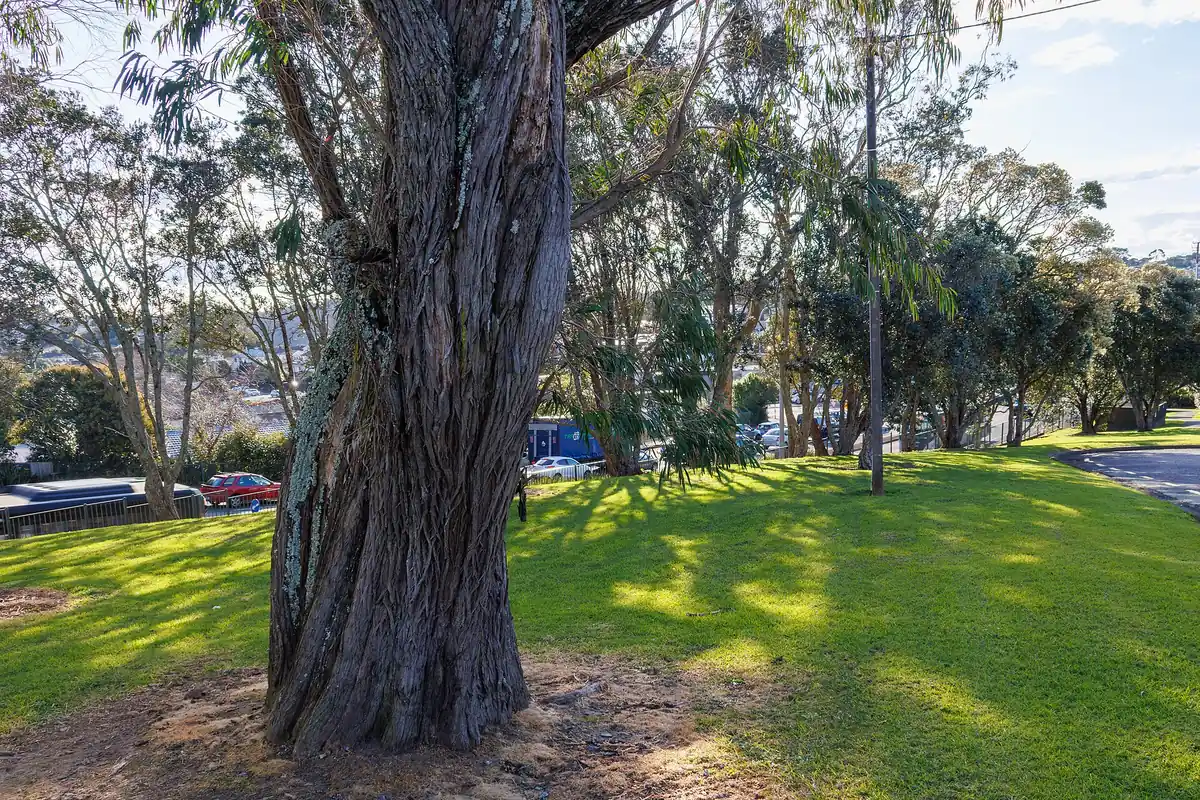
Glenfield grew fast from the 1960s, once the Harbour Bridge opened the North Shore to commuters. Its streets follow ridges, and between them run bush-filled gullies that drain towards the upper Waitematā: the Kaipātiki Creek valley and a string of smaller reserves. Houses from that era are a mix of weatherboard and brick-and-tile, often built on sloping sections with a deck on one side and a part basement or garage underneath. Over the last twenty years many sections have been subdivided for townhouses. Each kind of building gets a slightly different bee problem.
First, is it a bee or a hornet?
In Glenfield, check what the insect is before anything else. The first yellow-legged hornet queen found in New Zealand turned up in Glenfield in October 2025, and every find since has been on the North Shore. MPI is running an eradication response and relies on residents to report sightings.
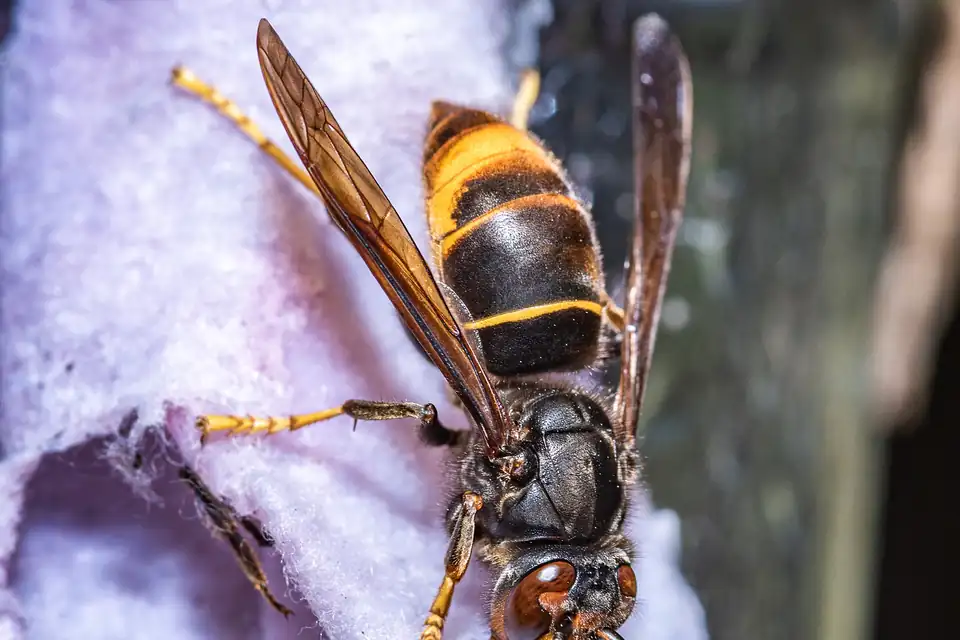

A yellow-legged hornet is bigger than a honey bee or a common wasp, mostly dark brown to black, with a single orange band near the end of the abdomen and bright yellow tips on its legs. Its nests are paper globes, often high in trees. If you think you have seen one, do not try to deal with it. Photograph it from a distance if you can and report it to MPI on 0800 80 99 66 or online. The hornet note has more on what to look for, and the bee or wasp guide covers the everyday look-alikes.
Swarms in the gullies and street trees
From September to December, Glenfield's gully reserves fill with flowering natives and garden escapes, and honey bee colonies in the area build up quickly. Swarms then settle on whatever is close to hand: a branch over the footpath, a fence beside a reserve walkway, a car parked under a tree.
A swarm hanging in the open is not a building problem yet. It is usually calm and often gone within a day. Report it through the Auckland Beekeepers Club or a collector listed by Honey and Bees New Zealand, keep people back and wait. Collection of an easy swarm is often free. The swarm collector page explains what a collector will want to know, and swarms out of reach covers the ones high in a gum or pine on the edge of a gully, where a collector may need climbing gear.
Decks, basements and brick veneer
The housing here sends bees to three places more than most.
Under decks. Many Glenfield houses have a large deck built out over the slope, with a dark space beneath, part screened by battens. Bumble bees nest in the dry litter under there in spring, and the occasional honey bee swarm moves into the framing between joists. A bumble bee nest under a deck that nobody walks across can usually be left until autumn. See bumble bees under decks and compost.
Basement and garage walls. Part basements built into the slope have gaps where the timber framing meets the block or concrete wall. Bees going in and out at that junction usually means comb inside the framing above.
Brick veneer cavities. Brick-and-tile homes have a narrow cavity between the brick and the timber frame, with weep holes along the bottom course. Bees can enter through a weep hole and build in the cavity behind. Getting them out may mean lifting bricks or working from inside, which is slower than lifting weatherboards. The walls and roofs guide explains the options.
Townhouses and shared walls
Newer townhouses in Glenfield are built to a tighter standard, with cavity battens, building wrap and sealed soffits, so colonies are less common in them. When they do happen, they are often in a shared or boundary wall, or in a roof void above a shared garage. Then the question is who arranges the work. If the building is under a body corporate, the common property rules apply. Our rentals and body corporates page sets out who usually does what.
What we do on a Glenfield job
If a nest has to go, we arrange for a local technician to visit. They identify the insect, find the nest, look at the access on the slope and give you a written figure before any work starts. If honey bees can be rehomed by a beekeeper, that comes first. If a colony is inside a wall or roof, the whole nest comes out, not just the bees, because comb and honey left behind attract robbing bees and pests. The cut-out page walks through the job.
Prices you will see
Swarms in the open are often collected without charge. For paid work, few Auckland businesses publish a figure. One Auckland beekeeping business lists $210 for removing bees from a wall cavity, without stating GST or repairs. A Wellington pest controller lists $140 including GST per bumble bee nest. Sloping sections, decks and brick veneer can all add time. The bumble bee nest cost page and the wall and roof cost page explain the difference.
Close by
Devonport has older timber villas and a very different set of problems, and the East Coast Bays sit on the coast to the north-east. All the areas we cover are on the Auckland areas page.
The rest of what we cover, from swarms to wall cut-outs, starts on our page about Bee Removal Auckland.
Quick answers
I saw a big wasp near my Glenfield fence. Should I spray it?
No. Photograph it if you can do so safely, note the place and time, and report it to MPI. Spraying could scatter a hornet colony and make it harder for MPI to find the nest.
Are there more swarms near the bush reserves?
Swarms come from managed hives and wild colonies, and gullies with plenty of flowering plants support both. Whatever the source, a swarm in the open is the same easy job for a collector.
Bees are going into my brick wall through a small hole. What now?
That is probably a weep hole into the veneer cavity. Don't block it while the bees are using it. Ask for an inspection, so the nest can be found and cleared before you seal the gap.