Bees in trees, hedges and garden spots
Not every colony is in the house. Tree hollows, hedges, meter boxes and old bins all host bees in Auckland gardens, and many can safely stay.
Checked
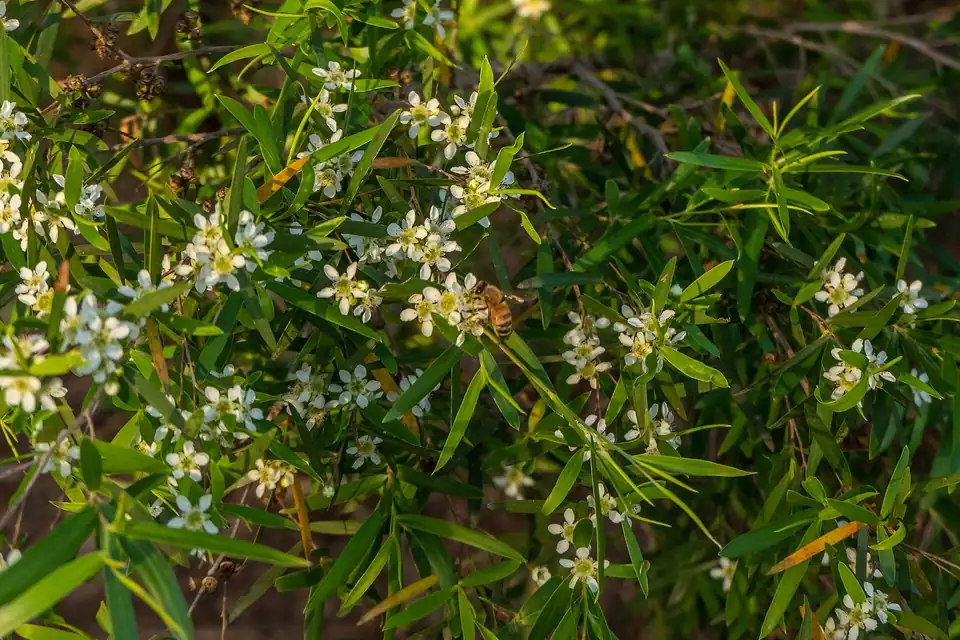
Honey bee colonies outside the house, in a hollow tree, a thick hedge, a water meter box, a letterbox, an old compost bin or a bird box, can often be left alone if they are away from where people walk and play. If a colony is beside a path, a door, a clothesline or a play area, it can usually be rehomed by a beekeeper or removed, and outdoor jobs are generally simpler than cutting into a wall. Bumble bee nests in garden spots last only one season, so waiting is often the cheapest answer. Here is how to judge each case.
Tree hollows
Old trees in Auckland gardens, such as fruit trees, oaks, planes, pōhutukawa and gums, develop hollows where branches fell or rot set in. A colony in a hollow is a natural nest site. Signs are a steady stream of bees in and out of one hole, sometimes with wax or staining at the entrance.
- High up and away from paths: leave it. It will cause no harm.
- Low down and near people: a beekeeper may be able to cut it out, sometimes with an arborist's help to open the hollow.
- The tree needs work anyway: tell the arborist about the bees before they start.
Some trees are protected under Auckland Council rules, so check before cutting into a significant tree. In the Waitākere Ranges, take care around kauri roots. See our Titirangi page.
Hedges and shrubs
A swarm sometimes settles deep in a hedge and, if it can't find a cavity, starts building comb among the branches. These open-air colonies are visible once you part the foliage. They rarely survive winter, but while they are there, hedge trimming is risky. A beekeeper can often remove the comb and bees in one visit. Stop trimming near it until then.
Water meter boxes, letterboxes and garden structures
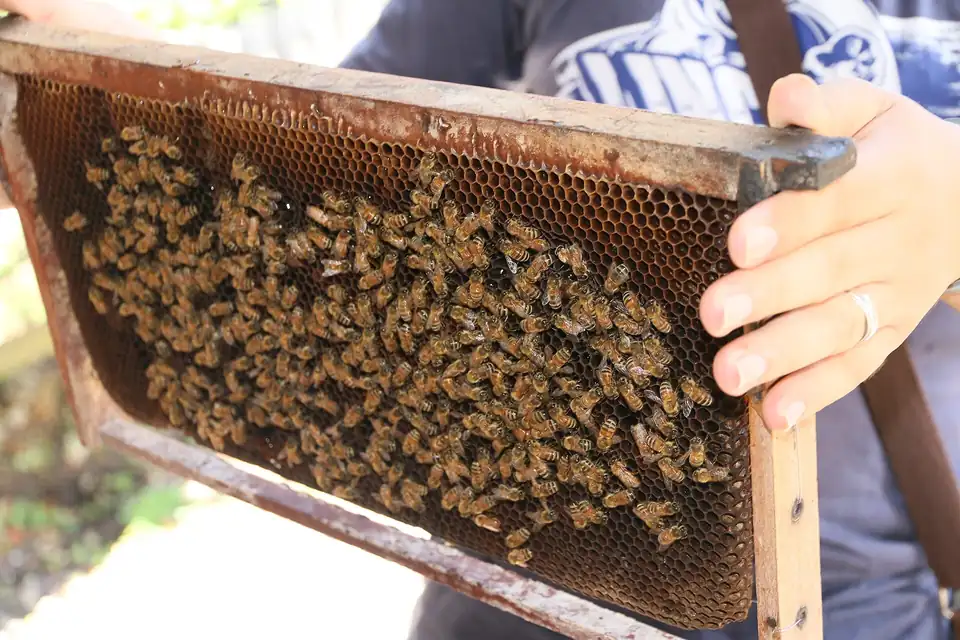

Small enclosed spaces suit small swarms. Common spots in Auckland:
- Water meter boxes set into the footpath or berm. Leave the lid closed: the comb usually hangs right underneath it.
- Letterboxes, especially brick or timber ones with a gap at the back.
- Old compost bins, wheelie bins and stored hive boxes.
- Bird boxes and nesting boxes.
- Garden sheds, cubby houses and stacked timber.
These are usually quick jobs: open the box or lid, lift the comb out, and rehome the bees, as in a frame like the one in the photo. Bumble bees are also common in compost bins and bird boxes; see bumble bees under decks and compost.
In the ground
Honey bees don't usually nest in open ground. Holes in the lawn with bees going in are almost always bumble bees or native solitary bees. See bumble bee nest in the lawn and native and solitary bees. A stream of shiny yellow-and-black insects from a ground hole is a wasp nest, a job for a pest controller.
Leave, rehome or remove?
| Situation | Usual choice |
|---|---|
| Colony high in a tree, away from people | Leave it |
| Colony low in a tree beside a path or play area | Rehome with a beekeeper, or remove |
| Colony in a hedge | Rehome before trimming |
| Colony in a meter box or letterbox | Remove or rehome, then close gaps |
| Bumble bee nest in a bin or bird box | Leave until autumn, or move if in the way |
| Native bees in bare soil | Leave them |
Why outdoor jobs cost less
There is no wall to open or repair, access is usually easier, and the comb can be reached directly. Height, a tree that needs cutting, or a long distance from the road add to it. Published reference prices are few: one Auckland beekeeping business lists $210 for removing bees from a wall cavity (GST and repairs not stated), and a Wellington firm lists $140 including GST per bumble bee nest. See the costs overview.
Pools, birdbaths and water
Lots of bees around a pool, tap or birdbath are usually collecting water, not nesting. See bees at the pool and birdbath.
If the bees here don't match yours, the front page on Bee Removal Auckland sets swarms, bumble nests and wall colonies side by side.
Quick answers
Will bees in a tree hollow damage the tree?
No. Bees use an existing hollow. They don't cause the rot that made it.
Can I fill the hollow after the bees are gone?
You can block the entrance once the colony and comb are removed. An arborist can advise on whether filling or opening the hollow is better for the tree.
Is a colony in my letterbox dangerous to the postie?
It can be a nuisance and a sting risk. Put a note on the letterbox and arrange removal promptly.