Bee or wasp?
Getting this right decides everything else: who to call, what it costs, and whether to report it to MPI. Look at the body, the flight and the nest.
Checked
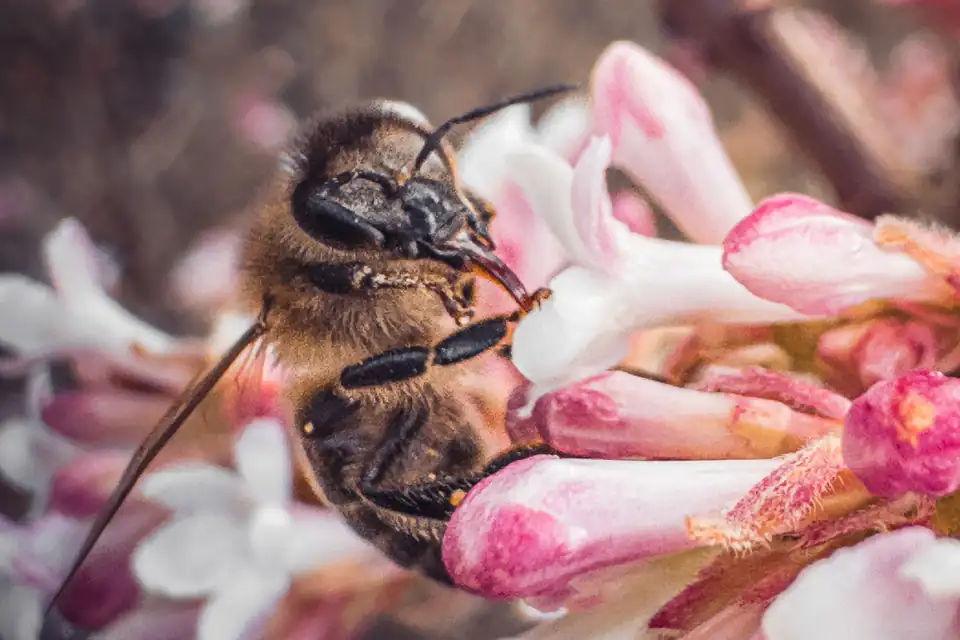
Bees are hairy and look fuzzy; wasps are smooth, shiny and sharply striped, with a narrow waist. Honey bees are golden-brown and fly steadily between flowers; bumble bees are big, round and very furry; German and common wasps are bright yellow and black and dart around food and bins; paper wasps are long and slim with legs dangling in flight. A large, dark wasp with an orange band and yellow feet may be a yellow-legged hornet, and should be reported to MPI on 0800 80 99 66. Bees are our work. Wasps are a pest controller's job, and hornets are MPI's.
Honey bees
- About 12 to 15 mm long, golden-brown to dark brown with paler bands.
- Hairy, especially on the thorax.
- Carry pollen in balls on their back legs.
- Live in colonies with wax comb, in hives, walls, roofs and trees.
- Swarm in spring as hanging clusters.
The photo at the top shows a honey bee worker. For a swarm, see swarms; for a colony in the house, see walls and roofs.
Bumble bees
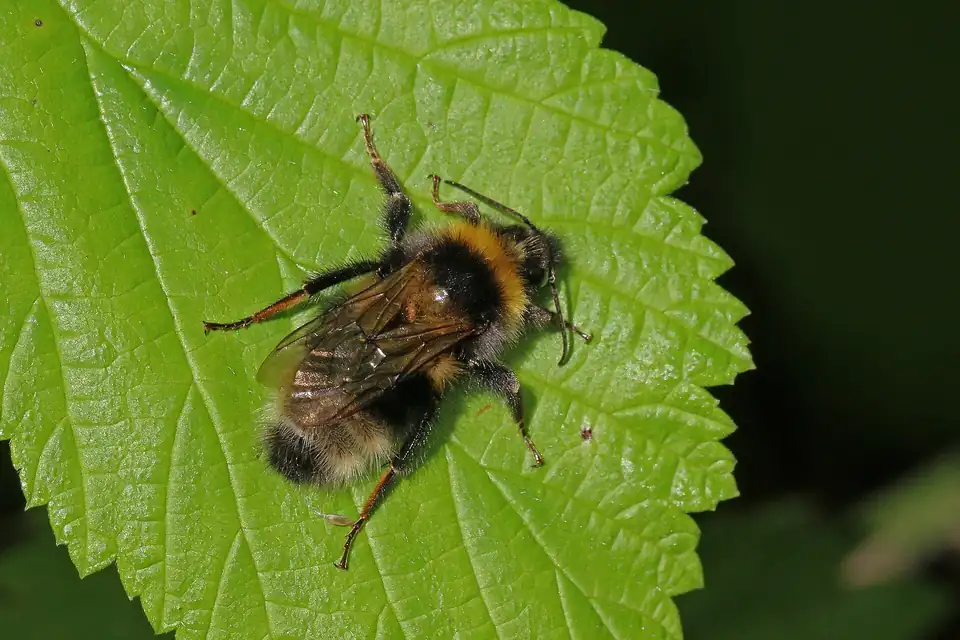
- Large and round, very furry, black with yellow bands and a white or buff tail.
- Slow, heavy flight, often low over lawns and flowers.
- Nest in old rodent holes, under decks, in compost, with a few dozen to a couple of hundred bees.
- Nests last one season.

German and common wasps
- About the size of a honey bee or bigger, bright yellow and black, shiny and almost hairless.
- Narrow waist, fast and erratic flight.
- Strongly attracted to meat, sweet drinks and rubbish in late summer.
- Nests of grey paper, usually in the ground, in wall cavities or roof spaces, with heavy traffic at the entrance.
DOC describes German and common wasps as introduced pests that are very abundant in parts of New Zealand. They sting readily near their nest and can sting repeatedly. A wasp nest is a job for a pest controller; we don't deal with wasps.
Paper wasps
- Long, slender bodies, yellow-and-brown or reddish, with long legs dangling in flight.
- Small open umbrella-shaped paper nests under eaves, in shrubs and on fences, with the cells visible.
- Generally less aggressive than German wasps but will sting if the nest is touched.
Also a pest-control job.
Yellow-legged hornet
- Larger than a German wasp, mostly dark with one orange band near the tail and bright yellow lower legs.
- Hunts honey bees at hive entrances.
- Large paper nests, often high in trees.
If you think you have seen one, photograph it from a distance and report it to MPI. Don't try to remove a nest. See our hornet note.
Native and solitary bees
Small, often black, and easily mistaken for flies or small wasps. They nest singly in soil or stems and almost never sting. See native and solitary bees.
Quick checks from a distance
| Check | Bee | Wasp |
|---|---|---|
| Body | Fuzzy | Smooth and shiny |
| Waist | Thick | Narrow |
| Legs in flight | Tucked up | Paper wasps dangle them |
| Interest in food and bins | Low | High in late summer |
| Nest | Wax comb in a cavity | Grey paper |
| Swarm clusters | Yes, honey bees | No |
Stings: another clue
A honey bee leaves its barbed sting in the skin; wasps don't. See bee sting or wasp sting and the stings page.
If it is bees
Bee nests that need to go are quoted after a visit. For reference, one Auckland beekeeping business lists $210 for removing bees from a wall cavity (GST and repairs not stated), and a Wellington pest controller lists $140 including GST per bumble bee nest.
If the bees here don't match yours, the front page on getting bees removed in Auckland sets swarms, bumble nests and wall colonies side by side.
Quick answers
Are there hornets in Auckland?
The yellow-legged hornet has been found on the North Shore and is the subject of an MPI eradication response. Report any sighting.
Do wasps make honey?
German and common wasps don't store honey as honey bees do. They raid bee hives for honey and larvae.
Can a technician tell me what it is?
Yes. The first job on any visit is confirming what the insects are. If they are wasps, you will be told so you can arrange a pest controller.