Bees on Waiheke Island
An island with vineyards, olive groves, holiday baches and houses on rainwater tanks. Bees thrive here, and getting help to them involves a ferry, so planning matters more than anywhere else in Auckland.
Checked
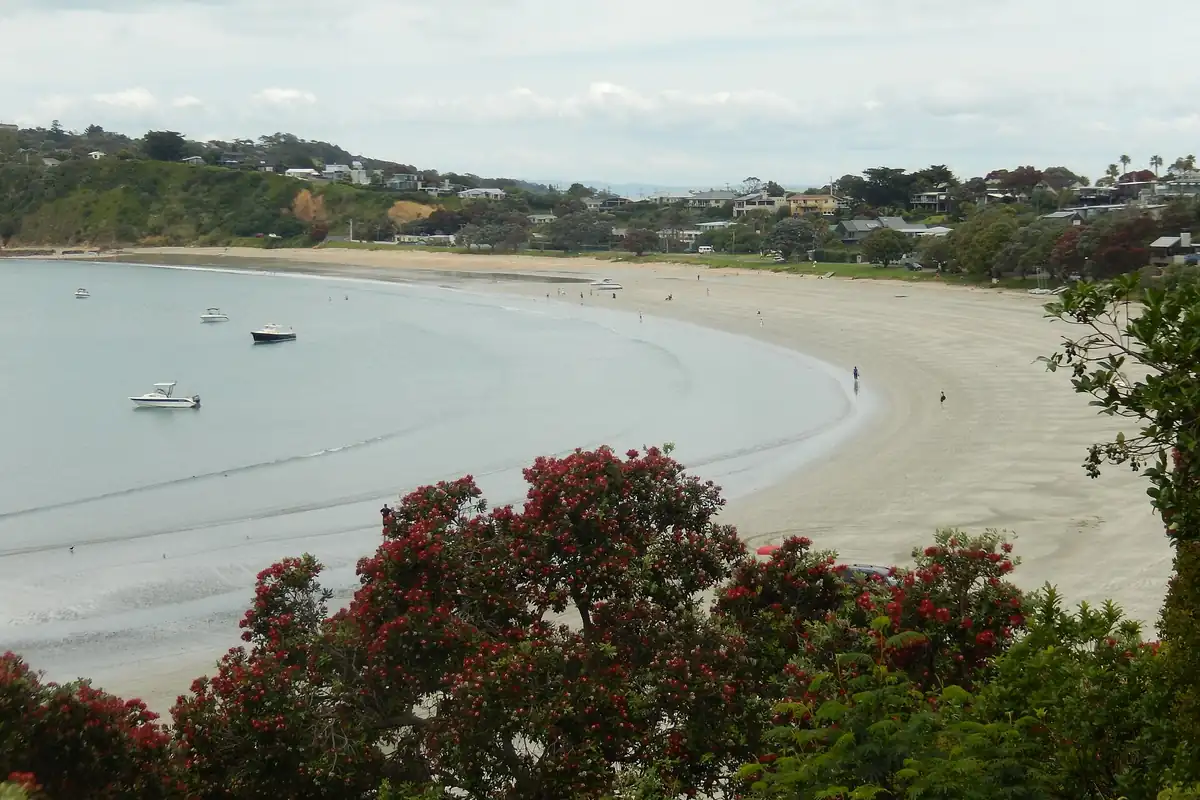
Waiheke is part of Auckland but works like a small rural district. Most of its population lives at the western end, around Oneroa, Blackpool, Surfdale, Ostend and Onetangi, with farms, vineyards and bush further east. Houses range from small baches built in the mid-twentieth century to large modern homes on the ridges. Most properties collect their own rainwater in tanks, because much of the island has no town water supply. And everything that comes from the mainland, people and vans included, comes by ferry.
Rainwater tanks and why bees visit them
Bees need water to cool the hive and dilute stored honey, and on a dry island in summer a tank overflow, a leaking tap or a dripping downpipe is a reliable supply. Bees gathering at a tank are usually just drinking, and they go away when the weather cools.
They become a problem when they get into the tank itself, through an unscreened inlet or a gap at the lid, and drown. That fouls your drinking water. Keep inlet screens and lids intact, fit a first-flush diverter if you can, and give the bees a better option, such as a shallow dish with stones, well away from the house. The pool and birdbath note has more ideas.
Tank stands deserve a check too. A timber stand or the hollow under a concrete tank can hold a colony, and it may sit there for a season before anyone notices.
Baches that stand empty in spring
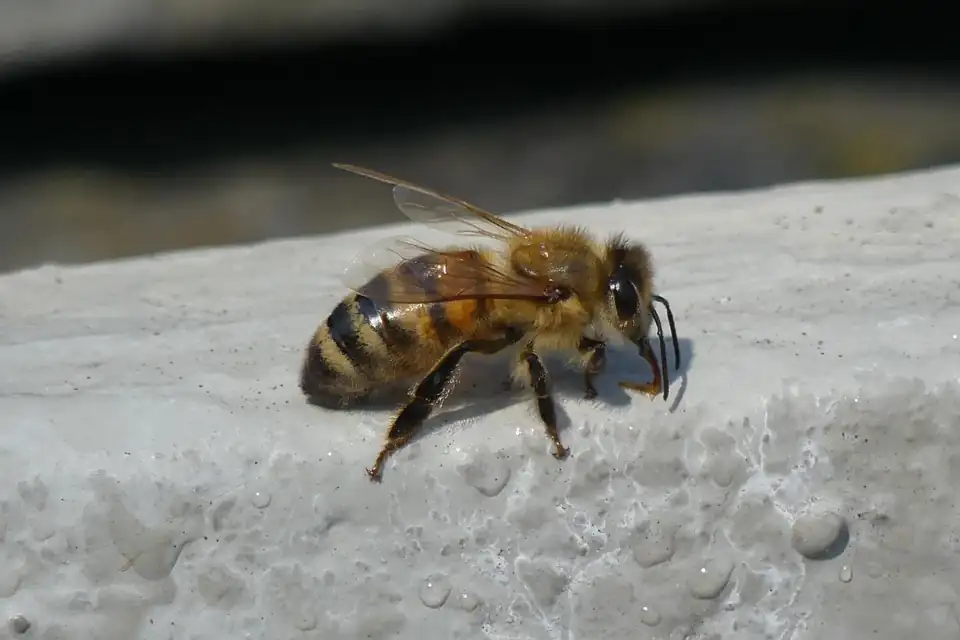

Many Waiheke houses are empty for weeks at a time. A swarm that arrives in October can settle into a soffit, a wall or the space under a deck without anyone seeing it, and by summer the colony is established. If you own a holiday house on the island, ask a neighbour to look at the eaves in spring, and on arrival look for bees streaming in and out of one spot. The bee-proofing note lists the gaps to close before spring.
Vineyards, olive groves and event venues
Vineyard rows, olive groves, lavender and coastal gardens make the island very good bee country. Bumble bees nest in the grass margins and mulched beds, and honey bee swarms land in olive trees and on vineyard posts. For a venue, a swarm on the day of a wedding or a tasting is a real worry. A swarm hanging in the open is calm, though, and the fastest fix is a local beekeeper with a box. Keep guests back, don't spray it, and call early in the day. The first hour with a swarm note lists what to do.
Hospitality sites also have bees drawn to sweet drinks and food waste. That is foraging, not nesting, and lids on bins and drinks help more than anything else.
The ferry and how it affects a job
Everything paid on Waiheke has a travel component. A technician coming from the mainland usually brings a vehicle across on the car ferry, which means booked sailings, a fare, and travel time on both sides. In practice:
- A swarm collector on the island itself will reach a swarm faster than anyone from the mainland. Ask locally first.
- Paid work inside a building is easier to schedule a few days ahead, and sometimes two Waiheke jobs are combined into one trip.
- Tell us the exact address, the road access, and whether the bees are high or low, so the right gear comes over the first time.
Asking island beekeepers
Waiheke has resident beekeepers, from hobbyists to small honey producers. Like every keeper in New Zealand, they must register their apiaries with NZ Bee Health and Biosecurity. A local keeper is often the best call for a swarm, and some will take on a cut-out from a building. If a colony can't be rehomed, for example because it is inside a ceiling over a bedroom, a technician can deal with it. Ask about the comb and honey in any case: it must all come out. See what a cut-out involves.
Stings far from an emergency department
The island has a medical centre and a ferry link, but serious allergic reactions need emergency help fast. If anyone in your household has had a severe reaction to a sting before, take extra care near swarms and nests and keep their prescribed plan to hand. For a sting that causes breathing trouble or swelling of the face or throat, ring 111. Our stings page summarises Health NZ's advice.
What it costs on the island
Swarms in easy reach are often collected free by local keepers. Work inside buildings is quoted after a visit, and ferry travel is part of the figure. The published reference points we found are one Auckland beekeeping business's $210 for removing bees from a wall cavity (GST and repairs not stated) and a Wellington pest controller's $140 including GST per bumble bee nest. The costs overview has the sources.
Back on the mainland
Devonport is a short hop across the gulf; Howick faces the island from the east. The Auckland areas page compares them all.
The rest of what we cover, from swarms to wall cut-outs, starts on our page about Auckland bee removal.
Quick answers
Bees are drinking from my tank overflow. Will they get into the tank?
They can if there is a gap. Check the inlet screen, the lid and the overflow pipe, and fix any gaps while the bees are only drinking.
Is there a beekeeper on Waiheke who collects swarms?
There are resident beekeepers on the island. Honey and Bees New Zealand keeps a list of swarm collectors by region, and the Auckland Beekeepers Club can pass on swarm reports.
Can I bring a swarm across to the mainland?
Moving bees means keeping them, and anyone keeping bees must be a registered beekeeper. Leave collection and moving to a beekeeper.