Bees in a chimney
An unused brick chimney is a perfect bee home: tall, dry, sheltered and open at the top. Getting a colony out is harder than from a wall, and smoke won't do it.
Checked
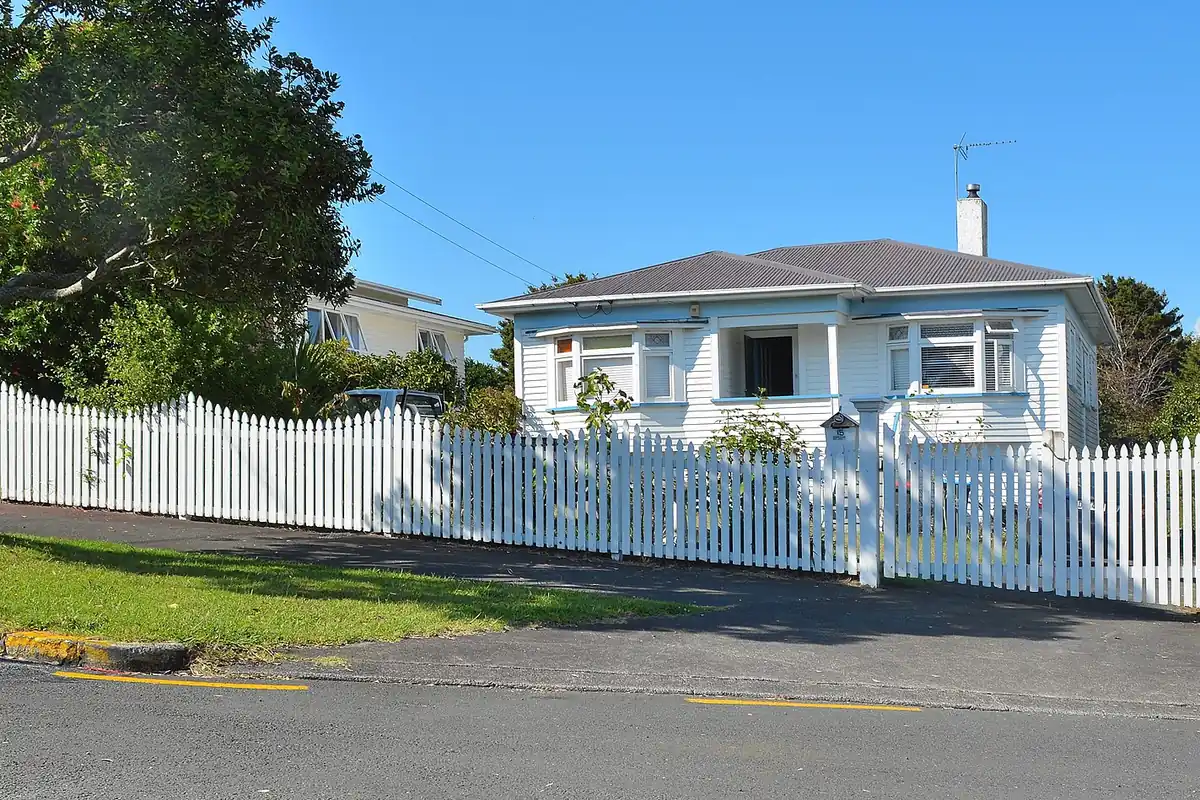
Honey bees often move into chimneys that are no longer used, especially in Auckland's villas and bungalows, where brick chimneys are common and many have lost their caps. A colony usually builds comb inside the flue, a short way down from the top, or in a void beside the flue where brickwork has gaps. To clear it, the comb and honey have to come out, either from the top of the chimney, from the fireplace below, or by opening the chimney breast. Lighting a fire or smoking the flue won't remove the colony, and melting wax and honey in a flue is a fire risk. Once it is clear, the chimney should be capped or meshed so the next swarm can't get in.
Signs bees are in your chimney
- Bees flying in and out at the top of the chimney, steadily, on fine days.
- A hum from the fireplace or chimney breast.
- Bees appearing in the room with the fireplace, especially near the grate or around a closed damper.
- Wax, debris or dead bees falling into the fireplace.
- Honey staining on the chimney breast in an older colony.
If you aren't sure whether the bees are using the chimney or just flying past it, watch the top for a few minutes. A colony has a constant two-way stream at one point. See signs of bees in a wall.
Why lighting a fire won't fix it
Smoke disturbs bees and may drive some out, but the comb stays wedged in the flue. Heat then softens the wax and honey, which can drip down the flue, and a flue lined with wax and honey is a fire hazard. Survivors may come into the room. If you use the fireplace, have the chimney cleared before you light it, and swept afterwards.
How chimney colonies are removed

The approach depends on where the comb sits and how the chimney is built:
- From the top: for comb near the top of the flue, a technician works from the roof, removes the cap or top bricks if needed, and cuts the comb out. This needs safe roof access.
- From the fireplace: for comb low in the flue or near the smoke shelf, work can be done from below, with the room sealed off.
- Through the chimney breast: for comb in a void beside the flue, a small opening in the breast may be the most direct route.
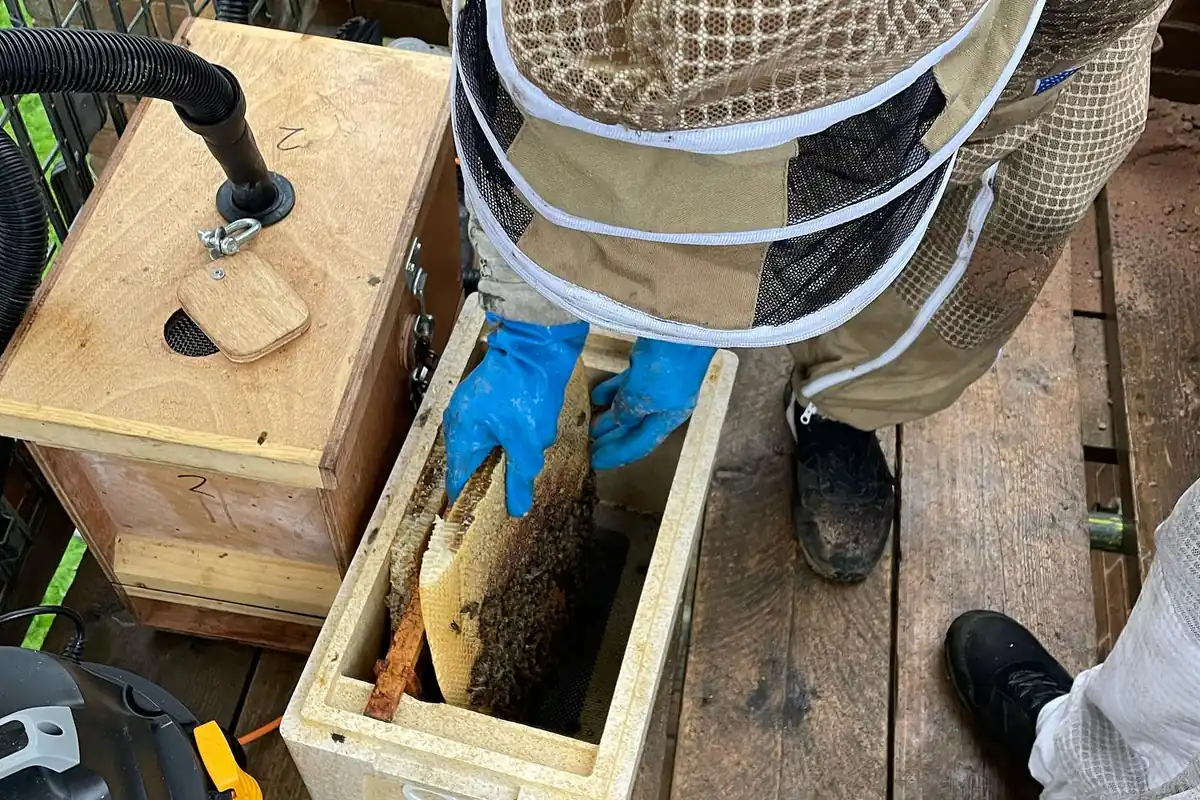
- Rehoming: if the comb can be lifted out in pieces, a beekeeper may tie brood comb into frames, as in the photo of a wall cut-out. Many chimney colonies are too awkward for that.
All the comb and honey has to come out. Leaving it invites the next swarm and draws robbing bees, which can spread American foulbrood. See after the bees are out.
Working on the roof safely
Chimneys sit on the highest, steepest part of the roof. Paid roof work must manage fall risk, and on clay tiles or slate the roof itself needs careful handling. Expect a chimney job to need more time and gear than a wall at ground level. The roof space page has more on roof work.
Capping and repairs afterwards
Once the colony is out, close the chimney to bees:
- A mesh guard or cap on top of an unused chimney.
- Repointing gaps in the brickwork where bees were getting into side voids.
- Closing an unused fireplace opening if the chimney is permanently out of service.
A builder or chimney specialist can do this. Some older Auckland chimneys are in poor condition and may need assessing for earthquake safety, which is separate from the bee job.
What it costs
Chimney work is quoted after a visit, because height and the chimney's construction vary so much. No Auckland business we found publishes a chimney price. For reference, one Auckland beekeeping business lists $210 for removing bees from a wall cavity, without stating GST or repairs, and a Wellington pest controller lists $140 including GST for destroying a honey bee colony in a cavity, with comb removal not included. See wall and roof costs.
If the bees here don't match yours, the front page on bee removal in Auckland sets swarms, bumble nests and wall colonies side by side.
Quick answers
Can I just block the top of the chimney?
Not while bees are inside. They will look for another way out, often into the room. Remove the colony first, then cap it.
Will a chimney sweep remove bees?
Sweeps don't usually take on live bee colonies. Have the bees and comb removed, then book the sweep.
Do bees in a chimney damage it?
Bees don't damage brick, but honey and wax can stain and soak the inside of the flue, and the work to remove them may disturb old bricks.