American foulbrood and abandoned comb
New Zealand runs a national plan to wipe out American foulbrood in managed hives. Honey left behind in walls, sheds and trees works against it, and householders can help without keeping a single bee.
Checked
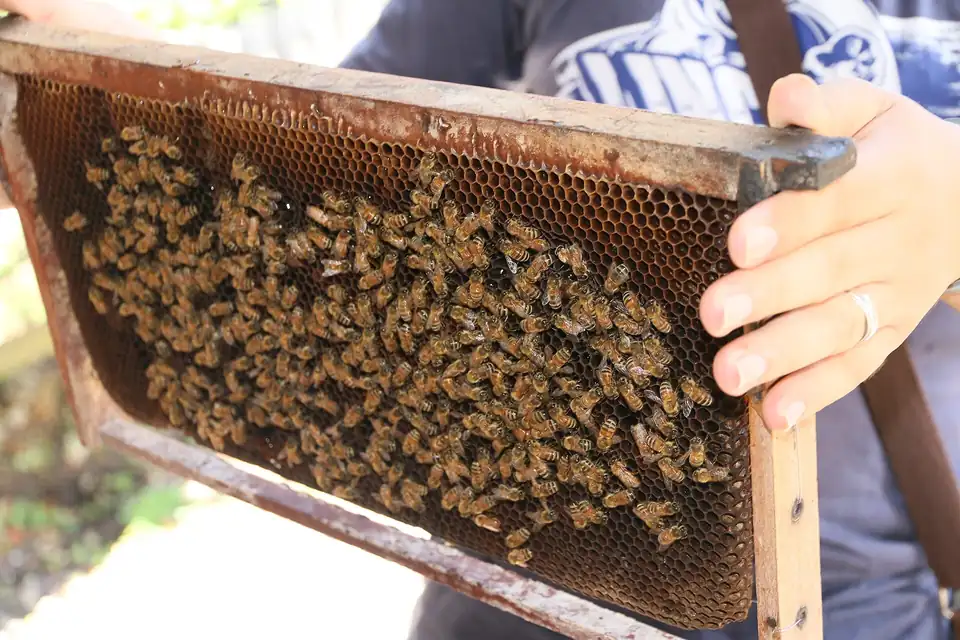
American foulbrood, usually shortened to AFB, is a bacterial disease of honey bee larvae caused by Paenibacillus larvae. It kills the brood and, over time, the colony. Its spores are extremely tough: they survive for decades in old comb, honey and hive equipment. New Zealand controls AFB under a national pest management plan, run by NZ Bee Health and Biosecurity, whose aim is to eliminate the disease from managed colonies. Abandoned comb and honey, in walls, sheds and old hives, is one of the ways it keeps spreading.
How AFB spreads
Larvae are infected when nurse bees feed them food contaminated with spores. Inside a colony, AFB spreads through shared food. Between colonies, it spreads in three main ways, according to NZ Bee Health and Biosecurity:
- Beekeepers moving equipment such as frames, boxes and honey between hives.
- Robbing. Bees from healthy colonies steal honey from a weak or dead one and carry spores home.
- Drifting bees entering the wrong hive.
Robbing is where householders come in. A colony that dies in a wall, or is sprayed and left, becomes an unguarded store of honey. If that colony had AFB, every hive that robs it can be infected.
What the national plan requires
The Biosecurity (National American Foulbrood Pest Management Plan) Order 1998 sets out the rules. The main ones:
- Every beekeeper must register with NZ Bee Health and Biosecurity, and every apiary must be recorded, now in the HiveHub system.
- Beekeepers must inspect their hives for AFB and file an Annual Disease Return every year.
- A beekeeper who finds AFB must destroy the infected colony and equipment, usually by burning, within seven days, and report it within seven days.
- Antibiotics must not be used in hives to mask AFB, and NZ Bee Health and Biosecurity advises against feeding bees honey from other colonies.
The plan is funded by a levy on beekeepers. For 2026/27, NZ Bee Health and Biosecurity's levy is $40 per beekeeper ($46 including GST) plus $1.95 per colony, excluding GST.
Why abandoned comb matters so much
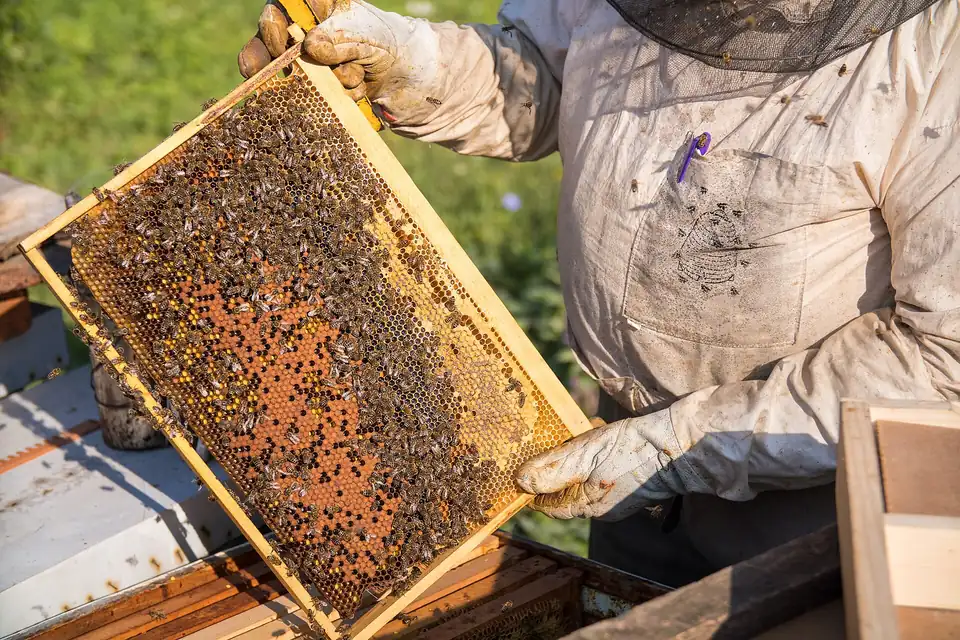

AFB spores in honey and comb stay infective for many years. A beekeeper who burns infected hives is doing the hard part, but if a feral colony in a wall nearby dies of AFB and its honey sits there, robbing bees reinfect the area. That is why we always remove the comb and honey when a colony in a building is destroyed, and why we tell people not to spray and seal.
What householders can do
You don't need to be a beekeeper to help:
- Have wall colonies removed properly, comb and honey included. See after the bees are out.
- Don't leave honey or old comb outside, even a jar or a frame, where bees can reach it.
- Don't feed bees honey, including in a dish of "bee water". Use plain water.
- Get rid of abandoned beehives on a property you buy. Old hive boxes with comb are a disease store. A registered beekeeper can advise.
- Don't take honey from a wild colony to eat or share. The honey from a wall colony note explains why.
What AFB looks like
AFB isn't something you need to diagnose, but beekeepers look for patchy, sunken and greasy cappings over the brood, perforated cappings, and dead larvae that rope out when probed with a matchstick. Old infected cells end up with hard, dark scales stuck to the cell wall. If you are a beekeeper and suspect AFB, follow NZ Bee Health and Biosecurity's guidance and report it within seven days.
Other bee diseases and pests
AFB is one of two controlled bee pests in New Zealand; the other is varroa. Others, such as small hive beetle and European foulbrood, are absent, and MPI wants to keep it that way. Anything unusual in a hive is reported to MPI on 0800 80 99 66. See varroa and wild colonies.
This note sits under getting bees removed in Auckland, where the front page sorts out which bee jobs need a visit and which don't.
Quick answers
Can people catch AFB from honey?
No. AFB affects honey bee larvae, not people. The concern is for bees, which is why honey from unknown colonies shouldn't be fed to bees or left where they can reach it.
Is AFB common in Auckland?
AFB is found throughout New Zealand at low levels. NZ Bee Health and Biosecurity publishes data on cases. Every infected colony left unmanaged makes it harder to eliminate.
Who do I tell about an abandoned hive?
If the hive is on your property, ask a registered beekeeper to deal with it. If you think hives are abandoned elsewhere, NZ Bee Health and Biosecurity can be contacted.