Bumble bees under the deck and in the compost
Dry, sheltered and full of old nesting material: decks, compost bins and garden sheds suit bumble bee queens perfectly. Most of these nests can stay until autumn.
Checked
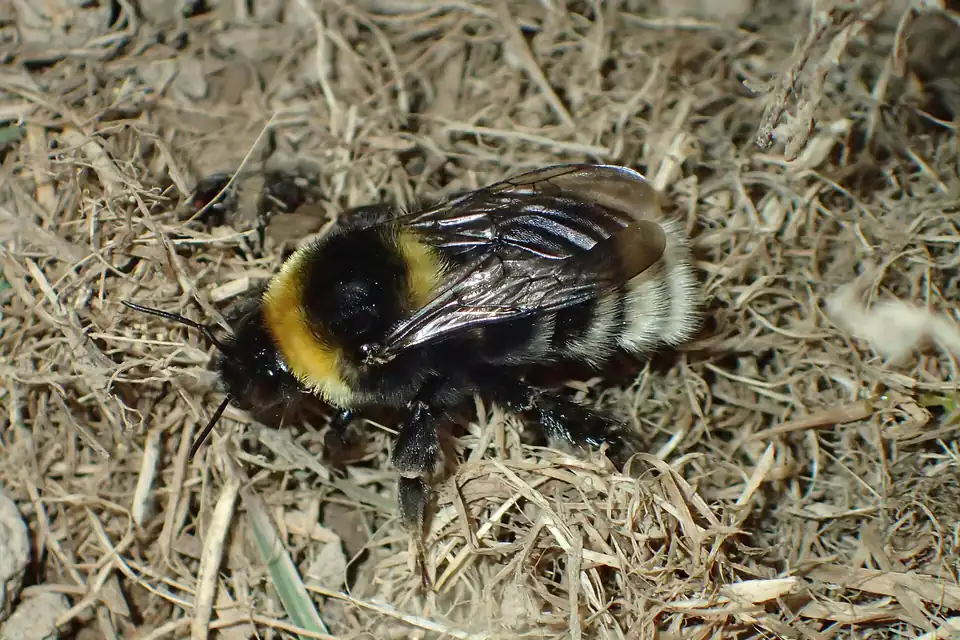
In early spring, bumble bee queens that survived the winter search low and slow over gardens for a nest site. They want somewhere dry, dark and insulated, ideally with old bedding material like dry grass, moss or the remains of a rodent nest. The space under a deck, the bottom of a compost bin, a pile of sacks in a shed or an old bird box all fit. A nest started there grows through summer and dies out at the end of the season. The bees are gentle unless the nest is disturbed, so a nest in one of these places can usually be left.
Under decking
Decks built close to the ground leave a sheltered, dry space underneath, and queens slip in through gaps between boards or at the edges. The first sign is usually a single large bee repeatedly flying in at the same gap, or a low hum from under the boards on a warm day.
Living with it is mostly easy:
- Walking on the deck doesn't usually bother the bees. Avoid stamping right over the nest.
- Don't block the gap they use; they may chew through other material or emerge somewhere less convenient.
- Keep pets from poking at the entrance.
If the entrance is right beside a door or the steps, so that people constantly walk through the flight path, the nest may need moving. Lifting deck boards to reach a nest is best left to someone with the gear.
In compost bins and heaps
Compost bins are warm and full of soft material. Bumble bees often nest in the drier top layer of a bin that isn't turned often, or in the base of a heap. They will defend it if you dig into it. Options:
- Pause turning the compost until the nest dies out, usually by late summer or autumn.
- Start a second bin for kitchen scraps in the meantime.
- If you must use it, approach in the evening, and accept a few stings may result. Better to wait.
Sheds, sacks and garages
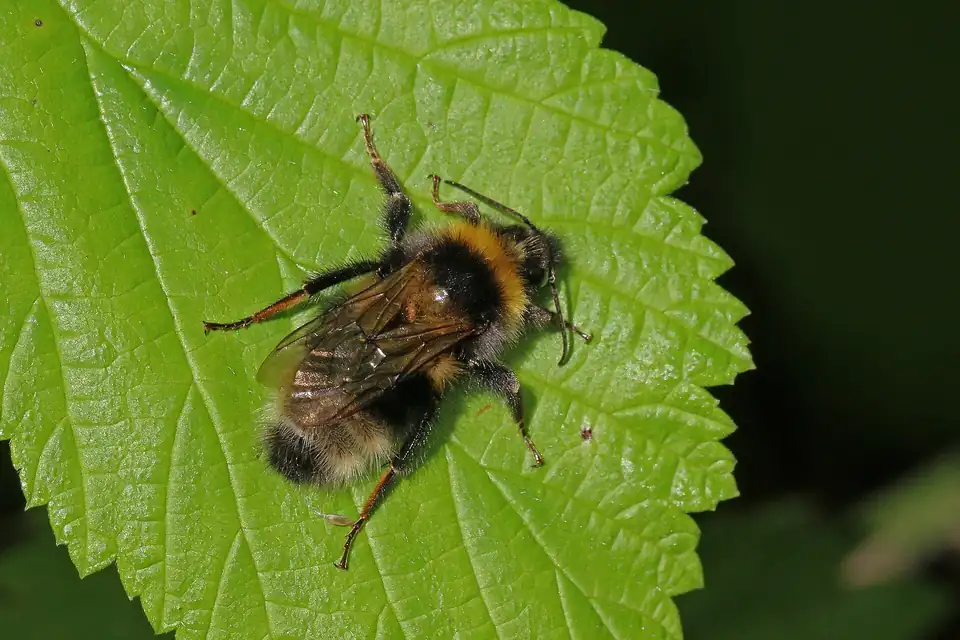

Piles of sacking, old cushions, insulation offcuts and boxes in a shed or garage can host a nest. The bees come and go through a gap in the wall, window or door. Plan shed work around the nest for a few weeks, or have it moved if you need the space.
Bird boxes and wall voids
Bumble bees sometimes take over a bird box, especially one with old nesting material. In a wall, a bumble bee nest is small and seasonal, and unlike a honey bee colony it doesn't leave kilograms of comb behind. It may not need removing at all. If you aren't sure which bee is going into your wall, compare the traffic: bumble bees come and go singly, honey bees in a busy stream. See swarm or established hive.
How long will it last?
The NZ Bumblebee Conservation Trust says a nest lasts about two to three months. In Auckland, nests started in early spring can be finished by midsummer, and later nests may run into autumn. Once new queens leave, the nest is abandoned for good. Old nests aren't reused, though another queen may pick a nearby spot next year.
When moving or removing makes sense
Leave the nest unless it is a real hazard. It may need dealing with if:
- It is at a door, step or path used every day.
- It is where children play.
- Someone in the household has a serious sting allergy.
Moving a nest is possible but not always successful. The moving a bumble bee nest page explains how it is done, and the bumble bee costs page has the published prices.
Making next year's nests less likely in awkward spots
- Close gaps around the edges of low decks with mesh in winter, when no nest is active.
- Keep compost bins lidded and turned.
- Store sacks and cushions off the floor or in sealed containers.
- Provide better nest sites well away from the house, such as an undisturbed corner with long grass.
This note sits under Auckland bee removal, where the front page sorts out which bee jobs need a visit and which don't.
Quick answers
Are bumble bees under my deck dangerous?
Not usually. Bumble bees are reluctant to sting and the colony is small. Most stings happen when someone puts a hand on the nest or a dog digs at it.
Will they damage the deck?
No. Bumble bees don't chew timber. They use existing cavities.
Do bumble bees come back to the same deck?
Old nests aren't reused, but the same sheltered spot may attract a new queen in a later year.