A bumble bee nest in the lawn
A small hole in the grass with big furry bees going in and out, a few an hour. It is almost certainly a bumble bee nest, and it will be gone by autumn.
Checked
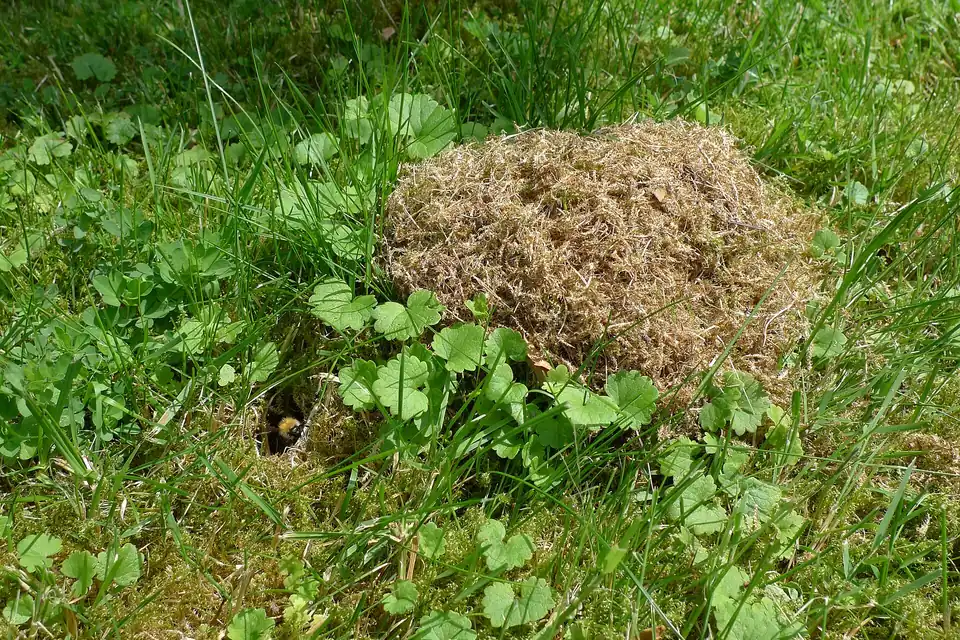
Bumble bee queens often nest underground, and an old mouse or rat hole under a lawn is a favourite spot. The tell-tale sign is a small hole, often with a tuft of dry grass or moss at the entrance, used by large, furry, black-and-yellow bees that come and go one at a time. Unlike a wasp nest, the traffic is slow: a few bees a minute at most. The NZ Bumblebee Conservation Trust says bumble bees are not aggressive and do no structural damage, and that a nest lasts only a few months. Most lawn nests can simply be worked around.
How to tell it is bumble bees
- The bees: large, round and furry, black with yellow bands and a white or buff tail. Most Auckland lawn nests belong to the buff-tailed bumble bee, shown above.
- The traffic: slow and irregular, with single bees flying in low and walking into the hole.
- The entrance: a hole the width of a finger or thumb, often hidden in thick grass or at the base of a shrub.
- No paper, no swarm: bumble bees don't build papery nests or hang in clusters.
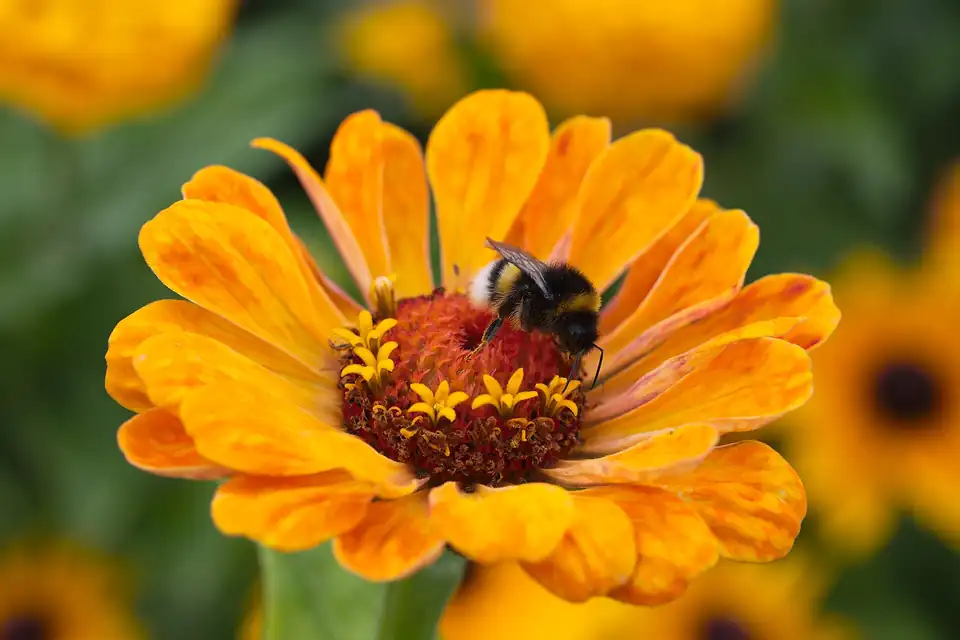

If the insects are shiny, sleek and pouring out in a steady stream, you probably have a wasp nest in the ground, which is a different matter. Check the bee or wasp guide and keep well back from it.
How a lawn nest grows and ends
A queen that survived winter finds the hole in early spring, builds a small wax cup of nectar and lays her first eggs. Her first workers take over foraging, and the nest grows through summer, typically to a few dozen or a couple of hundred bees. Late in the season it raises new queens and males, who leave to mate. The old queen and workers then die, and the nest is not reused. The NZBCT puts the life of a nest at about two to three months.
Can I mow over it?
Usually yes, with care. Bumble bees defend the nest only when it is disturbed directly. To mow safely:
- Mow in the cool of the evening or early morning, when fewer bees are flying.
- Raise the mower blade over the nest area, or leave a small patch of longer grass around the entrance.
- Don't stand on the entrance, and don't use a line trimmer right at the hole.
- Keep children and dogs from digging at it.
Vibration directly over the nest can bring out a few defenders. If that happens, walk away calmly; bumble bees don't chase people far.
When a lawn nest needs to go
Leave it if you can. It is a good pollinator colony and it will die out on its own. It may need dealing with if:
- It is in the middle of a play area or a path used every day.
- Someone in the household has a serious allergy to stings.
- A dog keeps digging at it and getting stung.
The NZBCT has guidance on moving nests, and moved nests don't always survive. Where moving isn't practical, a nest can be destroyed. Either way, the work is best done in the evening when the bees are home. See moving a bumble bee nest and the bumble bee nest cost page.
Don't pour things down the hole
Petrol, boiling water and household chemicals poured into a nest are dangerous to you, harm soil and lawn, and often fail because the nest sits off to one side of a tunnel. Petrol in particular is a fire and contamination hazard. If it has to go, ask for help.
After the season
Once the nest dies out in late summer or autumn, there is nothing to clean up. The small wax cells break down in the soil. A different queen may choose the same area next spring if there are still old rodent holes, so filling in the hole in winter can help.
Bumble bees are not the only ground nesters
Small native bees also nest in bare soil, often in groups, leaving tiny mounds of earth. They are harmless and worth leaving. See New Zealand's native bees.
This note sits under bee removal in Auckland, where the front page sorts out which bee jobs need a visit and which don't.
Quick answers
Will bumble bees sting my children?
They rarely sting unless squeezed, stood on or their nest is dug into. Teach children to leave the hole alone, and supervise around it.
Do bumble bees make honey I can collect?
They store small amounts of nectar in wax pots, nothing like a honey bee hive. There is nothing to harvest.
Will the nest spread to other parts of the lawn?
No. Each nest has one queen and one entrance. New nests next year come from new queens.