Why swarms keep coming back to the same spot
Same chimney, same corner of the eaves, every spring. It isn't the same bees. Old nest sites carry signals that new swarms find irresistible.
Checked
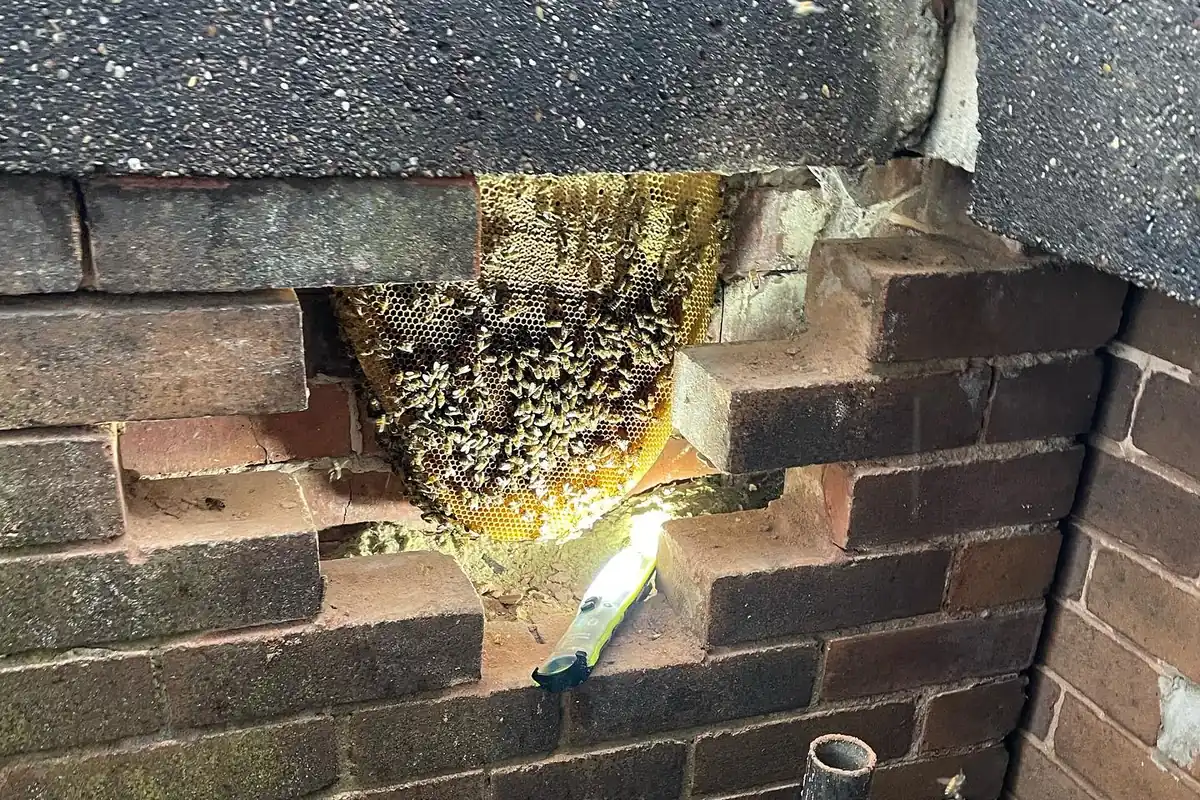
A spot that has held a honey bee colony before is much more likely to attract the next swarm. Scout bees choose a nest site by inspecting cavities for size, dryness, entrance size and height, and an old nest site scores well on all of them, because it has already passed that test once. On top of that, old comb, wax and propolis leave a scent that scouts recognise as "bees have lived here". If the comb from a previous colony was left inside, or the entrance was never sealed, new swarms keep finding it. Breaking the cycle means removing the old comb and closing the entrance properly.
How scouts choose a home
When a swarm leaves its hive and clusters, a few hundred older workers become scouts. They fly out and inspect possible cavities, walking around inside them for many minutes. Research by Cornell's Thomas Seeley, described in his book Honeybee Democracy, found that scouts favour a cavity of roughly 40 litres, an entrance of about 15 square centimetres near the bottom, a dry interior and a position a few metres off the ground. Scouts that find a good site recruit others with dances, and the swarm moves when enough scouts agree on one site.
A wall cavity between two studs, a chimney flue or a hollow tree often fits that description. The wall in the photo above held a large colony for exactly that reason.
Why an old site is so attractive
- It is the right size and shape, and nothing about the building has changed.
- The entrance is already there, often slightly enlarged by previous traffic.
- The scent of old comb and propolis stays in timber and lining for years.
- Leftover comb gives a head start. Scouts treat existing comb as a valuable resource, because building wax costs a colony a lot of honey.
So a house where a colony was sprayed and left, or where bees died out naturally, can host a new swarm the very next spring. Beekeepers use the same effect on purpose: bait hives with a piece of old comb catch swarms. Read why not to spray a wall colony.
Is there a colony nearby?
Repeated swarms landing in the same garden, rather than moving in, usually mean there is a source colony close by: a neighbour's hives, a colony in a tree, or a colony in another part of your own house. Swarms often cluster within a short distance of the colony they left. If swarms hang in your trees every spring, look around for where they are coming from. See neighbours' bees and council rules.
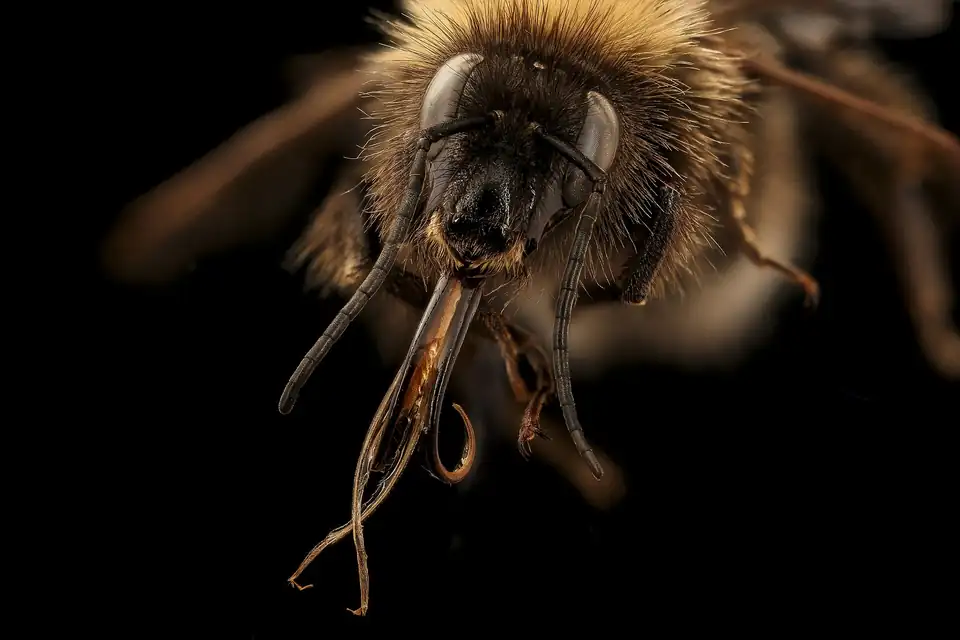

Bumble bees are different. Old bumble bee nests aren't reused, though a good spot with old rodent holes may attract another queen. The photo shows a garden bumble bee, one of the four species in New Zealand; see New Zealand's bumble bee species.
Breaking the cycle
- Have any active colony removed with all of its comb. See what a cut-out involves.
- Clean the cavity. Scrape out wax and propolis, remove stained insulation, and wipe away honey residue. See after the bees are out.
- Close the entrance properly with mesh or sealant, and repair the cladding.
- Check nearby gaps that are similar. Bees that can't use one entrance may find the next.
- Do it before spring, ideally by early August in Auckland.
When the spot is a tree
A hollow tree that hosts colonies year after year is a natural nest site. If it is away from the house and paths, the simplest choice is to let it be. If it is a problem, a beekeeper may cut out a colony, and an arborist can advise on the tree. See trees, hedges and gardens.
This note sits under bee removal around Auckland, where the front page sorts out which bee jobs need a visit and which don't.
Quick answers
Will a swarm return to my house after being collected?
The collected swarm won't; it is in a hive. Another swarm may choose the same spot if it is still open.
Does the smell of old comb really last years?
Wax and propolis are long-lasting, and beekeepers routinely use old comb to attract swarms. Cleaning and sealing the cavity is the reliable fix.
Could I set up a bait hive to catch swarms instead?
Only if you are a registered beekeeper who will manage the colony. Otherwise you are inviting bees to a box that will need dealing with.
Where this comes from
- University of California Riverside, Unwanted honey bees
- University of Georgia Bee Program, Honey bee swarms and bees in walls
- Thomas D. Seeley, Honeybee Democracy (Princeton University Press, 2010)