New Zealand's native bees
Small, dark and easy to mistake for flies, New Zealand's native bees live quietly in lawns, banks and hollow stems. They are harmless, and they are worth protecting.
Checked
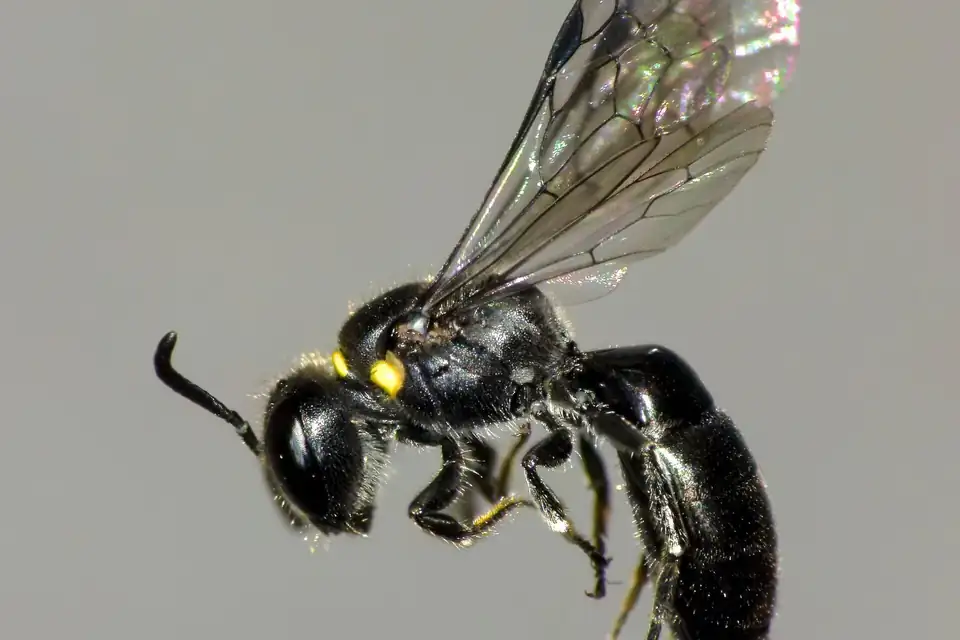
New Zealand has a small native bee fauna: about 27 species by a recent count in the New Zealand Journal of Ecology, though some sources give 28. All of them are solitary. There are no native honey bees and no native bumble bees; each native female builds and provisions her own nest. Most native species nest in the ground, digging short tunnels in bare, dry soil, and a few use hollow stems or old beetle holes in wood. They are much smaller than honey bees, often mostly black, and many people never notice them. They very rarely sting people, and when they do it is mild.
The main groups
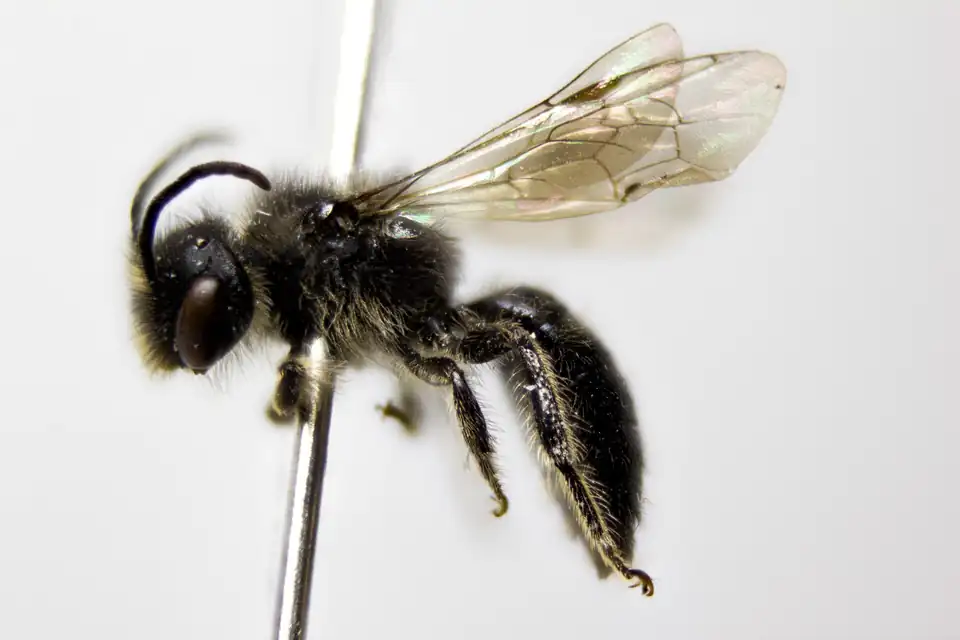
- Leioproctus. The largest group of native bees. Mostly small to medium, dark and hairy, and ground-nesting. Many visit native shrubs such as kānuka, mānuka and hebe. The museum specimen photo below shows one.
- Lasioglossum. Small, slim, brownish or dark bees, also ground-nesting. Lasioglossum sordidum is one of the most abundant native bees and turns up in lawns and gardens.
- Hylaeus, the masked bees. Small, sleek, almost hairless black bees with yellow or pale marks on the face, as in the lead photo. They nest in hollow plant stems and holes in wood rather than soil, and carry pollen in their crop rather than on their legs.
Where you will see them in Auckland
- Lawns and paths with thin, dry, sunny patches, where you may notice tiny mounds of soil around holes the width of a pencil lead.
- Clay banks and cuttings, which suit ground-nesting species because the soil drains well.
- Native plantings, especially kānuka, mānuka, hebe, flax and pōhutukawa.
- Old fence posts, dead branches and bamboo stakes for the masked bees.

Ground-nesting native bees sometimes nest in groups, so a sunny bank may have dozens of holes. It can look alarming, but each hole belongs to a single female who is busy provisioning her own brood.
Are they a problem?
Almost never. Native bees don't swarm, don't build comb, don't damage buildings and very rarely sting. A cluster of holes in a lawn or a path edge is not an infestation. Activity is seasonal, and the bees will be underground again once the flowering they depend on has passed.
The usual reasons people call about native bees are mistaken identity, a wasp nest in the ground or a bumble bee nest, and worry about children or pets near nesting holes. If you see a steady stream of large insects into one hole, it isn't native bees. Compare the bumble bee lawn nest note and the bee or wasp guide.
Why leave them alone
Native bees pollinate native plants that evolved alongside them, and they contribute to pollination in gardens and crops. They are also part of New Zealand's natural heritage: most species are found nowhere else. There is no reason to treat a native bee nesting area, and pesticides spread on lawns to kill them would also harm worms, other insects and birds.
Making room for native bees
- Leave a sunny patch of bare or thinly grassed soil, especially on a slope.
- Plant natives that flower across the seasons: kānuka, mānuka, hebe, harakeke, kōwhai.
- Leave dead stems and some old wood standing for masked bees.
- Avoid insecticides where bees forage or nest.
- Insect hotels with drilled wooden blocks can suit masked bees and introduced leafcutter bees; see leafcutter and mason bees.
Native bees and honey bees
Honey bees, introduced to New Zealand in 1839, and bumble bees from 1885, now share the flowers with native bees. Research continues on how much they compete. For your garden, the advice is simple: plenty of flowers and little spraying supports all of them. The native and solitary bees page explains when solitary bees in or near a house need attention.
This note sits under getting bees removed in Auckland, where the front page sorts out which bee jobs need a visit and which don't.
Quick answers
Do native bees make honey?
No. Native bees store pollen and nectar for their own larvae in individual cells, not as honey to harvest.
Will native bees sting my children?
Very unlikely. Most are too small to sting people effectively, and they are not defensive.
Can I move a native bee nesting bank?
There is no need. If they are in a path you use, a temporary detour for a few weeks is the kindest option.