What happens to a swarm after it is collected
The collector drives off with your swarm in a box. Here is what usually happens next, and why the rules around it protect every hive in Auckland.
Checked
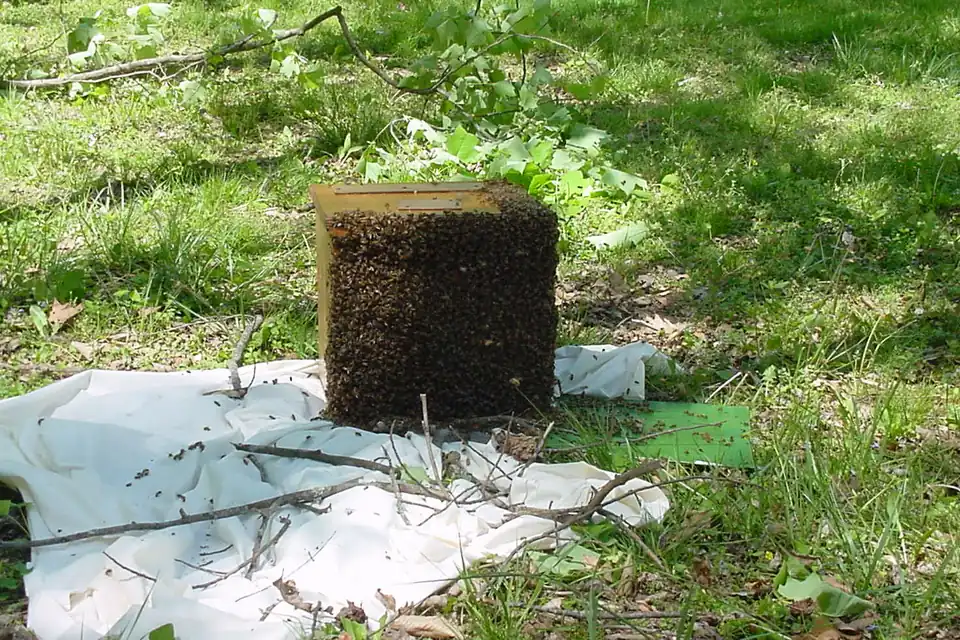
A collected swarm becomes a new colony in a beehive. The collector, who must be a registered beekeeper to keep the bees, takes the box home, usually in the evening once the stragglers have walked in, and transfers the bees into a hive with frames. Many keepers keep a new swarm apart from their other hives for a while, watch its first brood for signs of disease, and treat it for varroa. Within a few weeks a healthy swarm has drawn new comb, the queen is laying, and it is on its way to being a productive hive. That is why so many beekeepers collect swarms for free.
In the box: the first evening

Collectors usually leave the swarm box at the site until dusk, with a small opening so flying bees can join the queen inside. Once most bees are in, the entrance is closed and the box is moved. Swarm bees can survive a few days in a ventilated box if needed, because they set out full of honey, but most keepers hive them the same evening or the next day.
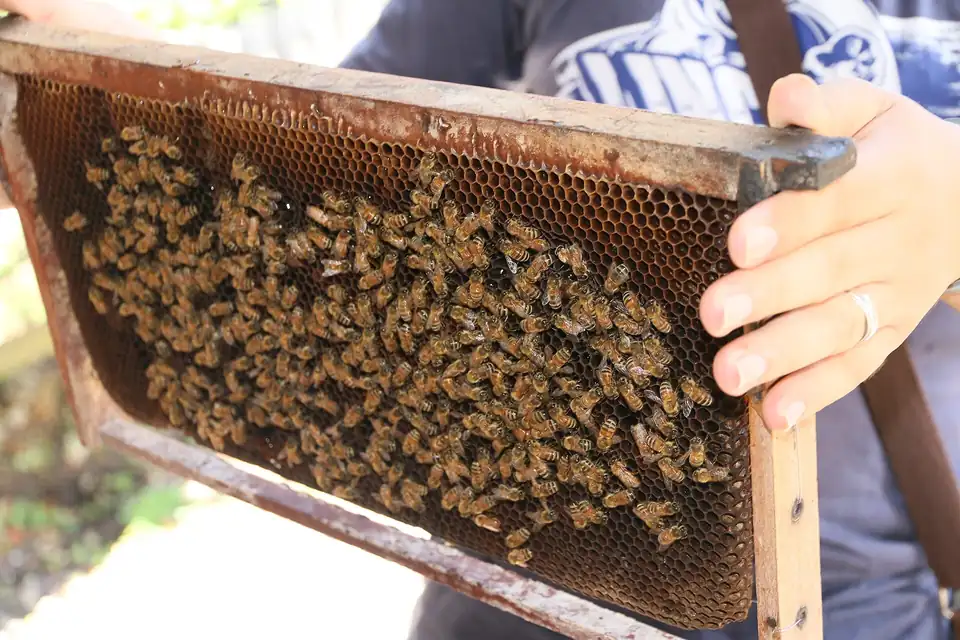
At the apiary, the bees are shaken or walked into a hive body fitted with frames, as in the photo. Some keepers give a frame of drawn comb or foundation to encourage them to stay.
Registration and the AFB plan
Anyone who keeps bees in New Zealand must be registered with NZ Bee Health and Biosecurity, and every apiary site must be recorded, now in the HiveHub system. New colonies are part of the keeper's records, and the keeper must inspect for American foulbrood and file an Annual Disease Return each year. A keeper who finds AFB must destroy the colony and report it within seven days.
Swarms are an unknown quantity: they may have come from a managed hive or a wild colony, healthy or not. That is why many keepers watch a new swarm's first brood closely before letting it share equipment with other hives. Read American foulbrood and abandoned comb.
Varroa treatment
Every honey bee colony in mainland New Zealand is exposed to varroa mites. A new swarm has no capped brood for its first days, so all of its mites are riding on adult bees. Many beekeepers take that window to treat the swarm, which is one of the most effective times to knock mites down. See varroa and wild colonies.
The first season
A swarm collected in spring has the whole season ahead. A strong prime swarm can build a full brood box of comb within weeks if forage is good, and may even produce surplus honey by late summer. A small afterswarm may need feeding with sugar syrup (never honey from unknown sources). Some keepers re-queen swarms whose temperament or performance is poor.
What if the swarm doesn't stay?
Swarms sometimes leave the new hive within a day or two, especially in hot weather or if the box smells wrong. Collectors reduce this by hiving in the evening, giving a frame of comb, and shading the hive. It is part of why collectors like to be called early.
Why you can't just keep it in a box
People sometimes ask whether they can leave a swarm in a box in their garden, as a favour to the bees. Without registration, inspection and varroa treatment, an unmanaged colony becomes a disease risk to others, and is likely to collapse within a few seasons. If you would like to keep bees, register, take a course through a local club such as the Auckland Beekeepers Club, and then collect your own swarms.
What it means for you
If you rang a collector, the bees you saw on your fence are probably now in someone's hive, being checked, treated and settled. That is the best outcome for a swarm. When a swarm can't be collected because it has gone into your house, it is no longer a swarm job; see bees in walls and roofs and the collector page.
This note sits under getting bees removed in Auckland, where the front page sorts out which bee jobs need a visit and which don't.
Quick answers
Can I ask for honey from the swarm later?
You can ask, and some collectors are generous. The bees are theirs once collected, and the first honey takes months.
Do collectors sell swarms?
Some beekeepers sell nucleus colonies; swarms collected from the public are usually kept as new hives.
Does a collected swarm go far away?
It depends on the collector's apiary. Bees are moved at least a few kilometres or kept closed for a while so they orient to their new site.