Bee sting or wasp sting?
The quickest clue is in the skin. A honey bee leaves its barbed sting behind; a wasp doesn't. Here is how to tell which it was, and what to do next.
Checked
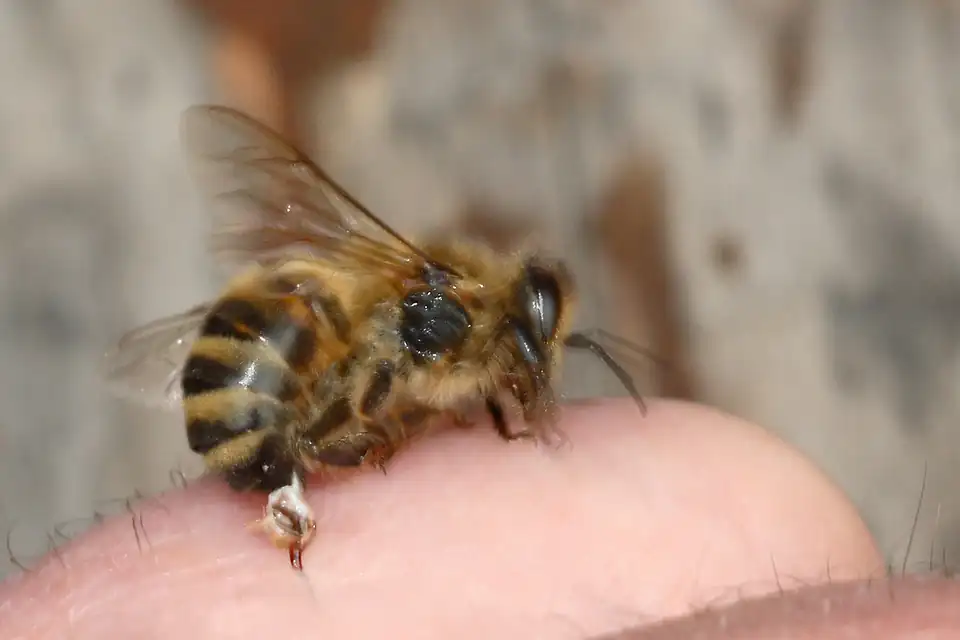
A honey bee sting usually leaves a small dark stinger stuck in the skin, often with a pale venom sac still attached and pulsing. That is because a honey bee's sting is barbed: it catches in skin and tears away from the bee, which then dies. Wasp stings are smooth, so the wasp pulls its sting out and can sting again, and there is nothing left in the skin. Bumble bees also have smooth stings but rarely use them. This note is general information only, not medical advice. For any sting that causes trouble breathing, swelling of the face, lips or throat, or faintness, ring 111.
Clue one: is there a stinger in the skin?
Look closely at the centre of the sting. A honey bee stinger looks like a tiny dark splinter, sometimes with a pale bulb on top. If you find one, a honey bee stung you. Health NZ advises removing it as quickly as possible by scraping it out sideways with a fingernail or the edge of a card, because the venom sac keeps pumping for a short time.
No stinger usually means a wasp, a bumble bee, or a honey bee sting where the stinger has already fallen out.
Clue two: how many stings?
Several stings from one insect point to a wasp, since wasps can sting repeatedly. Multiple stings all at once near a nest can come from either. A wasp nest in the ground that was mowed over or a colony disturbed in a wall can both produce many stings quickly.
Clue three: what did the insect look like?
- Honey bee: about 12 to 15 mm, golden-brown with dark bands, fuzzy, with a fairly thick waist. Flies steadily between flowers.
- Bumble bee: large, round, very furry, black and yellow with a pale tail.
- German or common wasp: sleek, shiny, bright yellow and black, almost hairless, with a narrow waist, as in the photo. Darts around food and bins.
- Paper wasp: long, thin, with legs dangling in flight, near small open nests under eaves.
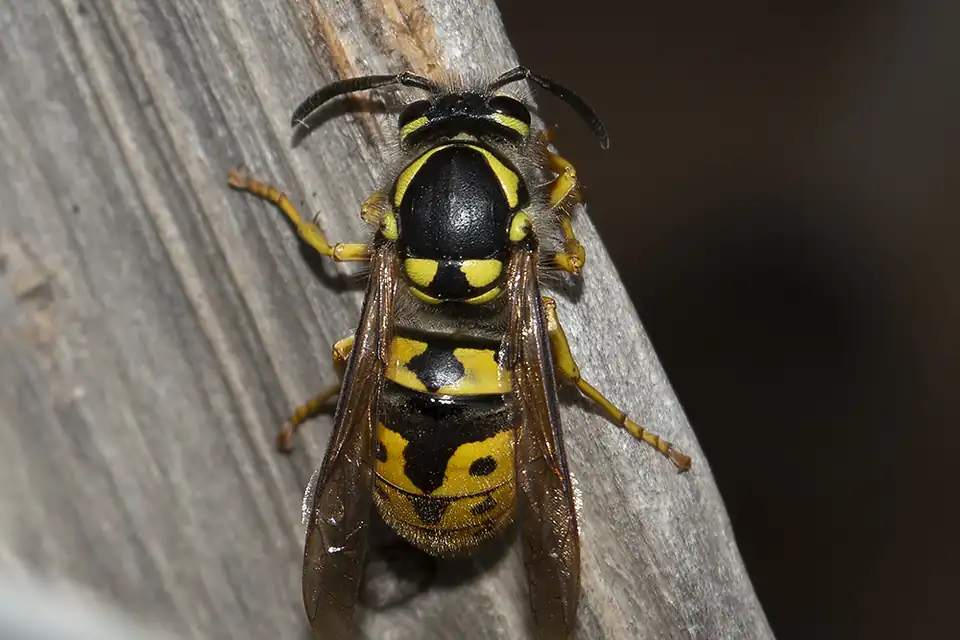

DOC notes that German and common wasps are introduced pests in New Zealand and very abundant in some areas. They are much more likely than bees to sting people around food and rubbish. The bee or wasp guide has a side-by-side chart.
Clue four: where and when?
- Stung while walking barefoot on clover or a lawn in flower: likely a honey bee.
- Stung near a rubbish bin, a sugary drink or a picnic in late summer: likely a wasp.
- Stung after disturbing a hole in the ground with steady traffic: could be wasps or bumble bees.
- Stung near a swarm or a hive entrance after it was disturbed: honey bees.
Do the reactions differ?
For most people, both cause a sharp pain, then redness, swelling and itching around the sting that settle over hours to a few days. Health NZ and Healthify advise washing the area, applying a cold pack and seeking advice if a reaction worries you. A large local swelling can spread well beyond the sting site in some people.
Some people are allergic to bee venom, wasp venom or both. Allergy to one doesn't always mean allergy to the other, which is why knowing which insect stung matters if someone has had a reaction before. Signs of a severe allergic reaction include difficulty breathing, wheezing, swelling of the face or throat, dizziness and collapse. Ring 111 straight away. For advice that isn't an emergency, Healthline is free on 0800 611 116, any time.
Why identification matters for the nest
If you were stung near your house, find out what you are dealing with:
- Honey bees going in and out of a gap in the house: a colony inside. See signs of bees in a wall.
- Bumble bees in a hole in the lawn: a one-season nest. See bumble bee nest in the lawn.
- Wasps: a pest controller is the right call.
Our stings page covers planning around a nest when someone in the house is allergic.
This note sits under Bee Removal Auckland, where the front page sorts out which bee jobs need a visit and which don't.
Quick answers
Does a honey bee die after stinging?
Yes, when it stings a person or animal with elastic skin. The barbed sting and part of the abdomen tear away.
Are bee stings or wasp stings worse?
For most people they feel similar. What matters more is how many stings and whether the person is allergic.
Should I squeeze out a bee sting?
Health NZ advises scraping it out sideways quickly. Squeezing with fingers may push more venom in.