Varroa and wild colonies
Before varroa arrived, wild honey bee colonies could live in a tree or wall for years. Since 2000, most die within a few seasons. That changes how you should think about bees in your house.
Checked
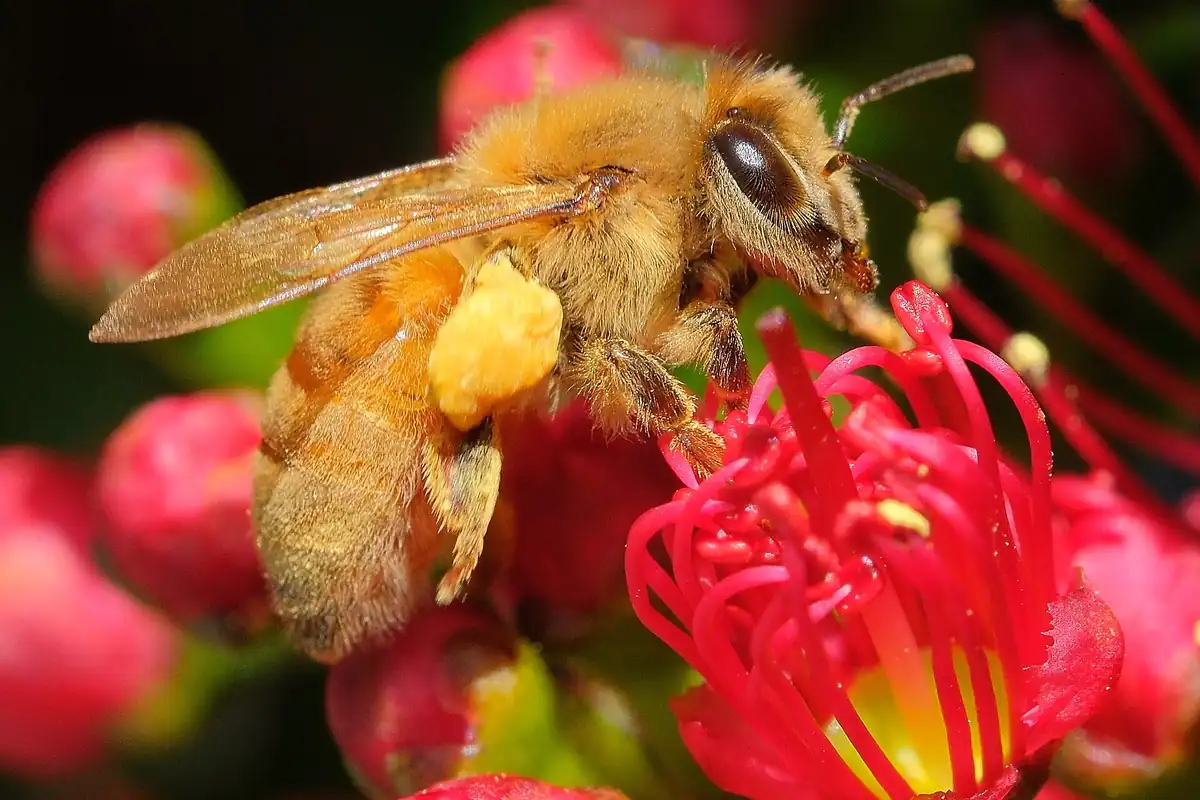
Varroa destructor is a parasitic mite that feeds on honey bees and their developing young, and spreads viruses between them. MPI records that varroa was first found in New Zealand in Auckland in April 2000. By the time it was detected it was already too widespread to eradicate, and it has since spread through the whole country apart from the Chatham Islands. Managed hives survive because beekeepers treat for varroa several times a year. Wild colonies, in trees, walls and roofs, get no treatment, and most collapse within a few years.
What varroa does to a colony
Female mites ride on adult bees and breed inside capped brood cells, feeding on the developing bee. Infested bees emerge weaker and shorter-lived, and many carry deformed wing virus and other viruses that the mites spread. As mite numbers build over a season, a colony's population falls, and it often fails in late summer, autumn or winter.
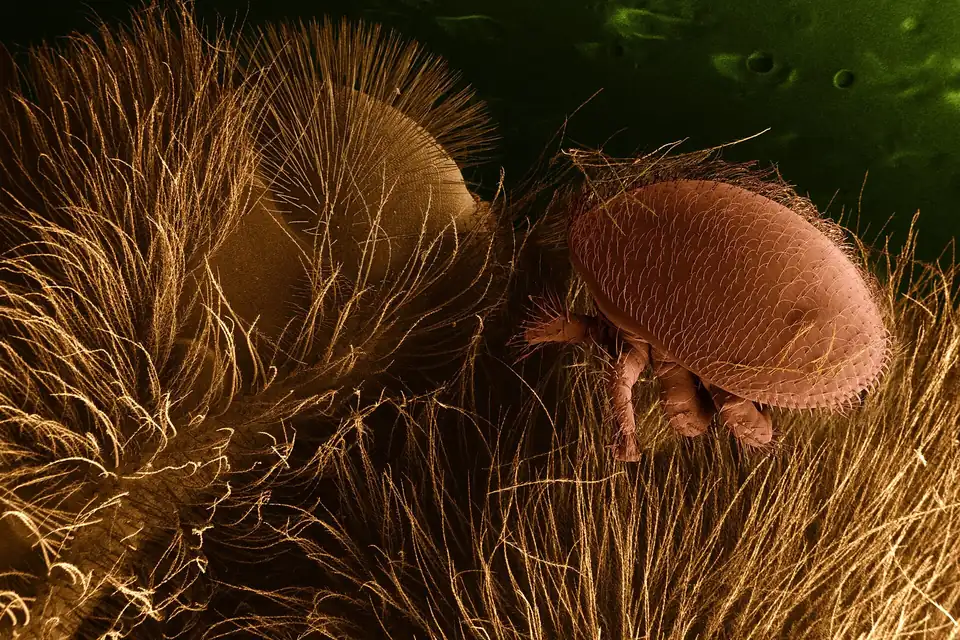

The photo shows one mite, magnified, among a bee's body hairs. In a heavily infested colony there can be thousands.
Why wild colonies rarely last now
Before 2000, a swarm that moved into a hollow tree or a wall cavity could live there for many years, swarming every spring. Older Aucklanders sometimes remember a house or a tree that "always had bees". After varroa, an untreated colony typically survives one to a few years before the mite load kills it. Some wild colonies persist longer, and swarms keep arriving from managed hives to replace those that die, so feral bees haven't disappeared. But the long-lived wall colony is now uncommon.
What that means if bees move into your house
It is tempting to think a colony in the wall will die out on its own, so why pay? There are three problems with waiting:
- It can take years. In the meantime, the colony grows, swarms and sometimes finds its way indoors.
- The comb stays. When the colony dies, the comb and honey remain, and that brings leaks, smells, wax moth and robbing. See why not to spray a wall colony.
- Dead colonies are a disease risk. A colony that collapses from varroa or American foulbrood leaves honey that bees from nearby hives rob, carrying disease home. See American foulbrood and abandoned comb.
So a colony in a building is still best removed while it is alive, ideally rehomed with a beekeeper who will manage its mites.
Should a rehomed colony be treated for varroa?
Yes, and a beekeeper who takes a colony from a wall will usually treat it soon after. Any registered beekeeper is expected to manage varroa in their hives. This is another reason collected swarms and rehomed colonies go to registered keepers rather than being left in a box in the garden. The what happens to a collected swarm note describes the process.
Other exotic threats MPI watches for
New Zealand is free of several serious bee pests that are common overseas, including small hive beetle, Tropilaelaps mites and European foulbrood. MPI asks anyone who sees something unusual in a hive, or large-scale unexplained bee deaths, to report it on 0800 80 99 66. In Auckland, the yellow-legged hornet is also the subject of an MPI response; see the hornet note.
Varroa and bumble bees
Varroa targets honey bees. Bumble bees have their own mites, usually harmless hitchhikers, and their nests last only one season anyway. A bumble bee nest in your garden is not a varroa risk. See the bumble bee guide.
What you can do as a householder
- Have colonies in buildings removed alive where possible.
- Don't leave old hives, comb or honey where bees can reach them.
- If you keep bees, register, monitor mites and treat as the label directs.
- Plant flowers that give bees a varied diet; healthy, well-fed colonies cope better.
This note sits under getting bees removed in Auckland, where the front page sorts out which bee jobs need a visit and which don't.
Quick answers
Can varroa affect people or pets?
No. Varroa lives only on honey bees.
Does a colony in my tree mean varroa is in my area?
Varroa is everywhere in mainland New Zealand. Every honey bee colony in Auckland is exposed to it.
Should I report a wild colony?
You don't need to report a normal wild colony. Report anything unusual, such as strange mites, beetles in a hive, or mass bee deaths, to MPI.