Honey from a colony in your wall
A cut-out can produce kilograms of honey. It is tempting to keep it. Here is why most of it should be thrown away, and the one case where it might not be.
Checked
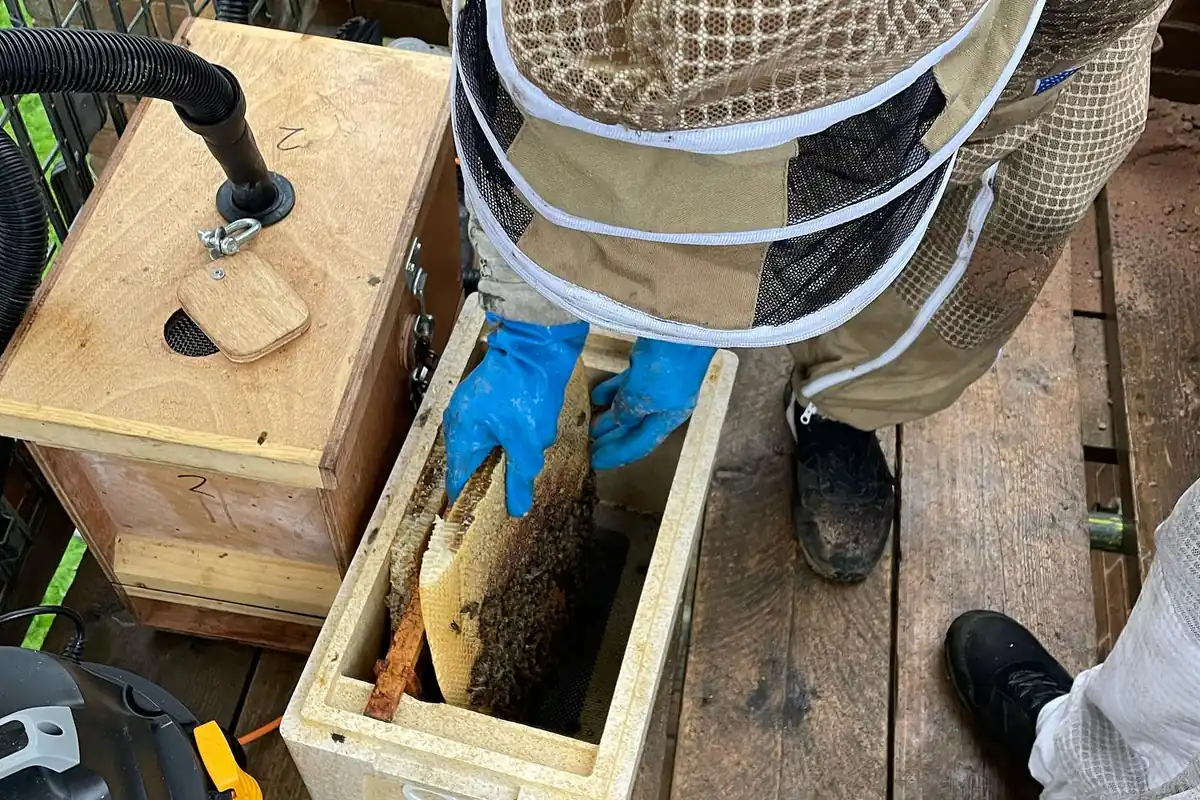
Honey from a colony in your wall is usually best thrown away rather than eaten or fed to bees. There are three reasons. First, you don't know what the colony was exposed to: if the bees were sprayed, the honey may hold insecticide. Second, honey from unknown colonies can carry spores of American foulbrood, which don't harm people but are deadly to bee larvae, so it must never be left where bees can reach it. Third, honey stored in a wall cavity sits among dust, insulation and building materials, and may have fermented. The exception is a live cut-out of a healthy colony that was never sprayed, where the beekeeper decides what is usable; even then, eating it is your own risk.
If the colony was sprayed
Anything sprayed into a wall can end up in the comb and honey. Household and professional insecticides are not designed to be eaten. Don't eat honey from a colony that was treated, and don't let it sit where bees can rob it, because the pesticide travels with the honey to other hives. It should be bagged and disposed of. Read why not to spray a wall colony.
American foulbrood
AFB is a bacterial disease of honey bee larvae. Its spores survive for decades in honey and comb. People can't catch it, but bees can, and honey from an unknown colony is a classic way it spreads, through robbing or through well-meaning feeding. NZ Bee Health and Biosecurity advises against feeding bees honey from other colonies for this reason. Never put wall honey out in the garden "for the bees". See American foulbrood and abandoned comb.
Dust, insulation and fermentation
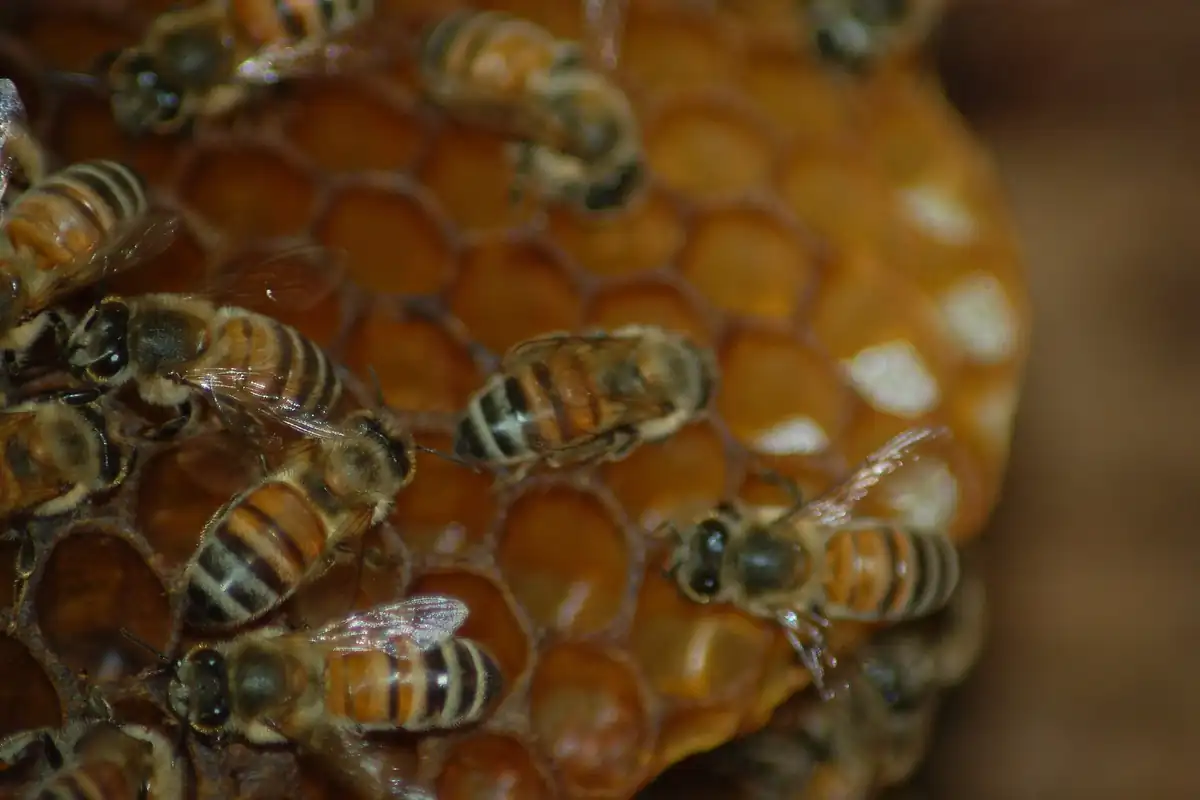

Honey in a hive box sits in clean frames. Honey in a wall sits beside old insulation, sawdust, dead bees and sometimes rodent droppings. Comb near the outside of a wall can absorb moisture, and honey with too much water ferments, tasting sour or fizzy. Dark, old comb, which held brood for several generations, gives honey a strong flavour and is hard to clean.
Live cut-outs of healthy colonies
When a beekeeper cuts out a live, unsprayed colony, the brood comb goes into frames for the bees, and the honeycomb is separated. Some beekeepers feed it back to the same colony, which already lives with whatever it contains. Others discard it. If the beekeeper offers you clean honeycomb, it is your call, but bear in mind that it hasn't been through the checks honey for sale must pass, and it shouldn't be sold or given away as food. MPI regulates honey sold to the public.
How to dispose of wall honey and comb
- Bag it in heavy plastic and tie it securely.
- Put it straight into general rubbish on collection day, not into compost, where bees and wasps can reach it.
- Clean up drips outside, so bees don't start robbing.
- Wash tools and the cavity with hot soapy water.
Large quantities from a big cut-out are usually taken away by whoever does the job. Ask about this when you get a quote; see the checklist before hiring a bee remover.
What about the wax?
Old wax from a wall can carry the same spores and residues as the honey. Don't melt it down for candles or polish if the colony was sprayed or unhealthy. Clean wax from a live cut-out can be rendered by a beekeeper, who will handle it with their own equipment.
Honey leaking into the house
If honey is already seeping through a ceiling or wall lining, the comb is collapsing, and the job is urgent. Put down a tray, keep the room closed and ask for a visit. See after the bees are out for cleaning and repairs.
This note sits under Bee Removal Auckland, where the front page sorts out which bee jobs need a visit and which don't.
Quick answers
Is wild honey healthier than shop honey?
Not reliably. Honey from an unknown colony in a building has no quality checks, and the risks above outweigh any benefit.
Can I give the honey to a beekeeper?
Offer it, but many beekeepers will decline honey from an unknown colony because of the AFB risk to their hives.
How much honey is in a wall colony?
It varies with the colony's age and the season. An established colony can store many kilograms.